Category: Blog

3D Printed Coffee Filter Holder

3D Printed Coffee Filter Holder

27 Years Experience

75+ Design Awards

1,000+ Manufactured Products

From Idea to Prototype in as Little as Six Weeks!

Ready to Start?

To fuel the creativity at Design 1st we drink coffee — a lot of coffee.  And like many offices across the country our coffee machine of choice is Keurig.

Of course we know the Keurig coffee pods used in the machines are bad for the environment, expensive, and prone to running out on Monday mornings. But the pros of convenience for clients, tasty choices for our staff, and a cup of coffee that was always hot outweighed the cons – well, until last week…

Last week each of our 3 Keurig coffee machines received some aftermarket parts. These included bags of Kicking Horse Dark Coffee, stainless steel reusable Keurig pods, and disposable paper filters.

After a pep talk, the whole Design 1st team bought into the new coffee setup — but there was still one problem:

Where do we store the disposable paper filters?

Placing them in the overhead cupboards proved awkward (especially for the vertically challenged staff). Leaving the whole box of 300 filters on the counter was an eyesore, and a leaning tower of filters beside our faithful Keurig machine was prone for disaster.

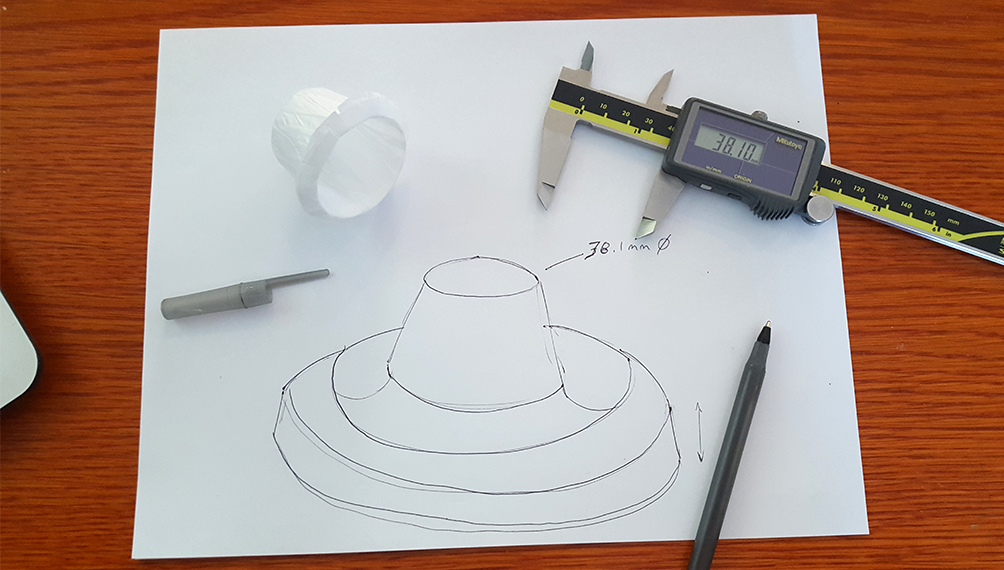
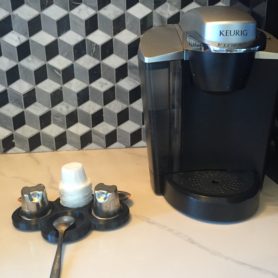
But over a lunch meeting, Chris (Senior Industrial Designer) came up with a solution! A 3D printed disposable keurig filter stand that would hold the filters upright.

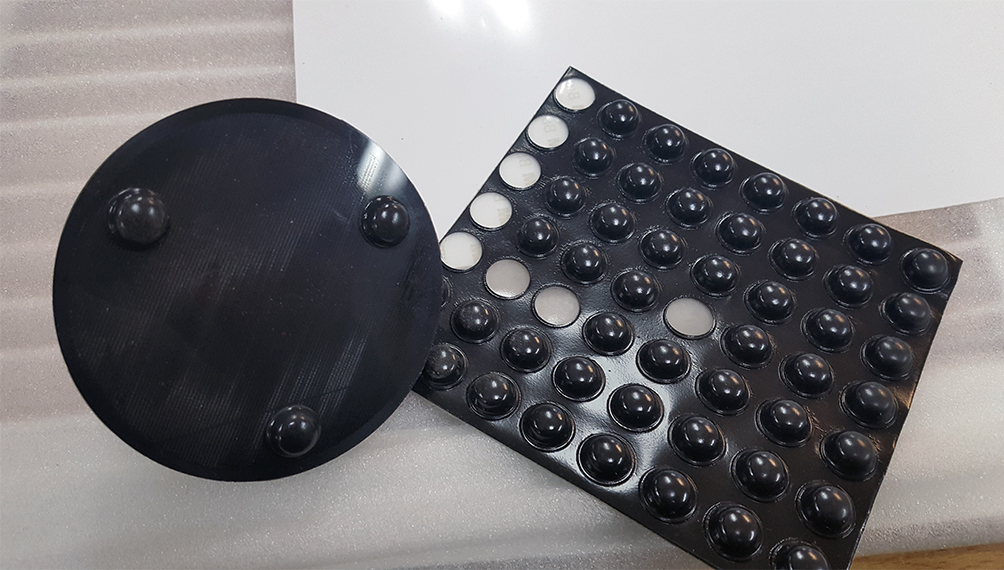
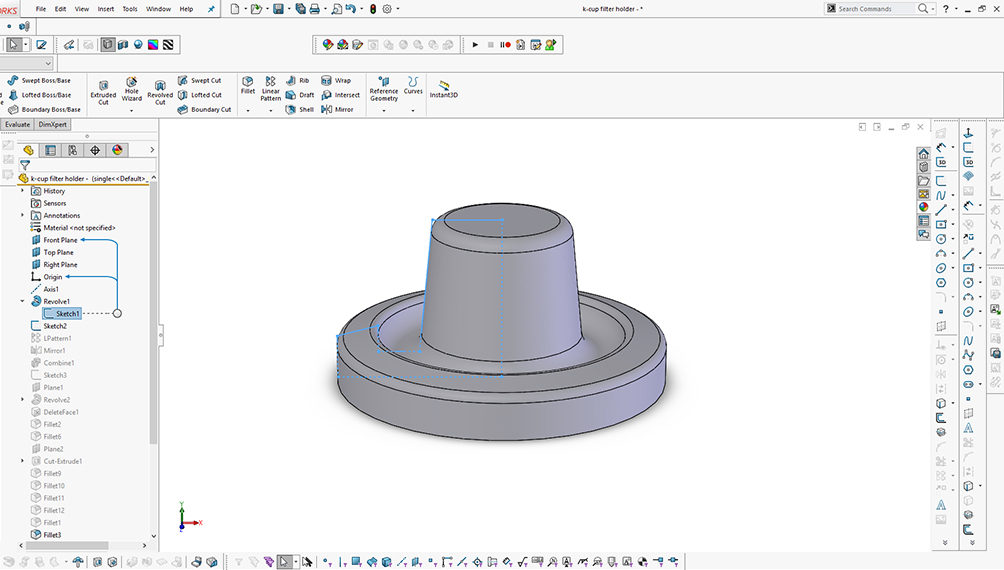
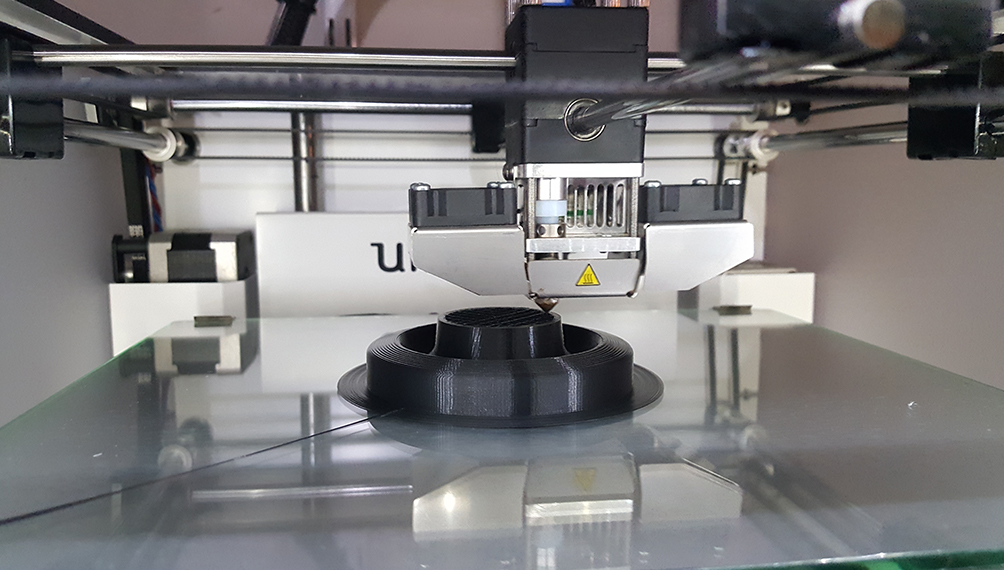
After some quick measurements with the calipers the idea was 3D modeled using Solidworks and sent downstairs to the 3D printing the lab. See the results below:

Share

Have a new product idea?

We can help take you from idea to design, prototyping, and volume manufacturing.

Published on: February 25, 2023

5 Major Impacts of Voice-First Devices

5 Major Impacts of Voice-First Devices

27 Years Experience

75+ Design Awards

1,000+ Manufactured Products

From Idea to Prototype in as Little as Six Weeks!

Ready to Start?

Design has often been described as a conversation between the designer and the user.

As designers of all kinds we have the distinct privilege to communicate and converse with users to understand their needs to create solutions for them.  But the influence of voice assistant technology like  Alexa, Siri, Cortana and Google home demands a new conversation.

And this new conversation is moving away the traditional one between the user and designer – to a conversation between the user and device, literally.

With an estimated 24.5M Voice-First devices to ship in 2017 the impact of voice on product designers, users and hardware start-ups is happening fast. Five major impacts of voice-first devices we see include:

1: Design around voice-first interfaces

Designing-around-interface

The gap between machine language and human language is shortening.  Human-computer interaction has been evolving towards less abstract methods of communication for over 100 years. From morse code, to punch cards, keyboards, gestures and voice commands.

We see a peeling away of visual cues abundant in devices up till now. The result is true aesthetic minimalism – no graphic interface to swipe or buttons to press, just voice.  Like the monolith from 2001 A Space Odyssey, featureless, a blank slate that generated curiosity. No one knew what it’s capabilities were – and there’s the anecdote.  The removal of screens, touch surfaces and ports transforms an object from a gadget into magic.

Designing for voice-first devices like Amazon Echo. Apple Airpods and Lifepod, a seniors assistant share a similarity with this monolithic language.  Users interact with the devices through voice and the fully functionality appears minimal and hidden.

2: Voice driven in-ear wearables

In-ear wearables are going be prominent in the development of voice-first devices. In-ear devices have been around for awhile, but with technological progression a new category is emerging: virtual assistants. Having “someone” in your ear ready to answer requests provides a combined value of both mobility and intuitive use which smartphones have tapped into.

These devices are hands free, allowing the voice command capabilities to be applied on the go, without the added cognitive load of multitasking and distraction of texting. Discretion and intimacy of in-ear products are some of their key benefits. Imagine not having potentially embarrassing searches visible on a screen, or to remind you to take your medication.

There are still a lot of design problems like battery life, form factor, cost and connectivity – but you can bet wireless in-ear wearables will be adopted by the mass market soon.

3: Shifting voice-first device infrastructure

Reducing the number of components – buttons and screens – on a product also reduces its cost. The simplicity of what’s inside some voice-first devices is remarkable. For example, Amazon Echo is based on a relay device that sends your input to a server and then repeats an answer back to you. The costs are transferred from physical components on the product to running the necessary infrastructure of a data center.

 This means that as more voice-first devices reach markets, and more consumers start using them, a huge pressure is going to be on these centers to keep up with the added load. Plus, as voice first devices gain mainstream acceptance, home wireless infrastructure will need accommodate the handoff between multiple voice devices without conflict.

4: New Business Models

In 10 years half of all computer interaction will be through voice-command. This trend will lead to many new business models, advertising methods, products and services.

Tide for example has already jumped on board, using Amazon Alexa skills to give users advice on how to remove stains and provide a fast way to reorder products. While hardware, voice-first devices like Lifepod deliver virtual care assistance to seniors and allow family members to check-in remotely.

 But the major change will occur in online world of advertising, payment processing and shopping. Voice is ready to disrupt the traditional ‘search and click’ method – allowing users to quickly purchase goods and asks questions from their favorite voice-first device platform.

5: The future [home] is now

The future of voice-first technology will help solidify the smart home as a functioning aspect of everyday life. Smart homes or connected homes, will be improved on with advanced versions of virtual assistants such as Google Home or Amazon Echo. These devices are pushing smart homes to the brink of reality.

For years lighting, plumbing, security and alarm systems have been slowly brought into houses, but only by the owners and one at a time. A voice-first world will create opportunities for full integration – integration between appliances, and between the home and its infrastructure. Even now, there are services such as If This Then That (IFFF) and Node-RED which allow you to link your smart devices together so they can talk to each other. Voice-first tech will unify the smart home into a cohesive unit.

Share

Have a new product idea?

We can help take you from idea to design, prototyping, and volume manufacturing.

Published on: February 25, 2023

Intel Executive IoT Program

Intel Executive IoT Program

27 Years Experience

75+ Design Awards

1,000+ Manufactured Products

From Idea to Prototype in as Little as Six Weeks!
Ready to Start?


Our whirlwind journey to London,UK to take part in Intel’s IoT Enterprise Programme was well worth the travel.

Over a two-day period we met some of the leading minds, companies and organizations involved in the rapidly growing Internet of Things industry. Plus we got to see how the East London Tech Community stacks up against our Ottawa homebase – or as some call it, the ‘Silicon Valley of the North.’

Aside from the great contacts we made, we got a global perspective on the future of IoT. Here are some of our key takeaways:

The 3 Elements of the Future of IoT:

  1. IoT is real and is happening right now. There is rapid growth in new disruptive IoT devices, services and business models across the globe.
  2. IoT is here to stay. Don’t wait – your competitors are innovating and the industry you are in will undergo change because of new IoT devices and services.
  3. You need IoT Partners. No one company can do it all themselves successfully. You need partners to develop hardware IoT solutions

Hardware Startup Tech Scene in East London

Within hours of landing in London, we were in the heart of IoT in the UK. The first thing we noticed was how dense the East London tech district was.  For example, in the five square block area we were in there were at least three hardware-focused incubator complexes and programs. These included:

Huckletree:

  • A large UK based tech incubator whose location in Finsbury Square was also home to a co-working space, dozens of hardware IoT startups, New Entrepreneurs Foundation and a big Silicon Valley Bank Office

Cocoon Networks:

  • Chinese-based incubator whose 70,000 sq/ft London location was home to Hardware Pioneers and contained loads of office space, meeting rooms and five-star amenities. Plus access to the lucrative Chinese market and venture capital.

Hello Shenzhen:

  • An IoT hardware and maker-culture focused partnership program created by the British Council and Shenzhen Open Innovation Lab.

The three-day trip was also anchored around two main events organized by Hardware Pioneers – ‘a global community of 5000 pioneers building IoT products.’  First up, an evening event on IoT prototyping and the first ever workshop of the Intel Iot program.

First Event: “IoT Products from Prototyping to Production”

This was a jam-packed evening session with at least 70 people, and 3 guest speakers from Raspberry Pi, RS Components and Silicon Labs. And in talking to fellow hardware product development attendees we discovered RS Components is their equivalent to Digikey, who we use to source prototype and electronic hardware components. Very cool!

Second Event: First Workshop of Intel’s IoT Executive Program

This was the event that drew us over to London.

We applied in early 2017 and we were excited to learn we earned a spot in this exclusive program. Twenty-five  25 executives attended the first workshop, representing companies involved in IoT product development.

The last important takeaway for us came on the plane ride home over the Atlantic. We received an email from a key contact we made who in following up with us mentioned:

“When it comes to IoT there aren’t many experienced product development consultancies here in UK therefore I believe Design 1st is in a very good position ”

This message really resonated with us, because three years ago we made the conscious decision to go “all-in,” placing out bets on IoT. This involved merging with an experienced full-service hardware electronics firm and growing our in-house IoT prototyping facilities.  Since then we have developed multiple IoT solutions for customers across the globe.

And while no one may know exactly where the future of the IoT industry is headed, our trip to London let us know we are on the right path.

Share

Have a new product idea?

We can help take you from idea to design, prototyping, and volume manufacturing.

Published on: February 25, 2023

Top 4 trends impact IoT usability

Top 4 trends impact IoT usability

27 Years Experience

75+ Design Awards

1,000+ Manufactured Products

From Idea to Prototype in as Little as Six Weeks!

Ready to Start?

Kevin Bailey, President of Design 1st discusses 4 trends that he believes will cut down on end user frustration.

Trend No. 1 – Mobile ease of use:

There is a world coming where the frustration of charging batteries and intermittent radio connection as you move about your day simply will not exist.

No one cares about radios, connections, charging and the other technology limited maintenance necessities of our world today.

The tools we use to get things done will simply maintain themselves, increasing our effectiveness on activities we take on and reducing the frustration and peripheral learning that is currently required.

Trend No. 2 – Common Modules and Standards:

I believe in the next couple of years the adoption of a variety of Bluetooth, Wi-Fi, loRa, open standards and modules will solve much of the connectivity frustration.

A settling out period will occur across a half dozen competing standards groups. Design of the electronics technology of a device will get more modular and ubiquitous, which means faster to select and easier to design into a product.

Trend No. 3 – Useful data and Analytics:
The collection and presentation of context relevant data will drive ease of use as we simple don’t have time or the patience to use the products that come with confusion, learning and complexity.

The quantity of data collected and available will grow exponentially in 5 years requiring data analytic butlers and filters to act on our behalf.

Early stage helpful interfaces are appearing today with voice activation cloud commands enabling a host of audio command based user definable actions from ‘play music’ to ‘turn on my lights’ and ‘buy eggs’ connecting our commands to actions on the objects around us.

Ease of use design will require simulation and testing tools that combine the new interfaces, device hardware and software with cloud and applications and user environment labs to create concepts that run users through scenarios to debug and validate new products features.

Trend No. 4 – Collaboration:
Going faster means collaboration with knowledge leaders for a short period during product development. The expertise is out there and smart companies are tapping into it. The global players have embraced this with programs like NineSigma to mine for new ideas and talent.

If you are going through connected hardware design for the first time you will need specific expertise, tools and a process architect that will guide the fast development. A single product requires a host of design, engineering and software expertise combined with fast turn services like 3D prototyping and manufacturer input.

The ‘try and learn’ development approach is an unavoidable predicament of underfunded projects. The future winners will find a way around this obstacle and secure the team members to get product ease of use exactly right for their target market and do it in under 8 months.

Share

Have a new product idea?

We can help take you from idea to design, prototyping, and volume manufacturing.

Published on: February 25, 2023

The Trillion-Dollar IoT Opportunity

The Trillion-Dollar IoT Opportunity

27 Years Experience

75+ Design Awards

1,000+ Manufactured Products

From Idea to Prototype in as Little as Six Weeks!
Ready to Start?
ces-2017-iot-talk-banner-1024x256

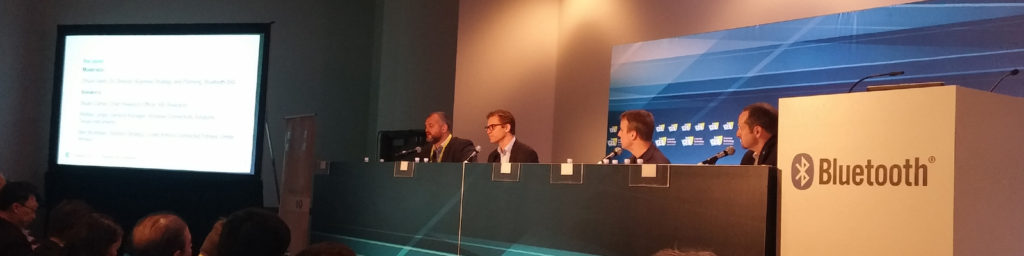
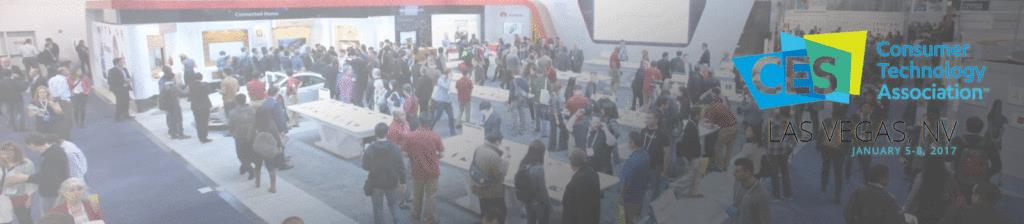
Peter Cottreau, Vice President, Electronics at Design 1st sat in on a CES 2017 session called ‘The Trillion-Dollar IoT Opportunity’.

The session was moderated by a hit-list of IoT Industry specialists from Bluetooth SIG, ABI Research, Under Armour Fitness and Texas Instruments.

Peter wrote an excellent synopsis of the talk below:

Peter-768x768
Author: Peter Cottreau VP Electronics, Design 1st

The Internet of Things is projected to be a multi-trillion dollar industry.

Connected devices are coming to market at a staggering rate. Developers, manufacturers and innovators are working diligently with the goal of meeting expectations for the IoT.

The panel brought together thought leaders from the standards world, the analyst community, OEM silicon systems design, and end-user device manufacturers for their perspectives on the current state of the IoT and the issues that will dominate as the technology matures.

Stuart Carlaw, Chief Research Office @ ABI Research observed that we are in the first phase of a 2-phase process in the evolution of the IoT.

The first phase is the “connectivity” phase in which we develop the physical interfaces that act as the on-ramps of the IoT.

It is important to understand that, at the physical level, there is not one single market. Multiple applications in a multitude of verticals lead to the fact that no one technology is going to solve all the problems. Note that IoT, LoRa, Sigfox, WiFi, Bluetooth, Thread, Zigbee, Z-wave and others all have an application area where their unique characteristics serve as the optimal solution.

The second phase, which we are about to broach, is the “data” phase.

In this phase we will see the emergence of a new set of applications which consolidate, analyse and disseminate value-added information and services to users.

Ben McAllister, Under Armor’s Director of Strategy for Connected Fitness remained admirably on message throughout the session.

He noted that Under Armour is a cloud/app data player looking to partner for low-level device tech and observed that “no one is asking for the IoT, they need help becoming better athletes”. Here he brings an interesting point for device developers: the more frictionless the experience the more readily it will be adopted.

People care less about Bluetooth and WiFi and more about the quality and seamless operation of their equipment.

Mattias Lange of Texas Instruments emphasized the dire need in the IoT for device/network level security. He warns there is a shortcoming in the industry with respect to the need to understand and communicate the security story across interface technologies back through the network.

He points out that, on top of the normal course data communications issues, developers must address provisioning/configuration/firmware update and management in the field in order to properly meet the demands of the IoT.

Stuart Carlaw, with hearty approval from the other panelists, pointed out that it takes the right technology combined with a good software implementation for optimal solutions and ultimate success.

“Hardware IoT device developers be warned, the right technology selection without optimal software will yield poor results in the hands of the end user.”

In summary, IoT developers must be aware of the end user requirements and how these match to the myriad interface possibilities.

They must be capable of enabling this hardware with frictionless user interface designs that render the technology transparent to the end user.

Finally, they must provide an underlying software implementation that is properly tailored, robust and deployable.

Share

Have a new product idea?

We can help take you from idea to design, prototyping, and volume manufacturing.

Published on: February 25, 2023

What makes IoT devices successful?

What makes IoT devices successful?

27 Years Experience

75+ Design Awards

1,000+ Manufactured Products

From Idea to Prototype in as Little as Six Weeks!
Ready to Start?
ces-booth-iot

Kevin Baily, President at Design 1st attended CES 2017 last week and shares his perspective on the secret to the success of an IOT product.

It’s ease of use.

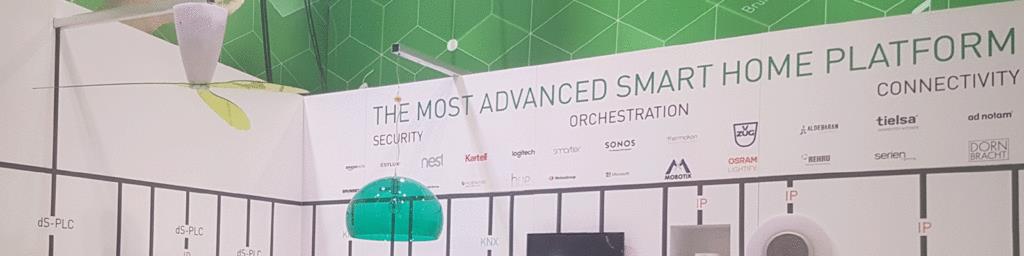
CES 2017 was an exciting mix of IOT hardware products tethered to their companion cloud and phone applications.

Many products were sophisticated prototypes with a product ready look, each booth beckoning you to try out their new features.  Audio interfaces are the new buzz.  However, at the show they were spotty with Amazon Alexa cloud platform and echo hardware devices struggling in the Wi-Fi saturated and noisy crowd environment.

With 3D prototyping exploding and investors providing a variety of funding models, a new generation of creative thinkers displayed their design talents.  This year’s show screamed of connected everything.  Truly a hardware heaven of wireless gadgets.  Drone fun, Virtual Reality goggles, robots, home monitoring and body electronics options were in abundance.

There was an entire floor with a thousand startup teams, set up like a science fair.  The exhibitors displayed product and ideas in various stages of development and the aisles bustled with shoulder to shoulder interested crowds. The rest of the show floors and buildings were vast runways of companies and global giants showing off connected objects, from body biometrics and hairbrushes to TVs, kitchen appliances and cars.

The take away for me was the hidden confusion coming as we buy, set up and use each of the hundreds of connected products to come with their unique interfaces that we will need to learn one by one in order to use them all.  Truly suffering will be the ease of use for this new category of IOT connected products.

Great products are born from ease of use as it enables us to accomplish tasks, allows us to feel in control and in doing so, it projects our confidence and personality to others.

At Design 1st we have 3 Golden rules that get used when we test drive any new product concept.

From a user’s perspective when I interact with a product:

  1. Don’t make me wait (2 seconds is awful, 10 seconds is a lifetime)
  2. Don’t make me guess (I feel frustrated)
  3. Create magic moments where what I want to happen, feels satisfying and enjoyable, every time.

Product ease of use for interconnected mobile devices is much more challenging than standalone device designing as they must be convenient and easy to use everywhere.  This means that as users, we expect to be able to take a discrete call in a movie or turning on the oven on your way home from the car audio interface.

We want the technology to disappear and the device to meet our needs.  Leveraging Amazon Alexa audio scripts (skills) is one choice for handsfree interaction and its popularity with designers has skyrocketed in the last 6 months as a convenient way to give commands and trigger actions without keys and displays.

To interact with devices in your home, there are now many service providers that will collect data and inform you using data from your growing inventory of household appliance and security sensors. These home stations add a display on a table or wall and can be accessed on computers, tablets and smartphones. 

This will likely be the first interface you will select and use.  

The big player choices are AppleHomeKit, GoogleHome, AmazonEcho, Honeywell and there are dozens of others.

The car manufacturers have their own audio and display interfaces and each one was jaw dropping to try out at the show.  The third major environment of use is when you are out and about. You will need a central command and the smartphone or watch becomes your friend so your biometrics can be a click away wearables and the small screen and audio will keep you connected, aware and informed.

Medical connected products are a category of their own.  They bring an exciting area of connected medical device equipment replacement and upgrade, however the hardware product creation is going slower than the consumer market frenzy, with the added complexity of compliance, privacy and security of data.

This feels like year one of a hardware journey where developers want everyone to experience the value of their standalone cloud interconnected device while global giants and standards groups catch up with simpler more ubiquitous solutions to help the technology problems disappear. This first step we believe is the connection phase followed by the data management phase (analytics, filtering and delivery), once the connection stage frustrations are minimized and the easier to use products have matured. 

In developing a good product, it is important your design team understands the changing component, cloud and software options to help extend product life in the changing cloud connectivity environment over the next 3 years.

It was apparent while walking the exhibits at CES 2017 that some companies are building fast and loose and many will fail the test of make it easy for me to use everywhere.  There are thousands of exciting connected products being brought to market every year. 

Ease of use will guide IOT product adoption over the next 5 years. Get it right, you stick around, get it just a little wrong and a new entrant will replace you.  The hardware design failure problem is so large that Indiegogo and Kickstarter crowdfunding platforms have implemented support programs to help mentor, guide and audit incoming projects with the platform establishing approval requirements before a campaign can be launched.

We all recognize a successful product as it is immediately exciting to interact with and easy to operate, with little or no help.

For most companies, the trial and error of creating devices and applications without considering the delays and inconsistencies of network connections and the environments and personal situations a user will need to be in (at home, office, in-between and away) can lead to several years of prototyping, learning and re-design before an acceptable solution is configured. These product development projects spiral to failure as they take the shotgun approach to the design process rather than using tried and true design tools, team experience and early stage lean methodology to test the various options.

The design methodology will ensure you arrive quickly at a product solution that is good enough to launch to your market.  A good deal of the feature design tweaking will happen in software after the product is launched.  Your connected hardware device generally is made to be ‘dumb’ for lower cost and longer useful life and the device software is updatable over the cloud.

Young startups and technology companies shifting to connected IOT products including manufacturers extending their product lines require a very experienced design process mentor now more than ever to steer connected product development.

At CES 2018, we predict an even larger explosion of devices most of which will be land fill the year after. Successful new product design must embrace rigorous user testing during the early product definition stage. This type of expertise is hard to find and harder to cultivate and maintain. 

A product development schedule is 4 months; an expert design team takes a decade and hundreds of projects to be effective.  Startups and companies connecting their existing products to the cloud will need to find and exploit existing product design teams that are experts at ease of use.

Building a team and developing the design process from scratch at the same time you are developing your product and technology is a much longer road making the venture an educational experiment not a business strategy, in today’s fast-paced product design environment.

The successful companies will go on to solve real world problems with devices and applications that give better customer experiences using devices that fit easily into our day and are delivered in under 8 months from idea to revenue generating sales.


Share

Have a new product idea?

We can help take you from idea to design, prototyping, and volume manufacturing.

Published on: February 25, 2023

The Value of Attending CES 2017

The Value of Attending CES 2017

27 Years Experience

75+ Design Awards

1,000+ Manufactured Products

From Idea to Prototype in as Little as Six Weeks!
Ready to Start?
ces-2017-design-1st-in-las-

Interview with Design 1st VP Sales, Ian Kayser on value of attending CES 2017

Return on Investment is always top of mind for Design 1st so being away four days to attend CES 2017 means there must be a pretty strong motivator. Ian Kayser certainly thinks so.

I sat down with him to talk about his experience from CES 2016 and why it is beneficial to attend this year.

joan-highet

Author: Joan Highet

Q: Ian, why is attending the Consumer Electronics Show a good investment?

A:  There is a multitude of reasons I personally attend. I’m Vice President of Sales at Design 1st so on the sales side, I look for new business and insights into what clients are looking to create. But equally important is that CES showcases innovation and imagination at its best, specifically in technology from my perspective. I get a world view of what’s happening.

For example, a wearable used to refer to a timepiece, now there are a myriad of electronic wearables that monitor exercise, health and vital signs, security, commercial vehicles etc. There is an explosion in drones and places where the technology can be used in security, lifestyle, maintenance and surveillance of infrastructure. Just a couple of examples of technology skyrocketing and how humanity can change.

Ian-2016

Ian Kayser, VP Sales

Q: Was there one thing that stayed with you the most from the show?

A: There was more than one. As I indicated before, drones will be an integral part of our life. For sure there are issues and challenges but the will be overcome with great design and learning. Automation in transportation like autonomous driving cars. Once there is consumer confidence, it will be a sea change in our society. Robotics is another area that is coming forward at quieter but rapid pace, with the ability to bring massive change.

If you are a business person in technology or design, you need to have world exposure. Design 1st may be in Ottawa, Canada but our market and clients are across the globe. CES opens your eyes to possibilities, discussions and potential. It’s a tremendous opportunity to connect with clients, suppliers, and build new relationships with people from everywhere.

Q: Ian, the footprint of CES is massive, last year some 2.47M net square feet. How do you decide where to start and what advice would you give someone attending for the first time?

A: You need a framework or an initial plan as the show can overwhelm you. You also must be prepared to pivot and modify as you get caught up in discussions. Focus on an industry that is relevant to your business, attend keynotes of interest, look for lead generation opportunities, new innovation and educate yourself. You need to be ahead of the technology and continue to be the expert to your clients.

Q: One last question, how do you share your experience with your team back home?

A: This is very important. Our firm makes a point of de-briefing with the partners post these events and ensuring our resources share in the knowledge and are updated on the latest trends. At Design 1st, we are in front of our clients every day and CES 2017 provides an additional layer of confidence in the trust they place in us.

Thank you, Ian, for your insights.

Share

Have a new product idea?

We can help take you from idea to design, prototyping, and volume manufacturing.

Published on: February 25, 2023

We Are Wearables Ottawa Launch

We Are Wearables Ottawa Launch

27 Years Experience

75+ Design Awards

1,000+ Manufactured Products

From Idea to Prototype in as Little as Six Weeks!

Ready to Start?
OttawaWAW-1050x700

An Ottawa Summer Full of Innovation, Making and Wearable Tech

There’s no slowing down for us this summer. From IoT meetups to speaking at a Wearables industry event, and working on our own D1 MakerLab projects, we’ve been busy!

But one of the highlights for us so far was being introduced to the We Are Wearables tech community, a grass roots organization whose mission is to promote the adoption and development of wearable technology.

The group was originally started in Toronto by Tom Richal and then quickly expanded with a second chapter in Chicago. Than earlier this summer, an Ottawa chapter was born – a community we’re proud to sponsor and be a part of.

The We Are Wearables Ottawa (WWOTT) chapter held it’s inaugural kick-off meeting this past June at Systemscopes office in the heart of the byward market. The event featured over a 100 members from Ottawa’s tech community and an expert panel of industry veterans, passionate about design, technology and wearables,  including our own VP of Industrial Design – Mr. James Henderson.

Other notable speakers WOTTT Members included:

Check-out some of the Twitter feedback and photos from the event:

1st meetup of @WeAreWearables #Ottawa was a big hit! Kudos @tomemrich & @GreenbergJen on getting ball rolling http://t.co/kQYj1odwUL #wwott

— Luc Lalande (@LucLalande) June 30, 2015

Some shots of the tech demoed at last night’s @WeAreWearables Ottawa #WWOTT @leohelps @gymtrackco

#WearableTech pic.twitter.com/FZeecbnLIg — Tom Emrich (@tomemrich) June 24, 2015

Share

Have a new product idea?

We can help take you from idea to design, prototyping, and volume manufacturing.

Published on: February 25, 2023

Getting the Colour of Chocolate Right

Getting the Colour of Chocolate Right

27 Years Experience

75+ Design Awards

1,000+ Manufactured Products

From Idea to Prototype in as Little as Six Weeks!

Ready to Start?

When you hear “milk chocolate”, what colour comes to mind? In our efforts to support a recent promotional program for Hershey, Design 1st had some chocolate colour co-ordination to sort out. The program involved a pickup truck fully wrapped in printed vinyl, a giant painted fiberglass chocolate bar structure, and backpacks sewn with custom-printed fabric.

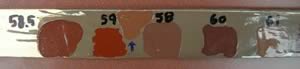
Before Design 1st was brought on board the project, Hershey’s mobile marketing firm, Gearwerx had been busy developing print graphics for everything from billboards to chocolate bar wrappers. The Design 1st challenge was to first get agreement across the stakeholders as to what particular shade of brown was the right one, then ensure that the selected colour could be matched across the printed and painted materials.

Here’s the skinny.

Start this process as early in the program as possible, especially when it’s only a matter of weeks from start to finish. Colour can be an emotional and highly subjective topic across the design and client teams, and colour-matching of the specified and sampled colour rarely gets done correctly the first time.

Colour is a manufactured item, so it has tolerances that are technical, using the CIE L*a*b* Scale, but the visual evaluation of colour matching should also accommodate some tolerance. The project team was looking for a cohesive look of CMYK-printed vinyl and fabric from different suppliers, with a high-gloss paint. The differences in gloss and texture showed a visible variation, but the hue, value, and chroma of the chocolate browns worked together for a great overall image.

Gearwerx-Hershey-Chocoloate-Truck

To specify and communicate colour visually, there are colour standards that are widely used and available, Pantone (www.pantone.com) being probably the most popular for printed colour, and RAL (www.ralcolor.com), which has a long history, initially started to serve the European paint industry.

Once there is agreement on colour(s), it takes time and effort to get sample colour swatches prepared, especially for textile, or for custom paint matching (if it’s required). The print supplier may have to recalibrate their printers’ colour profile a few times to get the Pantone specified artwork to match the actual Pantone colour swatch. For paint, each manufacturer will have a swatch chart of colours available, and often some of them will be cross-referenced to the RAL or Pantone standard.

Choosing the Right Color:

If you can specify a colour from the supplier’s chart, then the expense, time, and risk of mismatch of a custom colour match will be avoided. For Design 1st during “getting the colour of chocolate right…fast, there were some learnings. For the chocolate coloured paint that was applied to the fiberglass structure, backpack chocolate bars, and four large coolers, a good match was completed, but the supplier did not have the material in stock to prepare the quantity of paint required. This was discovered late on a Friday, so new stock was at least three days away.

Shipping Paint

Don’t expect a delivery or courier service to carry paint, as it is classified as a hazardous material. An alternative local supplier of the same paint/colour system was located, but a sample of the same paint spec turned out differently. For Hershey, visual approval by the clients was required (and is usually the case), and for the chocolate colour there were parties in Montreal and Toronto to send samples to for sign-off. Fortunately the colour mismatch was minor enough to be approved, but this experience reinforces the suggestion to get the colour program going early in the project.

OK. Now you can think about the taste of “milk chocolate”, which is where you really wanted to go anyway, right?

Drop by Design 1st for your free Hershey chocolate sample and talk to us about your next project. You can reach us at 1.877.235.1004 or info@design1st.com/a>.

Share

Have a new product idea?

We can help take you from idea to design, prototyping, and volume manufacturing.

Published on: February 25, 2023

Building an Internet Connected Product: Webinar

Building an Internet Connected Product: Webinar

27 Years Experience

75+ Design Awards

1,000+ Manufactured Products

From Idea to Prototype in as Little as Six Weeks!
Ready to Start?

Did you know that the fastest growing hardware product category is called the “Internet of Things” (IoT)?

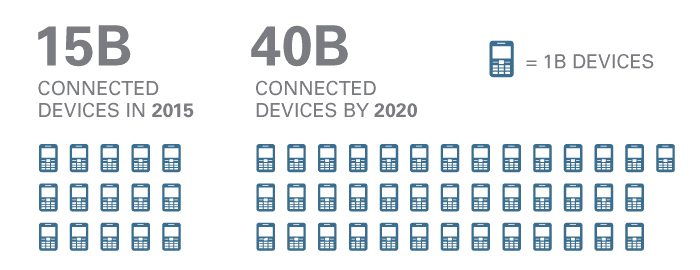
A recent 2015 Gartner research study estimated that by the end of 2015, 4.9 Billion IoT products will be in use, up 30% from 2014 – and will reach 25 Billion IoT products by 2020. This spells out a big opportunity for entrepreneurs, start-ups and established companies looking to develop an IoT Product.

2020-iot-connected-devices

There is currently an influx of these IoT products hitting the market which includes wearable fitness products, smart watches, home automation, connected security devices and medical equipment – to name a few.

These new IoT products are meshing together the traditional boundaries of industrial design, mechanical engineering, software programming, electronics, wireless networking and UX design. And along the way, creating a series of challenges and oversights for companies developing these IoT products.

Over the past year, we’ve been working with our partners Macadamian and Electric Imp to explore, develop and test the opportunities that IoT product development presents. Recently we sat down, and begin to explore the opportunity of sharing our in-depth IOT product design insights in the form of a webinar! To do this we put together an expert panel that covers all facets of IoT knowledge and included:

  • Kevin Bailey, President, Design 1st
  • Tony Hooper, Director of Engineering, Macadamian
  • Geoff Parker, Director of Healthcare Software Development, Macadamian
  • Hugo Fiennes, CEO, Electric Imp
  • Oliver Hutaff, CFO, Electric Imp

Watch a recording of the Webinar below:

Share

Have a new product idea?

We can help take you from idea to design, prototyping, and volume manufacturing.

Published on: February 25, 2023