Category: Blog

Changing Role of Industrial Design

Changing Role of Industrial Design

27 Years Experience

75+ Design Awards

1,000+ Manufactured Products

From Idea to Prototype in as Little as Six Weeks!
Ready to Start?


Brian Ling – the founder, blogger and mastermind behind one of our favorite industrial design blogs http://designsojourn.com put together an awesome presentation on the changing role of industrial design, way back in 2007. And it’s still relevant today.

Share

Have a new product idea?

We can help take you from idea to design, prototyping, and volume manufacturing.

Published on: February 23, 2023

The Future of Prototyping: 3D Printing

The Future of Prototyping: 3D Printing

27 Years Experience

75+ Design Awards

1,000+ Manufactured Products

From Idea to Prototype in as Little as Six Weeks!
Ready to Start?

Growing interest in “3D-Printing” has created new business models and new ways to think about designing products.

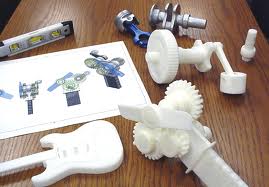
Prototyping is an integral part of the product development process and recent advancements in technology have created a variety of options for designers to make objects from 3D model data. This rise in innovation has been attributed to new techniques and methods within “additive manufacturing” – a process whereby 3D prototypes are created by joining materials layer upon layer, as opposed to “subtractive manufacturing” methods such as machining from solid blocks leaving waste materials when finished.

While a variety of competing technologies within additive manufacturing such as SLA (stereolithography), FDM (fused deposition modeling) and SLS (selective laser sintering) offer the ability to fabricate prototypes, 3D  Printing has risen in popularity based on its speed, low cost and ease of use.  Combined with the availability of free 3D design software such as Google Sketch-up, 3D printing has created a new demand for prototyping services for hobbyists and DIY enthusiasts who have created online communities to make their own action figures, knickknacks and simple gadgets.

While this new demand for 3D-Printing has awoke the spirit of creativity for inventors, the product designers and industrial manufactures have also turned their attention to this new technology. 3D-Printers and the 3D printing material offers design teams the ability to make precise prototypes using a variety of colors, materials and geometric shapes. This continues to push forward the concept of product development virtualization, allowing teams to work with clients remotely yielding market-ready prototypes made to exact specifications.

With the help of a product design team entrepreneurs and inventors alike now have the ability to take a napkin sketch idea to market without ever leaving the comforts of the desktop at home.

Share

Have a new product idea?

We can help take you from idea to design, prototyping, and volume manufacturing.

Published on: February 23, 2023

What is Industrial Design?

What is Industrial Design?

27 Years Experience

75+ Design Awards

1,000+ Manufactured Products

From Idea to Prototype in as Little as Six Weeks!
Ready to Start?


Here’s a great video compilation of quotes from design luminaries giving their interpretation of design. It reflects what goes through the heads of designers when engaging in the product development process – truly inspiring.

To me Design is………

Share

Have a new product idea?

We can help take you from idea to design, prototyping, and volume manufacturing.

Published on: February 23, 2023

Patent Support to Protect New Product Ideas

Patent Support to Protect New Product Ideas

27 Years Experience

75+ Design Awards

1,000+ Manufactured Products

From Idea to Prototype in as Little as Six Weeks!
Ready to Start?
product-design-patenting

How-to-Guide for Do-it-Yourself Patent Research

Hiring a lawyer is a critical part of the new product idea protection process, but being able to read patents yourself is also important!

Here is a simple guide to help you read patents.

What is a Patent?

On a high-level, a patent is a subset of legal protection for intellectual property. Grouped with patents are Trademarks and Copyrights; however, for hardware and physical products, patents are most relevant

Although definitions of patents very, the concise description below, sums it up well:

“A patent is an intellectual property right provided by the government, giving an inventor sole usage of their invention for a limited amount of time; 14 to 20 years, depending on the type of patent. Patents are given in exchange for public disclosure of the invention, as well as payments made to the government.”

Importance of Patents

Patents help improve the value of technology developments through allowing a firm to deploy patent based strategies. The result is an exclusion of competitors, higher profit margins and a mechanism for generating licensing revenue. For startups, patents will both help with external funding and allow potential investors to access tangible evidence of what excludes you from competitors.

How to Read a Patent

When trying to read a patent, many individuals get caught up in the legalize. The key point to remember is you don’t need a four year degree in IP (Intellectual Property) to read a patent and extract information.  The key is knowing what to look for and what to skip past. In reality, it can take hours or days to “fully” evaluate a patent; however, with time precious eHow put together an excellent summary of how to read a patent effectively. The main points are highlighted below; however, if you’re short on time, skip to Step 5:

Step 1: Skip the title

The title of the patent can be just about as general as the author wants; for example it often describes a product being improved on – not a new invention.  For example, a patent titled “Virtual Desktop Manager” does not actually patent virtual desktops; it covers a particular set of features of a specific virtual desktop management implementation. Effectively, the patent may set the context but not the content.

Step 2: Skip the drawings

Patent drawings are mostly similar to quick sketches of a product concept except that they cost in the area of $5,000.  These drawings are generally impossible to read and only have a small bearing on the enforceability of the patent.

Step 3: Skip the abstract

In other fields, the abstract is your best friend: a short, direct summary of the major points of a paper.  Patent abstracts are at best meandering and hard to read, and at worst deliberately misleading. The best suggestion is to skim over it and not make concrete opinions as to the validity of the statements made.

Step 4: Skip the specification

Essentially the specification is a detailed description that does not clearly separate what’s, new, novel and invented from what is common knowledge. The background and field of the invention are usually not relevant and the description of the drawings is generally incomprehensible and difficult to comprehend.

Step 5: Find the independent claims and read them

The independent claims are the only part of the patent that have any actual legal enforceability.  They are usually short, one sentence or so, difficult to parse in detail but skimming them over will bring both the context and content of the patent into view.

Step 6: Toss the dependent claims

Any claim that starts with “The _____ of claim _____” is essentially a refinement or detail with narrower scope than the parent claim, meaning if the original independent claims provided no value and meaning to you, these will not as well.

Step 7: And that’s it!

Getting sucked in to a patent dispute is no good for any entrepreneur.  By the time it’s done, you may be able to recite 40 pages of  “patenteese” by memory, but if all you need is a quick summary, just cut directly to the independent claims.  You’ll be done in a minute.

Over all patents are critical to the success of startups, entrepreneurs and existing firm exploring new product avenues. They can provide legal protection, stimulate investor confidence and reduce competitive pressures.  They key is to know what they can do for you. If you thinking of filing a patent or looking for legal advice regarding IP contact our partners at Hazlolaw.

Share

Have a new product idea?

We can help take you from idea to design, prototyping, and volume manufacturing.

Published on: February 23, 2023

The 2010 InfoComm Expedition – Las Vegas, Nevada

The 2010 InfoComm Expedition – Las Vegas, Nevada

27 Years Experience

75+ Design Awards

1,000+ Manufactured Products

From Idea to Prototype in as Little as Six Weeks!
Ready to Start?
lasvegasinfocomm


Year after year, the Audio Visual marketplace enthusiastically embraces the InfoComm tradeshow to make their purchasing choices, network with specialists and enhance their skills. The 2010 InfoComm – Las Vegas tradeshow provided a terrific platform for this industry interaction with over 900 exhibitors and 300 educational seminars. The thousands of Audio Visual (AV) professionals that converged for the tradeshow embodied innovation, showcasing AV technologies that pushed the boundaries of how users interact with conventional products.

Design 1st staff enjoyed the excitement at InfoComm 2010, taking the opportunity to checkout new cutting-edge technologies and follow up with former clients. These included self financed Ottawa agents and inventors along with startups and large international enterprises.

GestureTek and Christie Digital were two clients that pleased the crowd with interactive demonstrations featuring new motion, touch and visual technologies. GestureTek’s booth featured the GestTable™, a 42″ LCD multi-touch surface computing solution, along with the new GestDisplay™, a 70″ turnkey freestanding multi-touch unit. While Christie Digital presented three interactive gaming and touch screen demonstrations designed to deliver powerful audience engagement for broadcast, gaming, entertainment and signage applications.

“Our hardware innovations nicely compliment our deep insight into all forms of advanced display and digital signage applications, particularly multi-touch, immersion, 3D vision, mobile device interactivity, object recognition, motion and object tracking, and even face tracking,” says Vincent John Vincent, Co-Founder and President of GestureTek.

GestureTek’s award-winning interactive multi-touch surface computing technology delivered quite the “wow” factor through giving ‘Minority Report-style’ computer interactivity to tables, counters and panels.  With multi-touch displays, users simply point their fingers immediately above (or directly on) the surface, then make rotating or dragging motions to control dynamic multi-media content, access product information, view advertising, play games, create special effects or manipulate images.

“At Christie, our innovations are driven by a constant focus on providing exceptional image quality – to entertain, engage and embrace the world through visual communication.” said Jack Kline, president and chief operating officer, Christie Digital Systems USA, Inc.

Christie is consistently setting standards by being the first to market some of the world’s most advanced projectors and complete system displays. Christie’s legacy carried on at the InfoComm 2010 tradeshow, with the biggest attention grabber being the visual Microtiles display system.  Microtiles is the new digital canvas, which has been used in a variety of distinctive settings including Expo 2010 Shanghai, national television broadcasts and the NASCAR Hall of Fame. The MicroTiles feature jaw dropping, in-your-face resolution for up-close distant viewing, brilliant colors, true blacks and a consistent stable image.


Share

Have a new product idea?

We can help take you from idea to design, prototyping, and volume manufacturing.

Published on: February 23, 2023

2010 Ottawa Technology Venture Challenge

2010 Ottawa Technology Venture Challenge

27 Years Experience

75+ Design Awards

1,000+ Manufactured Products

From Idea to Prototype in as Little as Six Weeks!
Ready to Start?


Ottawa’s hi-tech community gathered for the 10th annual Technology Venture Challenge (TVC) on May 12, 2010. Started in 2000, the TVC is Ottawa’s most prestigious competition for encouraging post-secondary science students to act on their innovative ideas. From a starting point of over 20 teams in January, the event featured three finalist student teams, from Carleton University and the University of Ottawa, presenting their business case to an audience of technology executives, academics and local industry experts including Ottawa Mayor Larry O’Brien.

Design 1st president, Kevin Bailey was among a panel of judges at the TVC awards who posed questions to the teams and decided on the winners. Aurora Coral’s sustainable coral production method took home the top prize of $10,000 with TWPC’s small wind turbine system and Aduvo’s Smart-Home System receiving the runner up prizes of $5000 each. The TVC also presented a $5000 People’s Choice award for the first time in the events history. Design 1st was proud to fund this award based on an audience vote and present it to TWPC’s small wind turbine system.

This year’s TVC challenge is a significant milestone for us that testifies to the support and hard work of our sponsors and volunteers,” said Ken Charbonneau, a partner at KPMG LLP and chair of the event’s board of directors

In celebration of the 10th anniversary of the event, sponsors, volunteers and TVC founders were recognized with small gifts and a commemorative video was presented to all who were in attendance. The video, developed by In Motion and Design 1st, highlighted the past successes of the competition, technological innovation and the entrepreneurial passion of past students, CEO and business mentors and the many volunteers involved.

Building relationships with the business community, mentoring potential leaders and fostering student entrepreneurship are main goals of the TVC competition.  Through the hard work of event sponsors and volunteers, everyone involved is looking forward to the commercial success of this year’s young entrepreneurs.

For more information on the TVC annual competition, past winners and successful ventures visit: http://techvc.org.

Share

Have a new product idea?

We can help take you from idea to design, prototyping, and volume manufacturing.

Published on: February 23, 2023

Welcome to the Design1st Blog

Welcome to the Design1st Blog

27 Years Experience

75+ Design Awards

1,000+ Manufactured Products

From Idea to Prototype in as Little as Six Weeks!
Ready to Start?


“Outstanding products are created when engineers and artists work side by side.”

Kevin Bailey, Founder & President

At Design 1st our artists and engineers work together using the latest tools and technology to create innovative, market leading products for our clients. The range of products, clients and ideas we have worked with over the years have given us a breadth of experience and creativity.  Moving forward we have expansion plans for a  major presence in each of the metropolitian areas across Canada including; Vancouver, Montreal, Ottawa and Toronto.

This blog has been designed to highlight our national presence, product design experience and creative design ideas. In collaboration with Twitter and Facebook our blog will continue to update readers on the changing trends in the Canadian start-up, design and product development industries.

Stayed tuned for more updates.

Design 1st

Share

Have a new product idea?

We can help take you from idea to design, prototyping, and volume manufacturing.

Published on: February 23, 2023

Three Reasons Why Cannabis Vaporizer Are Soaring

Three Reasons Why Cannabis Vaporizer Are Soaring

27 Years Experience

75+ Design Awards

1,000+ Manufactured Products

From Idea to Prototype in as Little as Six Weeks!
Ready to Start?


Legalization of cannabis has made consumers and entrepreneurs hungry for more than just munchies – they want new innovation!

The result? A flurry of R&D activity to bring new cannabis tech hardware devices to market. The most popular devices are vaporizers  – those handheld devices that heat up marijuana flower, oil or extracts into vapor that can be consumed.

Here are three reasons driving the investment into new cannabis vape designs and why this trend is set to continue for a while.

1) Vaping cannabis is becoming more popular than smoking

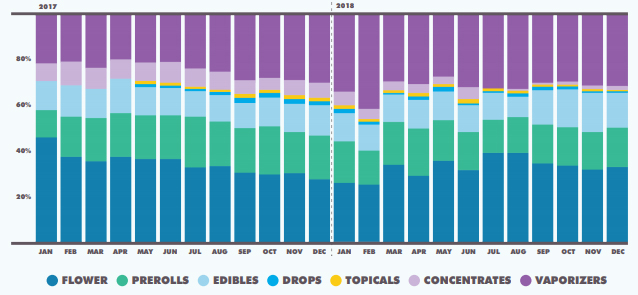
As the legal cannabis market matures, health-conscious consumers are turning to vape devices as their preferred method for consumption. This choice is reflected in the vape sales of mature cannabis markets like California and Colorado where upwards of 30% of all sales are in the vape category, a trend that is forecasted to increase.    The chart below shows the growith in vaporizers as the preferred method for cannabis consumption across the US.

In newer Cannabis markets like Canada, Michigan and Israel the vape market is still you young and ready to grow. Leaving lots of opporunity for vape technology.

The challenge for vape manufacturers is to continue to evolve their offerings to the growing market of cannabis vape consumers. This means moving away from the traditional e-cigarette pen like form factor and exploring new user-friendly designs.

cannabis-consumption-stats

2) Cannabis vape technology is evolving, fast

The traditional e-cigarette style cannabis vape is fast becoming a relic of the past. New vapes designs are emerging from companies across the globe. They include a host of new features including accurate dosages, disposable cartridges, bluetooth connected apps, biometric tracking and tamper-proof safety designs.

The result is a constant churn of cannabis vape tech with new devices launching often. This creates an opportunity for new vape developers to enter the cannabis market. Examples of global vape technology that are starting to take off right now include:

Vape DeviceCompanyCountryCategory
DosistSanta Monica, USADisposable Vape Pen
Tablee TechnologiesToronto, CanadaMedicinal Cannabis Vaporizer

There are many more vapes in product development now as the market opportunity is huge and set to grow for years to come.

3) Cannabis vape device companies partner with cannabis producers

Cannabis regulations for device manufacturers are a work in progress. This creates a big risk for entrepreneurs and companies looking to invest in the Cannabis tech space. For example the most valuable public cannabis company in the US, Curaleaf got in hot water by going to market with disposable vape pens not approved by the FDA.   

To limit risk in cannabis tech hardware development, the solution is to separate cannabis cultivation and production away from consumption devices.  This allows companies to specialize in either hardware or cultivation and ease the regulatory burden.

Examples of cannabis hardware and cultivation companies who have recently partnered together include:

  • Organigram Holdings (Cannabis Producer) and Feather Company (Vape Hardware)
  • Pax Labs (Vape Hardware) signs agreement with 4 Canadian cannabis producers ( Aphria, Aurora, Organigram and Supreme Cannabis)
  • Ace Valley (Disposable Vape Hardware) and MediPharm (Cannabis extract producer)
  • Green Tank (Vaporizer Hardware) and Up Cannabis (Cannabis producer)
Share

Have a new product idea?

We can help take you from idea to design, prototyping, and volume manufacturing.

Published on: February 23, 2023

How to Use TikTok to Research, Design, and Sell New Product Ideas

How to Use TikTok to Research, Design, and Sell New Product Ideas

27 Years Experience

75+ Design Awards

1,000+ Manufactured Products

From Idea to Prototype in as Little as Six Weeks!
Ready to Start?
tiktok-header-768x384

TikTok is the ultimate app for both consumers and businesses to unleash their creativity and showcase their products in a fun and engaging way. With a user base of over a billion, TikTok offers endless opportunities to reach and interact with a massive, diverse audience.

The app has been often misunderstood as just an app for Gen Z and the younger generation, but this line of thinking will only hurt potential growth and opportunity for any brand and business. Whether you’re a casual user or a business looking to promote your brand, TikTok provides a platform to express niche interests, discover new trends, and connect with people from all over the world.

Here are the major trends in which TikTok is changing the way we design, market, and distribute consumer goods.

TikTok Trends:

Common TikTok FAQ's:

tiktok-products-768x384

Niche Products can Find Large Audiences

TikTok’s algorithm for curated content is a game-changer for finding different brands in a short amount of time. Instead of only seeing content from the brands, people, and hashtags people follow, TikTok dynamically curates content down to the unique interests. This means that no matter what niche it is, from Dungeons and Dragons enthusiasts to 3D printing artists, content will be tailored specifically for each user’s interest. 

For new product brands, this is a golden opportunity! By partnering with influencers, tagging distinct and trending keywords, and efficiently promoting products, you can reach micro-niche audiences and showcase your products in an organic way. Even in a crowded app space, TikTok’s algorithm ensures that all new products can find their perfect match and reach the ideal product-market fit.

tiktok-influencers-768x480

Influencers Help with Products Going Viral

Building your brand on TikTok is just like any other social platform — it takes time, creativity, and a dash of luck to see your unique content take off. But there’s another way to skyrocket your brand to success: tapping into the massive and engaged networks of influencers!

TikTok influencers can drive massive awareness for new products faster than ever before. What’s the secret? TikTok influencers already have an established following, and can engage their audience like no one else. Followers can participate in challenges, join in on popular trends, post video duets, join TikTok live streams, and add in on the conversation.

Influencer marketing is becoming a must-have for any new product launch, and TikTok influencers are at the forefront of this trend — so much so that they have launched their own Marketplace to search for influencers and creators.

tiktok-trending-768x415

Capitalizing on Trends for Product Ideas

Trends such as viral sounds and popular hashtags are a tremendous part of how TikTok videos and brands gain widespread traction. Just take a quick search for #TikTokmademebuyit and you’ll be amazed at the hundreds of products that have gained a massive following. From high-tech vegetable choppers to smart coffee tables, these products are driving thousands of searches on Google and Amazon and often selling out fast!

If you want to stay ahead of the game, you can use TikTok’s Trend Discovery Tool to know what’s on your audience’s mind, what’s hot in your industry, and what’s going viral in real-time. As a product designer, you can get valuable insights into consumer product interests and solidify your product-market fit.

Here’s a bonus tip! Take the time to read through the comments section on viral product videos. You’ll understand how products could be improved and what features consumers love. With the Trend Discovery Tool and strategic capitalization on trends, your product could be the next big thing!

tiktok-feedback-768x481

Post-Purchase Feedback can Improve Products

TikTok calls the impact its platform is having on consumer’s buying journey the “infinite loop“, and for good reason. Consumers can discover, research, review, and participate in product conversations at any stage of the process.

For new products, the value of TikTok doesn’t stop after making the sale. Gather post-purchase insights, engagement, and feedback to continuously improve your product and make modifications. Brands can take advantage of TikTok’s video reply feature to directly respond to individual comments, thus sparking more conversation with consumers and building more meaningful engagement.

Common TikTok FAQ's

tiktok-sell-768x480
How to sell products on TikTok?

Ready for your brand to take-off? Firstly, you need to create a TikTok account and set up a business profile. You can check out TikTok’s business landing page to learn more about different marketing strategies for your brand.

Utilize TikTok’s e-commerce features like the shopping features, which allows you to add links to your products in your video descriptions. You can also add product tags to your videos to make it easier for users to find your products.

Running TikTok ads could be a great way to reach a large audience quickly. You can use the platform’s targeting features to reach the right people based on interests, behaviors, and demographics.

Keep creating captivating content, engage with your target audience, and track sales and metrics to see what’s working and improve on your marketing strategy.

How to add products to your TikTok shop?

After being verified as a business account and completing all the requirements for your TikTok Shop, you can now add your own products.

To add products to your TikTok Shop, go to your profile and tap the three horizontal lines in the top right corner, then tap “Manage Shop”. Tap “Add Product” to create a new product. Enter your product’s details, such as the product name, description, price, and product images. Make sure to also add the link of where to buy your product, and select the categories that best fits your product.

Review the information you entered and make any necessary edits. When you’re ready, tap “Publish” to make your product live. They will be sent for review and won’t be added to your videos until they have been approved.

After being approved, you can now use the shopping feature in your TikTok videos to showcase your products and link them to your TikTok Shop. Note that TikTok may have limitations on the types of products that can be sold through its platform.

How to promote Amazon products on TikTok?
To promote Amazon products on TikTok, you first need to be in Amazon’s Affiliate Program and then you can earn commission on any sale made through your unique referral link. Search for Amazon products that are relevant to your page and target audience that you believe will resonate well on TikTok. From there, you can create engaging videos to showcase highlights of the products. On each video, you can refer to your profile bio, which will have your Amazon storefront link.
tiktok-faq2
How to find trending products on TikTok?

There are numerous ways to find trending products on TikTok, and you can add your brand to the hype train! One way to keep up with the trends is utilizing TikTok’s Trend Discovery Tool to see what kind of products are going viral, and what are the hottest hashtags being watched and searched. With this tool you can also find which TikTok creators are trending, providing you with ideas for which influencers to partner with when it comes to your niche. There are also popular sounds that go viral which you can use as new ways to showcase your products for your own page.

How to link products on TikTok?

After setting up TikTok Shop or TikTok Storefront, you can create organic TikTok videos that contain Product Links. To create a video with a product link, first create a video on the TikTok app.

​From the Post module, tap “Add Link”, and then select “Products”.

​From the Showcase module, tap “Add” to select the product you want to feature in the video. ​Enter a Product name and tap “Add”. ​Repeat this process for each Product Link you want to add to your video. Finish creating your video and post!

Share

Have a TikTok product idea?

We can help take you from idea to design, prototyping, and volume manufacturing.

Published on: February 23, 2023

10 Questions to Ask Before Choosing a Manufacturer for Your Product

10 Questions to Ask Before Choosing a Manufacturer for Your Product

27 Years Experience

75+ Design Awards

1,000+ Manufactured Products

From Idea to Prototype in as Little as Six Weeks!

Ready to Start?
design-manufacturing

“Choose a manufacturer as you would choose a partner, with the same level of care and attention to detail. The right manufacturer can build your product and become an invaluable asset to your business.”

When it comes to bringing a new product to market, one of the most important decisions you will make is choosing the right manufacturer. The manufacturer you select will play a crucial role in the success of your product, so it’s important to take the time to find the right one. At Design 1st, we assist clients throughout the entire process of selecting a manufacturer. While some clients may choose to find options independently, they often rely on us for feedback and support.

To help inventors, startups, and established businesses avoid the pitfalls of choosing the wrong manufacturer, we put together 10 key questions to answer when before choosing a manufacturer.

1) What is your experience with my product type and materials?

It’s important to work with a manufacturer with experience in your product category, as they will be better equipped to handle any challenges that may arise during the production process. For example, if you building an inflatable plastic product you want to make sure the manufacturer has deep experience in this space to guarantee product quality.

2) Can you provide references for other products you manufactured?

Ask for references from other clients and reach out to them to ask about their experience with the manufacturer. If this is not possible,  do online research to flag any potential negative reviews or feedback.

Face mask prototype product samples

3) What is your manufacturing production capacity?

Manufacturer production capacity refers to the maximum amount of products a manufacturer can produce within a given period. This can be expressed in terms of the number of units produced per day, week, or month or in terms of the total production time required to produce a specific number of units.

Manufacturer production capacity can be influenced by a number of factors, including the type of equipment and machinery used, the availability of raw materials and components, the workforce’s skill level, and the manufacturing process’s efficiency.

It’s important to understand a manufacturer’s production capacity when you want to work with one. It will help you determine whether the manufacturer can meet your production needs and, if not, help you plan accordingly. For example, if you need to produce 5,000 units in a month and the manufacturer can only produce 3,000 units in that time, you will need to look for another manufacturer or adjust your production plan.

design-1st-chinese-manufacturing-partners
The Design 1st team meeting clients and manufacturer in China

4) Can you provide samples of products from your manufacturing?

Ask for samples of the manufacturer’s previous work to ensure they have the capability to produce the quality of the product you require. More important is getting samples of your product’s production process and materials.

At Design 1st, we go through several processes to dial in your volume manufacturing run. This includes developing a “pre-production” prototype that uses the exact manufacturing process to identify any risks. Another option is to travel to the factory, meet with your manufacturer, walk the shop floor, see samples, and ask questions.

5) What is your lead time for new product production runs?

Find out how long it will take for the manufacturer to produce your product and ensure it aligns with your business plan. If manufacturing in China, consider national holidays like Chinese New Year and any component supply issues you may face. If you have a hard deadline to have a product ready for market, start working with the manufacturer at least nine months in advance. The last thing you want is to rush!

To ensure manufacturing quality, you need to follow a strict quality control process that your manufacturer agrees to. At Design 1st, we do this by setting up a low-volume production run, where initial products get manufactured, assembled, and shipped to our office for review. For complicated builds involving connected electronic products, or products with dozens of parts, we prefer a visit to the factory and invite our clients to join us.

4-stage-product-development-process
Example of Design 1st Product Development Timeline Chart

6) What are your minimum order quantity and unit pricing?

Find out how many units the manufacturer requires you to order at a minimum and ensure it is feasible for your business. When engaging with manufacturers directly, inventors and startups will often face steep costing for low-volume production runs. Or, in many cases, the manufacturer will flat-out refuse to work with you beyond a certain minimum quantity.

Working with an established partner, like Design 1st, can help give you leverage during negotiations on minimum order quantity pricing.

7) What are your manufacturing pricing model and service offering?

Ask about the manufacturer’s pricing structure and service offering. Do they include product assembling? Are there minimum order quantities? Do they have a strong product quality control process? How is shipping handled? You want to understand the entire financial picture, so there are no surprises.

For example, when manufacturing injection plastic parts, you will need to pay for tooling ($10,000 – $100,000+) to get the mold made for your parts, plus costs for the manufacturing run and shipping.  The complexity of your product (i.e. the number of parts) will impact the total costs related to manufacturing, assembly, and delivery of your product.

chinese quality inspection
Design 1st VP of Manufacturing, Dave Ingram conduction a quality control audit in a client's manufacturing facility

8) What is your manufacturing quality control process?

A manufacturing quality control process is a series of steps and procedures a manufacturer takes to ensure that its products meet certain quality standards and specifications. These steps typically include inspecting and testing the materials and components used in the production process, monitoring the manufacturing process itself, and testing the finished product before it is shipped to customers.

The specific steps in a quality control process can vary depending on the manufacturer and the product being produced. Some common steps include:

  • Incoming inspection of raw materials and components to ensure they meet the required specifications
  • In-process inspection of products during production to ensure they are being manufactured to the correct specifications
  • Final inspection of finished products before they are shipped to ensure they meet all requirements
  • Testing of finished products to ensure they meet performance and safety standards
  • Keeping detailed records of all inspections and tests to ensure traceability and accountability.

A quality control process aims to identify and prevent manufacturing defects and non-conformances before the product reaches the customer.

Design 1st helps support clients by creating a custom quality control process that reviews products as they are manufactured, assembled, and packaged for the market.

manufacturing-assembly-quality inspection
Design 1st VP of Manufacturing Dave Ingram conducting a quality control audit

9) What are your payment terms?

Ask about the manufacturer’s payment terms and ensure they align with your business plan.  Do you have the funding for tooling and a large volume production run? If not, you will want to negotiate payment terms that align with your needs. Working with a manufacturing partner with strong existing relationships with suppliers and manufacturers can often provide better payment terms both in the short and long run.

10) What is your communication process?

Find out how the manufacturer will communicate with you during the production process and ensure it aligns with your needs.

By asking these questions, you will be able to select a manufacturer that is capable of producing a high-quality product, within your budget and timeframe, and that is a good fit for your business. Remember that good communication and transparency with the manufacturer will be key for a successful partnership.

By asking these questions, you will be able to select a manufacturer that is capable of producing a high-quality product, within your budget and timeframe, and that is a good fit for your business. Remember that good communication and transparency with the manufacturer will be key for a successful partnership.

tRemote meeting with manufacturing team
Remote meeting with manufacturing team to review part samples
Share

Have a new product idea?

We can help take you from idea to design, prototyping, and volume manufacturing.

Published on: February 23, 2023