• Services
  • Portfolio

Category: Blog

How will 5G impact IoT product development?

How will 5G impact IoT product development?

27 Years Experience

75+ Design Awards

1,000+ Manufactured Products

From Idea to Prototype in as Little as Six Weeks!

Ready to Start?

Ontario’s IoT product development industry got hit with some exciting news Monday: a $400M research boost to create, the super-fast, next generation of 5G wireless networks.

Termed the “5G Corridor,” the public-private partnership plans to make Ontario a contender on the global stage for IoT development through access to a pre-commercial 5G network. 

But to understand how the 5G announcement will impact product development now and into the future, we need to answers some questions:

Table of Contents

What is 5G Wireless Technology?

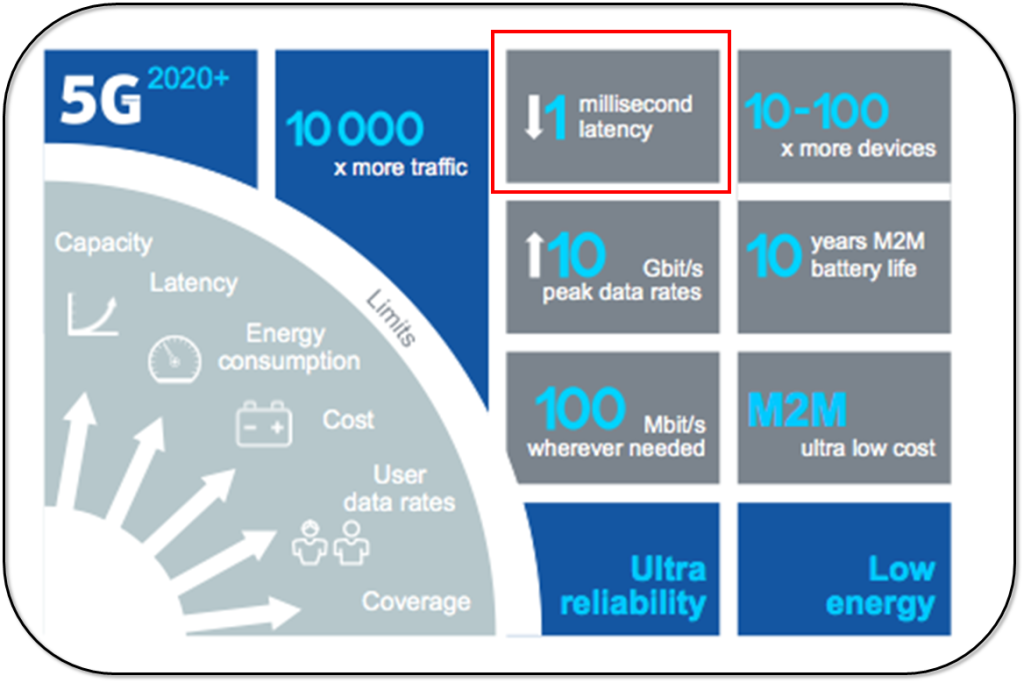
5G is not just a step up from 4G – it’s on another floor.  It provides low end-to-end latency, the ability to connect to thousands of devices at once and blazing fast speeds that can move computing and processing power away from devices and into the network.

This means future wireless IoT devices can be much smaller, sip power and scale rapidly.

Plus, 5G will become the underlying wireless infrastructure to support autonomous vehicles, VR/AR headsets and smart cities.  So, it’s not just faster download speeds: 5G will be a game changer for many industries including hardware products and IoT solutions.

“5G is the gateway to the future and we are just on the brink of this technological revolution,”  Innovation Minister Navdeep Bains said Monday at a funding announcement in Ottawa.

But to truly understand 5G, it’s important to look how far we’ve come

“The 2G networks were designed for voice, 3G for voice and data, and 4G for broadband internet experiences. With 5G, we’ll see computing capabilities getting fused with communications everywhere, so trillions of things like wearable devices don’t have to worry about computing power because network can do any processing needed,” Asha Keddy VP IoT (Intel)

Source: IEEE
What is the goal of Canada’s new “5G Corridor"?

Officially titled the ENCQOR, Evolution of Networked Services through a  Corridor in Quebec and Ontario for Research and Innovation, the new network infrastructure test bed allows startups,  government and schools to experiment with new 5G-enabled products and services.

The goal of this 5G Corridor is to provide an interim step while Canada’s three major carriers (BCE Inc., Rogers and Telus) ready themselves for a 5G rollout in two to three years.

Access to the precommercial 5G Corridor network will allow startups, companies and government to execute on visions for new IoT devices and services in a real-world environment. This will help Canada remain competitive and continue to develop global IoT solutions that scale and avoid obsolescence in the short-term. 

Will Canada be the first to rollout 5G?

No. South Korea, Japan and China are all in the race to deploy 5G networks sooner and U.S. carriers Verizon and AT&T are racing to release a small 5G rollout by the end of 2018.

In fact South Korea was the first country to debut the power of 5G networks to the world at the 2018 Pyeongchang Olympic Winter Games where they used 5G for self-driving cars and allowed viewers to access multiple camera from events, including virtual reality content.

5G network equipment at 2018 Pyeongchang Olympics
What is holding Canada back from adopting 5G sooner?

The one major hurdle is the available spectrum, referring to the band of radio waves that carry cellular services. 

5G requires a new spectrum allocation that no carrier has access to right now. The Canadian federal government is responsible for managing spectrum as a public resource and has not opened up the auction for Carriers to bid on the new spectrum bands.

According to the Globe and Mail, “The government is close to releasing final rules on an auction for radio waves in the 600-megahertz frequency, which is low-band spectrum that will help provide wide coverage in 5G networks, and it has an active consultation under way on millimetre-wave spectrum. But spectrum consultations can take months or years to wrap up and there still is no firm timeline of when auctions will be held or even in which order the spectrum will be released or reassessed”


And similar to the US, South Korea and Japan, once the government holds a spectrum auction Canada’s carriers can start rolling out their 5G networks. But with no timeline in sight, we are still a few years away from the rollout. 

In the meantime, carriers are beefing up networks, radio technology, and cell sites to accommodate increased traffic and bandwidth over 4G LTE networks.

What is the impact of 5G on IoT product development?

Right now, there will not be much change. Existing IoT devices and those in development today rely on a mix of wireless protocols each with their own benefits. These include:

  • LoRaWAN
  • Cellular (4G LTE CAT-M)
  • Cellular (4G LTE NB-IoT)
  • SigFox

We have experience using many of the above networks in IoT device development for Wide Area Network (WAN Applications). For example, we are developing a GPS anti-theft bike tracking product for a client that that leverages the 4G LTE CAT-M cellular network to relay data from the device accelerometer to the user’s app. 

But even with the modest speed, coverage and latency gains in the existing 4G LTE protocols, we still cannot take advantage of all the opportunities 5G presents.

So, while we await the gradual rollout of 5G we continue to develop IoT devices for customers around the globe using a mix of existing wireless protocols. The ones we choose are based on use-cases and trade-offs. The image chart below shows how we think about IoT devices with respect to wireless networks.

IoT device category map

As the chart above shows, right now we select IoT wireless protocols based on project requirements for the product or solution. We do this by thinking about 3 groups of networks: Personal, Local and Wide. These inputs allow us to select the optimal wireless network configuration, electronics components and battery power to develop an effective device that will not go obsolete in the near future.

But with the 5G Corridor, and countries around the globe getting ready to adopt the 5G, we are starting to envision solutions that take advantage of the high-bandwidth, low-latency network.

The evolution of the IoT will be very closely linked to the evolution of the wireless world. Changes in the WAN as seen with 4G IoT extensions and the emergence of 5G, changes in the LAN and PAN with recent updates to Bluetooth and adoption of other wireless technologies will continue to provide new challenges and opportunities to hardware developers.

We here at Design 1st are committed to closely tracking these developments to remain at the cutting edge of technology.

Share

Have a new product idea?

We can help take you from idea to design, prototyping, and volume manufacturing.

Published on: March 20, 2018

Ultra Ever Dry | New Material Innovation

Ultra Ever Dry | New Material Innovation

27 Years Experience

75+ Design Awards

1,000+ Manufactured Products

From Idea to Prototype in as Little as Six Weeks!
Ready to Start?

We’re always on the lookout for new innovative materials for products and we just came across another one. “Ultra Ever Dry” is a liquid repellent coating that creates a thin barrier of air on any surface that it is applied to! The nanotechnology based coating can be applied to just about any material you can think of including: gloves, cement cinder blocks, nails, shoes, glass etc.

This morning one of our mechanical engineers, who is known for scouting out new innovative material technology, came across the Ultra Ever Dry video and was pretty impressed. We gathered around his computer to watch the material in action and immediately new ideas for applications of this material began coming out. For insistence what if you coated a fiberglass canoe with this stuff, could you glide through the water quicker with less drag or would stability be impacted?  Could we coat the our client’s Heatstone radiant heated patio stones with this to more effectively repel the water and ice that melts from its surface? What about the illustrious We-Vibe how would the coating benefit it?

I’m sure over the coming week’s will come up with more questions and ideas for applications of the Ultra Ever Dry liquid repellent coating but in the mean time check-out their amazing product video:

Share

Have a new product idea?

We can help take you from idea to design, prototyping, and volume manufacturing.

Published on: November 24, 2016

A Desktop CNC Milling Machine for $2000

A Desktop CNC Milling Machine for $2000

27 Years Experience

75+ Design Awards

1,000+ Manufactured Products

From Idea to Prototype in as Little as Six Weeks!

Ready to Start?

Ok, brace yourself…We just came across a desktop CNC Milling machine for $2000 on Kickstarter!

The machine is called the Nomad Mill and we believe it’s ready to take the Maker, Inventor and Hobbyist market by storm. And we’re not the only ones either, since launching on Kickstarter 4 Days ago the Nomad has already blown past it’s $30K goal and is currently sitting at $146K with 26 Days left.

Check-it out for yourself:

Share

Have a new product idea?

We can help take you from idea to design, prototyping, and volume manufacturing.

Published on: July 24, 2015

Modernizing Product Concept Design with CAD

Modernizing Product Concept Design with CAD

27 Years Experience

75+ Design Awards

1,000+ Manufactured Products

From Idea to Prototype in as Little as Six Weeks!
Ready to Start?


The Product Design Show from Engineering.com continues to release excellent videos on product development. Whether you’re a design professional, inventor or simply interested in how products are developed, the show has wealth of information that is sure to peak your interest.

The recent episode “Modernizing Product Design Concept” provides an excellent take on how CAD (computer-aided design) programs like Solidworks, which we use at Design 1st, have revolutionized how design concepts, are created, tested and shared. Check-out the video below:

Share

Have a new product idea?

We can help take you from idea to design, prototyping, and volume manufacturing.

Published on: February 24, 2015

FIRST Robotics Competition

FIRST Robotics Competition

27 Years Experience

75+ Design Awards

1,000+ Manufactured Products

From Idea to Prototype in as Little as Six Weeks!

Ready to Start?

The FIRST Robotics Program (FRC) offers an opportunity for high-school students to mentor with Industry professionals and step into the design engineering world, putting their young minds to work building a sophisticated robot in 6 weeks to compete in a variety of challenges. Founded in 1992 the FRC annually provides over $12 Million in scholarships to students and  deems its mission is:

“To transform our culture by creating a world where science and technology are celebrated and where young people dream of becoming science and technology leaders.” – Dean Kamen, Founder

Each year, teams of high school students find design and engineering companies who are willing to sponsor, mentor and work side by side with them. The activity is to compete with other schools to build robots weighing up to 120 pounds that can complete challenging tasks that change each year. The teams are given a standard set of parts at the beginning of January and are given six weeks to construct a robot that can operate autonomously as well as when guided by wireless controls to complete a set of unique challenges.

For the second year in a row the Design 1st engineering team worked with students from All Saints High School located in Kanata, Ontario. Over the course of six weeks, Design 1st and other supporters from the Ottawa hi-tech industry honed their teamwork skills and built, programmed and tested the robot, shown below.

Celebrating its 20th anniversary the 2011 FIRST robotics competitions consisted of 2,075 teams from 9 countries and close to 52,000 high school students. At the beginning of the build season FIRST teams receive a kit of parts containing electronics, software and structural components like pneumatic and electronic actuators, speed controllers, and gearboxes to build the robot. The teams also receive an additional off-the-shelf component budget set at a maximum of $400USD. These competition constraints make the challenge both exciting and competitive where team’s only advantages were their resourcefulness, experience and problem solving abilities.

This year’s challenge titled “Logomotion”, featured 2 teams of 3 robots each facing off in a two minute match to earn points – a description of which can be viewed below:

For this year’s competition the All Saints High School team traveled to Rochester New York, where all the teams set up functional booths which were areas for teams to display their robots as well as deal with any issues that competition can throw at the robot.  The All Saints Robotics team performed extremely well using their fork lift inspired design to accumulate points and complete the challenges.   The team hung a full first Logo gaining them the extra bonus points needed to win their 6th match.   Every year the competition comes down to a bit of luck and a lot of reliability and practice with the robots.  All saints placed 18th out of 46 robots at the RIT Regional competition in their 3rd year in the tournament.

In addition to the journey to New York the All Saints Robotics team also had the opportunity to showcase their robot at the museum of Science & Technology in Ottawa. Throughout the day the team fielded questions from passerby’s displaying the robots and abilities and inspiring young people of the marvels of technology and engineering.

The All Saints team is already looking forward to next year where they can hone their engineering abilities, build on past experiences and most importantly get a taste of “real world” engineering.  The team is always on the lookout for new mentors from diverse backgrounds including design, software, electrical or mechanical fields. Interested parties can contact Matt Bailey for the opportunity to lend their skills and collaborate with a motivated team in building the next generation FIRST robot.

Share

Have a new product idea?

We can help take you from idea to design, prototyping, and volume manufacturing.

Published on: July 20, 2014

Launch of the NV20 Pro – Indoor TV Antenna

Launch of the NV20 Pro – Indoor TV Antenna

27 Years Experience

75+ Design Awards

1,000+ Manufactured Products

From Idea to Prototype in as Little as Six Weeks!

Ready to Start?
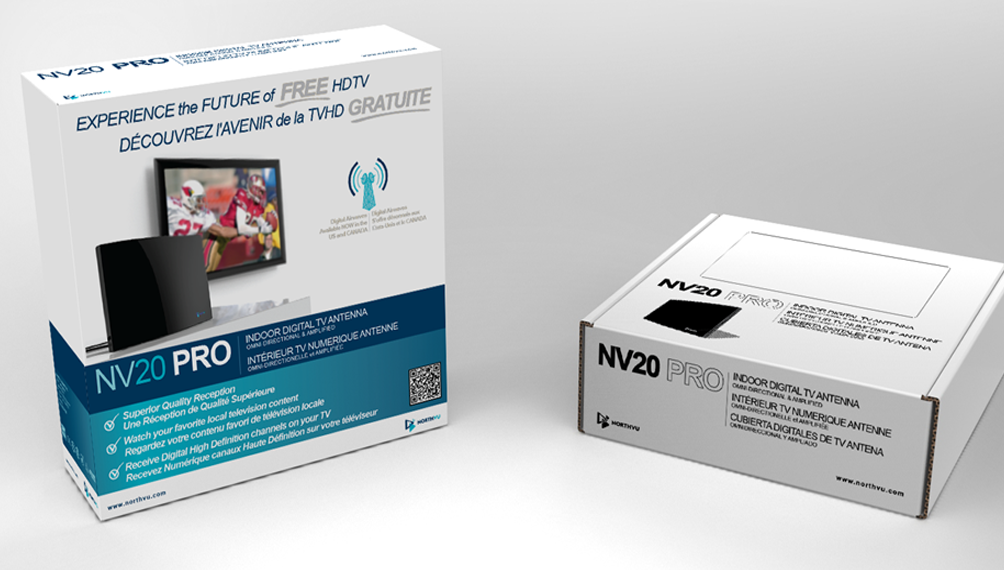
final packaging

The NorthVu NV20 Pro is a compact HD TV antenna designed to blend into any home entertainment area. Simple to use and easy on the eyes, the NV20Pro gives the rabbit ears antenna an artistic refresh bringing broadcast high definition digital TV channels free into your home.   It’s a box; you buy it once, plug it in to the back of your TV and start receiving free channels.  There are 10 to 20 TV channels in most major cities in North America.

Are Cable television bills getting too high? Did you wish you could just cut the cord?

Rising cable costs are nothing new, more channels and less advertising dollars coming in the door are a prescription for higher cable prices. But with the rise of online downloadable video, it’s hard to justify paying higher prices for both broadband and cable television. The NorthVu System antenna provides an alternative to paying for cable, offering consumers’ access to free OTA (over-the-air) digital television channels. Plug-in back of the box TV antenna’s often bring up memories of rabbit ears and fuzzy stations – NorthVu’ NV20Pro antenna brings in crystal clear HD straight into your living room.

While television antennas a far cry from a new invention. The NV20 Pro is the first antenna to use fractal technology, the same technology that eliminated external antenna’s on cell phones. This provides for both a small compact design and more powerful reception. The other advantage is that it is Omni-directional, meaning you don’t have to point it while standing on one toe and touching your finger to your nose, which was the case for old fashioned rabbit years, simple plug it into the TV and your ready to go.

Why haven’t I heard of this? Free TV?

While VHS and cassette tapes were rendered pretty much obsolete, the TV antenna began to make a slow comeback in 2009, when the government mandated that television broadcaster’s switch their transmission signals from analog over to digital,
meaning no more fuzzy reception! With digital you either receive the channels or you don’t.  All that is required is an HD Antenna and a Television. Take this and combine it with online video downloading and eliminating the cable bill is now possible.

Design an Antenna for the Modern Home.

NorthVu knocked on the Design 1st studio door seeking help to turn their innovative fractal HDTV antenna technology into a consumer friendly entertainment product. The goals was to revamp the old fashioned look of the TV antenna and turn the necessary object into a discrete elegant piece of home décor. This required finding a balance between form and function ensuring NorthVu’s HDTV antenna would blend with the variety of modern consumer tastes. To add to this challenge, the Design 1st team worked with NorthVu creating multiple design concepts and product iterations leading to the final design.

The NV 20 Pro made its debut at the CES 2012 in Las Vegas and has recently come out of the labs and is now through production and on sale at Amazon.

Visit www.northvu.com for more information.

Share

Have a new product idea?

We can help take you from idea to design, prototyping, and volume manufacturing.

Published on: July 20, 2013

Mom Turned Inventor of “myColdCup”

Mom Turned Inventor of “myColdCup”

27 Years Experience

75+ Design Awards

1,000+ Manufactured Products

From Idea to Prototype in as Little as Six Weeks!

Ready to Start?

When engineer and mother Gwenda Lindhorst–Ko visited the Design 1st offices for the first time in 2009 she brought only herself and an idea. The idea was an invention that would solve the novel problem of keeping her child’s milk cold throughout the school day. The end result was “myColdCup” an innovative product guaranteed to keep milk cool for 5 + hours.

Recently, Gwenda was featured on the television show “Backyard Inventors” – a demonstration video of myColdCup is shown below.

Share

Have a new product idea?

We can help take you from idea to design, prototyping, and volume manufacturing.

Published on: July 19, 2012

FIRST Robotics 2013: Astechz Team 2994

FIRST Robotics 2013: Astechz Team 2994

27 Years Experience

75+ Design Awards

1,000+ Manufactured Products

From Idea to Prototype in as Little as Six Weeks!
Ready to Start?
FIRST

Let the games begin! That was the phrase heard by 1000’s of high school robotics teams across the globe January 5 as the 2013 FIRST robotics competition (FRC) was launched. From that point on, high school teams had 6 weeks to design, fabricate, program and test their robot based on competition criteria.

As a sponsor for the past 4 years to the Astechz Team 2994, Design 1st has seen its fair share of robots go from whiteboard sketch into the ring against competition. This year the competition game called “Ultimate Accent” was particularly challenging as the robot had to fire Frisbee’s into thin slots and climb a 3 tier steel structure. A Demo of the game can be seen below:
During the Jam packed build season, Design 1st mentored the team on the design and build of the robot, while Mitel kindly donated their facilities to set up a replica field to practice. This past weekend the Astechz headed down to Toronto to compete in the regional competition against dozens of other teams from across Ontario. Making it to the Semi-Finals the Astechz impressed judges and other teams with both their enthusiasm and robot design. In particular the robots climbing design drew applause from both judges and other teams as they made the way up to the highest level on the steel structure, racking up 30 points in the process. A video of this amazing feat is below:


Of the 35 teams at the competition only the AsTechz and Team 114 the Simbotics were able to design mechanisms to climb the tower to the third level. With help from Design 1st mechanical engineering gurus John Kim and Matt Bailey, the Astechz devised a very creative way to make the climb. The climbing technique even impressed large robotic companies in the audience to drop by the Astechz booth and ask questions on how it was done!

team2994-robot-1024x767

Next stop for the Astechz team is another competition coming at the end of March in Toronto. In between now and the competition it will be practice, practice, practice at the Mitel facilities in order to perfect the remote control driving, Frisbee shooting and climbing! And as with all custom made mechanical devices, gadgets and robots there will be a fair bit of “tweaking” going on in the shop too!

team-2994-in-the-shop-1024x767
Share

Have a new product idea?

We can help take you from idea to design, prototyping, and volume manufacturing.

Published on: February 24, 2011

2010 Vancouver Olympics: A Look at Innovative Design

2010 Vancouver Olympics: A Look at Innovative Design

27 Years Experience

75+ Design Awards

1,000+ Manufactured Products

From Idea to Prototype in as Little as Six Weeks!
Ready to Start?


The 2010 Vancouver Olympics showcased the creative design talent Canada has to offer. These Olympic Games provided designers, architects and engineers countless opportunities to exhibit their talent and innovation.  Whether it was the sustainable design of the Olympic medals, the engineering challenges of the torch or the artistic architecture of the podiums, Canada’s creativity shone through.

winter_2010-vancouver-olympics-medals1-300x239

Olympic Medals:

The Olympic medals embodied the concept of sustainable design using end-of-life electronics for material procurement. Teck Resources harvested the gold, silver and bronze from circuit boards of old computers melting it down and casting it back into Olympic medals. These medals highlighted both the pearls of athletic accomplishment and the dangers that electronic waste can have on the environment.  With 11,000 computers being sent to the landfill daily in the United States, we don’t need to continually extract natural resources to make new products but instead think about deploying sustainability in our design practices.

Olympic Torch:

Canadians were proud when they held the Olympic torch during the 2010 Vancouver Winter Games but few were aware of the engineering challenges that were overcome during the design of the torch. For Leo Obstbaum and the design team at Bombardier they were well aware of these challenges and constraints which included:

  • Must be easy to transfer the flame between torches
  • Must burn for at least 12 to 15 minutes
  • Burner must produce a visible flame in all weather conditions
  • Must be adaptable to attach or fix to alternative modes of transportation
  • Must be able to be manufactured in high quantities so each Olympic Torchbearer may purchase their torch as a commemorative keepsake
Olympic-Torch-300x193
Each of these constraints was handled creatively; for example, the maple leaf on the back of the torch is not only a symbolic element, but has an important functional role as an air intake hole to ensure the Olympic Flame burns brightly during the coldest of winter days.  Gathering its design inspiration from the smooth, fluid lines left in snow and ice after playing winter sports – the final torch design carried the following features:

Height: 37.125 inches/ 94.5 centimetres

Weight: 3.5 pounds/1.6 kilograms

Operational temperature: -50° Celsius to +40° Celsius

Fuel: blend of propane, iso-butane and hydrocarbons

Materials used: white composite finish, stainless steel burner, aluminum core

Olympic Podiums:

The creative design of the 2010 Vancouver Olympic podiums revealed the snow-topped mountains of Vancouver and Whistler reflecting the fluidity and organic forms of the podiums. Designed by James Lee and Leo Obstbaum, the podiums are made from wood donated by communities, businesses, individuals and First Nations from across British Columbia. The complex design process for each podium employed over 200 wood pieces sourced from Western red cedar and Douglas fir, the end result was creative and innovative yet simple – embodying Canadian design principles.

2010 Vancouver Olympic Podium
Share

Have a new product idea?

We can help take you from idea to design, prototyping, and volume manufacturing.

Published on: February 23, 2010