Category: Electronics Design

New Way to Shovel Snow – Heatstone™

New Way to Shovel Snow – Heatstone™

27 Years Experience

75+ Design Awards

1,000+ Manufactured Products

From Idea to Prototype in as Little as Six Weeks!

Ready to Start?

Santa can bring you a new way to shovel snow off the walks – from your living room! Collaborating with the Design 1st team, a Toronto Inventor has been busy creating a new product for the northern markets where an aging population will experience more back injuries by snow shovelling walks and driveways.

Introducing HEATSTONE™ a new way to get rid of unwanted snow from your home, in the market since 2012!

heatstone winter snow melt

Consiglio, a Toronto based inventor, approached Design 1st with the idea to build outdoor radiant flooring with concrete patio stones.  Seeing an opportunity to increase winter safety, comfort and convenience Consiglio engaged with the Design 1st team and began the product development process. From the initial first meeting a year ago, to introducing the product to the marketplace, a creative engineering and design team was needed to work alongside Consiglio on his first journey as an inventor.

The first stage for a design team working with new ideas and inventions is simply to listen. From there we help determine all the things that are important to the success of the product.  Ol’ Saint Nick makes a list and checks it twice; the Design 1st team uses the same process when designing product concepts.  First we get creative, imagine possibilities and illustrate the concepts with sketches, images and models.  It is good practice to outline requirements that meet both our clients and their end customers’ needs. For Consiglio this included safety, ease of installation and maintenance of his radiant flooring concrete patio stones. Safety wise, the patio stones had to clear pathways of ice and snow while meeting reglatory compliance issues in North America.

Lorem ipsum dolor sit amet, consectetur adipiscing elit. Ut elit tellus, luctus nec ullamcorper mattis, pulvinar dapibus leo.

The patio stones will be selling in local commercial hardware stores so ease of installation was a must, as many clients would be building the outdoor radiant flooring themselves.  Winter seasons vary from one year to the next so maintenance and quality were also key design requirements.  No better walkway for ruggedness across the seasons than decorative concrete stone. All the electronics are well protected inside the stones so mother nature and garden tools cannot get  at them.

From there the Design 1st team creates 3D models of the concepts checking over the details and ensuring every surface, edge movement and feature is resolved with critical consideration of the product image, human interaction, materials and manufacturing requirements.

From idea to physical working models, once the technical details and product requirements are met, modelled and reviewed – the 3D virtual design concept is sent Santa’s workshop to be assembled into a working prototype.  In a similar fashion to Santa’s North Pole facilities Design 1st’ onsite workshop has all the tools to build technical products including CNC Machines, micro-saws, cutting machines, epoxies, batteries, bolts, wires, hardware and building materials of all sorts.

For Consiglio’s outdoor heated patio stones the prototyping process involved creating working concrete stone patio blocks that were tested, modified and delivered on the promise to melt the snow as it falls or even after it accumulates.  After some minor tweaks the new product introduction (NPI) phase commenced where the Design 1st engineering team documented every screw, part, assembly and surface treatment in preparation for manufacturing.

Now as Consiglio moves into production cycle the Design 1st acts as a guide helping provide manufacturing introduction, design support, quality control and identifying opportunities for cost savings as the product facilities make last minute improvements.  This holiday season when the snow begins to fall, ice begins to form and sleigh bells are ringing the gifts from Santa’s workshop will put a smile on children’s faces and patio stones designed in our workshop will put a smile on yours!

A joyous Christmas & a Prosperous New Year to All

~Design 1st staff

Share

Have a new product idea?

We can help take you from idea to design, prototyping, and volume manufacturing.

Published on: July 20, 2023

Keep the James Webb Space Telescope Launch on Track

Keep the James Webb Space Telescope Launch on Track

27 Years Experience

75+ Design Awards

1,000+ Manufactured Products

From Idea to Prototype in as Little as Six Weeks!

Ready to Start?


In a crunch, COM DEV, the company responsible for a key guidance system component of NASA’s James Webb Space Telescope, relied on a member of Design 1st’s electronics engineering team to troubleshoot and repair a crippling control system problem.

In October 2018, NASA, the Canadian Space Agency, and the European Space Agency are set to launch the James Webb Space Telescope.

Billed as the successor to the Hubble Space Telescope, Webb will be the most complex and powerful telescope ever built. It will be able to see through dust clouds which absorb visible light, helping scientists to see further back in time.

Orbiting a million miles from the Earth and using a viewing area that is seven times larger than Hubble, JWST will capture the infrared signals from the first stars and galaxies over 13.5 billion years ago.

Crucial to Webb’s success is a Fine Guidance Sensor (FGS), a means of positioning the telescope that will orient it for target acquisition and provide image stabilization during scientific observations. COM DEV International Ltd. was contracted in 2001 to begin development of the hardware and software for Webb’s FGS.

COM DEV had experience contributing to over 950 satellite projects, but this was still an enormous task, and a failure to deliver would set back the entire Webb project.

Late-stage space simulation tests uncover a crippling problem.

Unfortunately, late-stage tests in 2013 uncovered serious problems with the FGS’ control system. When the hardware was tested in space-simulating conditions (these were as cold as -240°C), some scenarios caused the system to lock up and behave inconsistently.

The problem was critical and it threatened to delay the entire launch of the JWST.

The software inconsistencies had to be quickly diagnosed and fixed, written into new Field Programmable Gate Array (FPGA) integrated circuits, and then re-installed into the FGS system. System verification testing would also have to be redone, costing over $1M and slowing down the parallel development of other systems.

And if replacing the FGPAs caused any damage to the host circuit boards, it would create delays which would be disastrous for the whole JWST program.

In searching for a solution, COM DEV engaged Design 1st. VP of electronics Peter Cottreau to troubleshoot the issue and recommend a solution. Acting quickly, Peter:

  • Diagnosed the problem and proposed changes to 3,000 lines of FPGA code
  • Convinced NASA the changes would completely resolve all issues
  • Created a test framework to verify the changes were effective

As of March 6, 2016, with successful completion of instrument testing, the telescope is officially optically complete.

“This is the culmination of a lot of hard work by a lot of people who have been working for many, many years,” said Jamie Dunn, NASA’s Integrated Science Instrument Module Manager. “This final test was phenomenal, everything is working spectacularly well.”

The James Webb Space Telescope is currently scheduled to launch from French Guiana on an Ariane 5 rocket in October 2018.

Read Full Case Study

Share

Have a new product idea?

We can help take you from idea to design, prototyping, and volume manufacturing.

Published on: July 19, 2023

How to Design Hardware Products for New Thread Wireless Protocol

How to Design Hardware Products for New Thread Wireless Protocol

27 Years Experience

75+ Design Awards

1,000+ Manufactured Products

From Idea to Prototype in as Little as Six Weeks!
Ready to Start?

The purpose of the new wireless protocol is to help smart home automation or Internet of Things (IoT) devices talk with each other more efficiently. But what does this mean for new products currently in development or existing smart home products? Here’s what we found out:

Thread Protocol Background:

  • Thread is a new low power wireless mesh network protocol for home automation products
  • It’s backed by several big name vendors including Samsung, Nest, ARM, Freescale Semiconductor, Silicon Labs who collectively formed the ‘Thread Group”
  • Thread Group’ modeled after WiFi Alliance and will carry out product certification, testing products for compliance and interoperability in order to carry Thread Logo

How will does the new Thread network protocol apply to new & existing Products?

  • All existing device which use ZigBee/6LoWPAN (802.15.4) standard can easily migrate to Thread with the existing radios with just a firmware update. No Hardware Needed
  • While companies can support Thread and build into products Thread certification will not take place till mid-2015
  • Plan to release the Thread specification in June 2015
thread-wireless-protocol

The Thread Protocol and Technology:

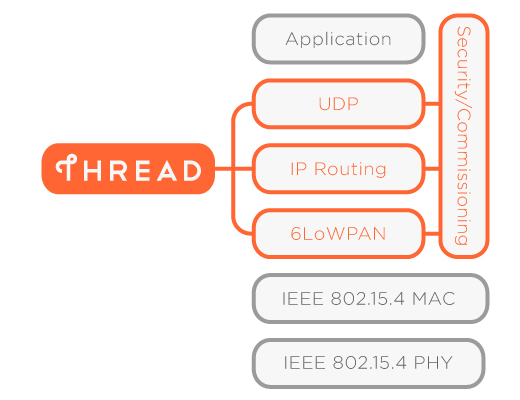
  • Build off IEEE 802.15.4 standard that defines the PHY and MAC layers, leaving the upper layers open for development
  • ZigBee and 6LoWPAN are two specs with a custom upper layer that allow IPv6  and create a wireless embedded internet.
  • Thread will replace ZigBee or 6LoWPAN in the upper layers of 802.15.4 with Software update
  • Thread will improve wireless security, routing, setup and device wakeup that should save precious battery life

So, if you’re in development now or plan to release a new smart device or IoT hardware product make sure to include a 802.15.4 radio chip even if you’re using Wi-Fi.

This way if the ‘Thread’ protocol does take off, like it’s big-names backers say, your Smart Device will be supported.

Share

Have a new product idea?

We can help take you from idea to design, prototyping, and volume manufacturing.

Published on: February 24, 2023

How will 5G impact IoT product development?

How will 5G impact IoT product development?
27 Years Experience

75+ Design Awards

1,000+ Manufactured Products

From Idea to Prototype in as Little as Six Weeks!

Ready to Start?

Ontario’s IoT product development industry got hit with some exciting news Monday: a $400M research boost to create, the super-fast, next generation of 5G wireless networks.

Termed the “5G Corridor,” the public-private partnership plans to make Ontario a contender on the global stage for IoT development through access to a pre-commercial 5G network. 

But to understand how the 5G announcement will impact product development now and into the future, we need to answers some questions:

Table of Contents

What is 5G Wireless Technology?

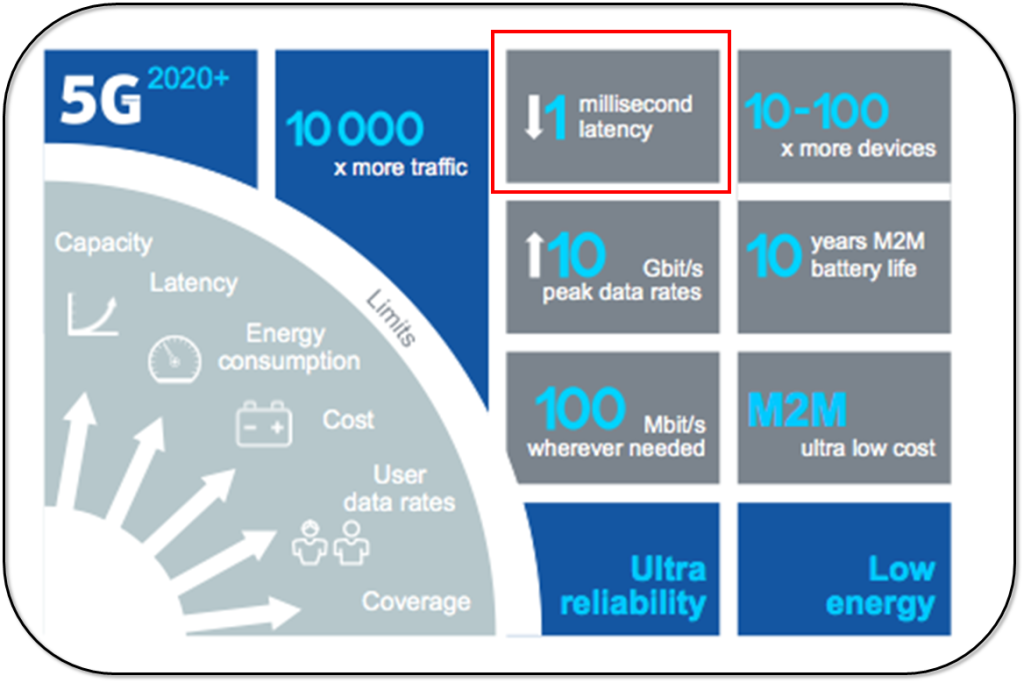
5G is not just a step up from 4G – it’s on another floor.  It provides low end-to-end latency, the ability to connect to thousands of devices at once and blazing fast speeds that can move computing and processing power away from devices and into the network.

This means future wireless IoT devices can be much smaller, sip power and scale rapidly.

Plus, 5G will become the underlying wireless infrastructure to support autonomous vehicles, VR/AR headsets and smart cities.  So, it’s not just faster download speeds: 5G will be a game changer for many industries including hardware products and IoT solutions.

“5G is the gateway to the future and we are just on the brink of this technological revolution,”  Innovation Minister Navdeep Bains said Monday at a funding announcement in Ottawa.

But to truly understand 5G, it’s important to look how far we’ve come

“The 2G networks were designed for voice, 3G for voice and data, and 4G for broadband internet experiences. With 5G, we’ll see computing capabilities getting fused with communications everywhere, so trillions of things like wearable devices don’t have to worry about computing power because network can do any processing needed,” Asha Keddy VP IoT (Intel)

Source: IEEE
What is the goal of Canada’s new “5G Corridor"?

Officially titled the ENCQOR, Evolution of Networked Services through a  Corridor in Quebec and Ontario for Research and Innovation, the new network infrastructure test bed allows startups,  government and schools to experiment with new 5G-enabled products and services.

The goal of this 5G Corridor is to provide an interim step while Canada’s three major carriers (BCE Inc., Rogers and Telus) ready themselves for a 5G rollout in two to three years.

Access to the precommercial 5G Corridor network will allow startups, companies and government to execute on visions for new IoT devices and services in a real-world environment. This will help Canada remain competitive and continue to develop global IoT solutions that scale and avoid obsolescence in the short-term. 

Will Canada be the first to rollout 5G?

No. South Korea, Japan and China are all in the race to deploy 5G networks sooner and U.S. carriers Verizon and AT&T are racing to release a small 5G rollout by the end of 2018.

In fact South Korea was the first country to debut the power of 5G networks to the world at the 2018 Pyeongchang Olympic Winter Games where they used 5G for self-driving cars and allowed viewers to access multiple camera from events, including virtual reality content.

5G network equipment at 2018 Pyeongchang Olympics
What is holding Canada back from adopting 5G sooner?

The one major hurdle is the available spectrum, referring to the band of radio waves that carry cellular services. 

5G requires a new spectrum allocation that no carrier has access to right now. The Canadian federal government is responsible for managing spectrum as a public resource and has not opened up the auction for Carriers to bid on the new spectrum bands.

According to the Globe and Mail, “The government is close to releasing final rules on an auction for radio waves in the 600-megahertz frequency, which is low-band spectrum that will help provide wide coverage in 5G networks, and it has an active consultation under way on millimetre-wave spectrum. But spectrum consultations can take months or years to wrap up and there still is no firm timeline of when auctions will be held or even in which order the spectrum will be released or reassessed”


And similar to the US, South Korea and Japan, once the government holds a spectrum auction Canada’s carriers can start rolling out their 5G networks. But with no timeline in sight, we are still a few years away from the rollout. 

In the meantime, carriers are beefing up networks, radio technology, and cell sites to accommodate increased traffic and bandwidth over 4G LTE networks.

What is the impact of 5G on IoT product development?

Right now, there will not be much change. Existing IoT devices and those in development today rely on a mix of wireless protocols each with their own benefits. These include:

  • LoRaWAN
  • Cellular (4G LTE CAT-M)
  • Cellular (4G LTE NB-IoT)
  • SigFox

We have experience using many of the above networks in IoT device development for Wide Area Network (WAN Applications). For example, we are developing a GPS anti-theft bike tracking product for a client that that leverages the 4G LTE CAT-M cellular network to relay data from the device accelerometer to the user’s app. 

But even with the modest speed, coverage and latency gains in the existing 4G LTE protocols, we still cannot take advantage of all the opportunities 5G presents.

So, while we await the gradual rollout of 5G we continue to develop IoT devices for customers around the globe using a mix of existing wireless protocols. The ones we choose are based on use-cases and trade-offs. The image chart below shows how we think about IoT devices with respect to wireless networks.

IoT device category map

As the chart above shows, right now we select IoT wireless protocols based on project requirements for the product or solution. We do this by thinking about 3 groups of networks: Personal, Local and Wide. These inputs allow us to select the optimal wireless network configuration, electronics components and battery power to develop an effective device that will not go obsolete in the near future.

But with the 5G Corridor, and countries around the globe getting ready to adopt the 5G, we are starting to envision solutions that take advantage of the high-bandwidth, low-latency network.

The evolution of the IoT will be very closely linked to the evolution of the wireless world. Changes in the WAN as seen with 4G IoT extensions and the emergence of 5G, changes in the LAN and PAN with recent updates to Bluetooth and adoption of other wireless technologies will continue to provide new challenges and opportunities to hardware developers.

We here at Design 1st are committed to closely tracking these developments to remain at the cutting edge of technology.

Share

Have a new product idea?

We can help take you from idea to design, prototyping, and volume manufacturing.

Published on: March 20, 2018

The 4 Challenges of Voice UI Design

The 4 Challenges of Voice UI Design

27 Years Experience

75+ Design Awards

1,000+ Manufactured Products

From Idea to Prototype in as Little as Six Weeks!

Ready to Start?

One of the main themes at CES 2018 is the maturation of technologies using voice as the primary user interface. Key players like Amazon and Google are leveraging their cloud infrastructure and AI software to position themselves as fundamental cogs in the upcoming voice-activated world.

In this blog post, Peter Cottreau, VP of Electronics at Design 1st, discusses the underlying architecture of Voice User Interface (VUI) and what it means for VUI prototyping and hardware developers.

Google physical presentation board

What is Voice User Interface Architecture?

The VUI architecture that is emerging is a speaker/mic device that captures voice samples which are transported via the home connection to the internet to voice interpretation software in the cloud. What is returned is an actionable digital command which is interpreted locally and effects the desired control over an IoT device in the home.

The 4 Challenges of Voice UI Architecture:

  1. Privacy and security concerns.
    Consumers are concerned about the big brother feel of this model and this is limiting \”always listening\” behavior required for wholescale adoption and delivery of the full user experience. A number of hardware product have been developed to help mitigate these concerns but these come at additional cost and UI friction.
  2. Network availability and access cost.
    Not all countries/locations enjoy the network access and reliability of the big cities. In the event of network outages, access to things may prove frustrating in a world where voice activation has come to be relied upon.
  3. Network latency:
    Slow or congested networks can result in command latencies that can hamper or ruin the user experience.
  4. Language support.
    Current popular cloud voice services support a very limited number of languages. Furthermore, variations in accents pose serious problems and can result in very low voice-to-command success rates.

Solution to VUI Architecture Challenges: Local Voice Interpretation

In the face of these challenges, there is a strong case to be made for augmentation of the current architecture with a solution where simple IOT device command and control is interpreted locally while the more complex or open-ended queries directed to the cloud services.

Example of Local Voice Interpretation Technology

Fluent.ai is a solution provider in this space with a voice interpretation technology capable of hundreds of command phrases at low latency using a small fraction of the compute and memory resources available on the average cell phone.

Decoding is performed on a local device so privacy/security concerns are alleviated and public network availability is not an issue.

With decode latencies in the millisecond range the technology is ideal for local command and control applications. The technology is human language independent and is very tolerant of accent variation.

What do Google and Amazon think?

These benefits are not lost on the incumbent suppliers. Amazon and Google and others will likely look to augment their solutions to provide similar benefit but at least for the time being players like Fluent.ai have a compelling offering. One we are exploring with several IoT voice prototype projects.

What does this mean for IoT hardware developers?

Current state of the art for low cost connected controllers have adequate processing power to bring simple voice control directly to many IoT devices. These controllers often support the DSP functionality required and are generally fast enough for the job. One of the bigger challenges is memory footprint.

With memory requirements in the 4-6 MB range tradeoffs will be required. Low cost embedded processors will still require external memory keeping the cost of voice enabling a device above $5 for the next while, so it is unlikely you will be talking directly to your lightbulbs anytime soon.

 
Share

Have a new product idea?

We can help take you from idea to design, prototyping, and volume manufacturing.

Published on: January 19, 2018

Does Your Next Product Include Electronics?

Does Your Next Product Include Electronics?

27 Years Experience

75+ Design Awards

1,000+ Manufactured Products

From Idea to Prototype in as Little as Six Weeks!

Ready to Start?

Design 1st welcomes the integration of Ashton Electronic Systems into our design team

We have been tapping the talented electronics design and software experts at Ashton for several years. By having them become dedicated members of our integrated in-house team that includes industrial designers, engineers, and manufacturing setup specialists, we can take even more time, cost and risk out of the hardware product development process.

A cohesive team under one roof:

  • Anticipates challenges earlier
  • Finds novel solutions to tricky problems sooner,
  • Optimizes product cost and manufacturability throughout the process, and
  • Guides the product development process all the way from idea to manufacturing setup.

Learn more about our new electronics design capabilities by joining us at IoT613 – Ottawa’s Internet of Things conference on September 24-25.  Or call us to discuss our capabilities in arduino+3D prototyping to get connected concept products to user test at record speed.

Share

Have a new product idea?

We can help take you from idea to design, prototyping, and volume manufacturing.

Published on: September 21, 2015

FIRST Robotics Competition

FIRST Robotics Competition

27 Years Experience

75+ Design Awards

1,000+ Manufactured Products

From Idea to Prototype in as Little as Six Weeks!

Ready to Start?

The FIRST Robotics Program (FRC) offers an opportunity for high-school students to mentor with Industry professionals and step into the design engineering world, putting their young minds to work building a sophisticated robot in 6 weeks to compete in a variety of challenges. Founded in 1992 the FRC annually provides over $12 Million in scholarships to students and  deems its mission is:

“To transform our culture by creating a world where science and technology are celebrated and where young people dream of becoming science and technology leaders.” – Dean Kamen, Founder

Each year, teams of high school students find design and engineering companies who are willing to sponsor, mentor and work side by side with them. The activity is to compete with other schools to build robots weighing up to 120 pounds that can complete challenging tasks that change each year. The teams are given a standard set of parts at the beginning of January and are given six weeks to construct a robot that can operate autonomously as well as when guided by wireless controls to complete a set of unique challenges.

For the second year in a row the Design 1st engineering team worked with students from All Saints High School located in Kanata, Ontario. Over the course of six weeks, Design 1st and other supporters from the Ottawa hi-tech industry honed their teamwork skills and built, programmed and tested the robot, shown below.

Celebrating its 20th anniversary the 2011 FIRST robotics competitions consisted of 2,075 teams from 9 countries and close to 52,000 high school students. At the beginning of the build season FIRST teams receive a kit of parts containing electronics, software and structural components like pneumatic and electronic actuators, speed controllers, and gearboxes to build the robot. The teams also receive an additional off-the-shelf component budget set at a maximum of $400USD. These competition constraints make the challenge both exciting and competitive where team’s only advantages were their resourcefulness, experience and problem solving abilities.

This year’s challenge titled “Logomotion”, featured 2 teams of 3 robots each facing off in a two minute match to earn points – a description of which can be viewed below:

For this year’s competition the All Saints High School team traveled to Rochester New York, where all the teams set up functional booths which were areas for teams to display their robots as well as deal with any issues that competition can throw at the robot.  The All Saints Robotics team performed extremely well using their fork lift inspired design to accumulate points and complete the challenges.   The team hung a full first Logo gaining them the extra bonus points needed to win their 6th match.   Every year the competition comes down to a bit of luck and a lot of reliability and practice with the robots.  All saints placed 18th out of 46 robots at the RIT Regional competition in their 3rd year in the tournament.

In addition to the journey to New York the All Saints Robotics team also had the opportunity to showcase their robot at the museum of Science & Technology in Ottawa. Throughout the day the team fielded questions from passerby’s displaying the robots and abilities and inspiring young people of the marvels of technology and engineering.

The All Saints team is already looking forward to next year where they can hone their engineering abilities, build on past experiences and most importantly get a taste of “real world” engineering.  The team is always on the lookout for new mentors from diverse backgrounds including design, software, electrical or mechanical fields. Interested parties can contact Matt Bailey for the opportunity to lend their skills and collaborate with a motivated team in building the next generation FIRST robot.

Share

Have a new product idea?

We can help take you from idea to design, prototyping, and volume manufacturing.

Published on: July 20, 2014