
Category: Hardware Startups

Top 10 Crowdfunding Agencies for Hardware Startups

Top 10 Crowdfunding Agencies for Hardware Startups

Estimated Reading Time:

Assessing your Product for Specialized Crowdfunding Expertise

Crowdfunding agencies don’t all offer the same services. Each have their own specialized expertise depending on a client’s unique product development needs. Hardware products have challenges on their own that differ from software and services, and some can take advantage of crowdfunding to the product development process. Some factors to consider when researching crowdfunding agencies are:

Complexity of product design and engineering

Not all crowdfunding agencies offer consulting regarding the prototyping and design stage of your product. Crowdfunding campaigns sometimes fail due to hardware products that are launched too early with little design revision on a product. Additionally, not all crowdfunding agencies come with an all-in-one package that can assist you in the early product development stage such as prototyping, patenting, and design.

Manufacturing and supply chain resource

It is critical to maintain clear communication with a manufacturer that best suits your needs, as missteps can delay production and output defective products. There are also complexities to overseas manufacturing, such as time zone differences, language barriers, shipping, and quality assurance. Most crowdfunding agencies do not offer manufacturing, product design, and supply chain expertise. They focus on the marketing and funding, so the option is to have a product design and manufacturing partner such as Design 1st that can secure and handle all of the product design process prior to campaign launch, as well as the large-scale development and manufacturing for the consumers after funding has been met through the crowdfunding agency.

Regulations, compliance, and certification

Hardware products require compliance with electrical, safety, or environmental regulations before they can enter a market. Some crowdfunding agencies can help navigate certifications such as CE, FCC, or RoHS, to efficiently market your product and ensure they are safe for public consumer use.

Initial investment and budget management

Crowdfunding agencies have different fee setups, and it is important to assess how much funds you must secure up front for processes such as product manufacturing or digital marketing. Some agencies also offer no fee upfront, but with interest depending on how well your product campaign goes. Crowdfunding consulting can help plan realistic funding goals, hidden costs, and budgeting.

Marketing to consumer, and demand analysis

A lot of crowdfunded campaigns fail due to poor digital and ecommerce marketing, or a lack of demand for your product in the market. Some crowdfunding agencies specialize in digital marketing, with some even owning their own professional studio for video and photo content. When researching an agency, assess whether your product needs additional marketing consulting for a successful crowdfunding campaign.

Risk management and backer fulfillment challenges

Some crowdfunding agencies can offer risk management, including planning realistic timelines and transparency in communication with backers. If you want a campaign that promises unique rewards for your backers, and being able to fulfill those rewards, there are crowdfunding agencies that are specialized in backer fulfillment and managing reward delivery risk.

Top 10 Crowdfunding Agencies for Hardware Startups

1. LaunchBoom

  • Specialization: While Kickstarter specializes in campaigns that already have a working prototype and a solid marketing strategy, LaunchBoom is where someone can go for help in pre-launch strategy for their product, no prototype needed. They’ve raised millions for home, tech, hotel, and game products.
  • Notable Campaigns:
    – Lomi, an instant composting home tech product, $7.2M raised
    – The Crooked Moon, a DND horror campaign game, $4M raised
  • Services Offered:
    – Free lessons in how to successfully launch your product campaign
    – Pre-launch strategy expertise for Indiegogo and Kickstarter launches

  • Pricing Model: They have a few different options ranging from $4,000 to $12,000 depending on product category and level of support, founder-friendly plans available.
     
  • Success Stats: In 2024, LaunchBoom claims a 97.83% campaign success rate for their Kickstarter and Indiegogo projects, and raising over $175 million across nearly 1,000+ campaigns.
  • Unique Differentiator: They are a team of crowdfunding experts that started in crowdfunding, have first-hand experience of the process, and know the steps to a successful product launch.

  • Best For:  If you want to ensure a successful crowdfunding campaign for your home, tech, outdoor, hotel, or game product, where a crowdfunding expert can help you through the process.

2. Jellop

  • Specialization: Jellop specializes in promotion strategies to market current Kickstarter campaigns. They help product creators by running ad campaigns on Reddit, Google, Meta, and email.
  • Notable Campaigns:
    – Peak Design Travel Tripod, $12.1M raised
    – Roller Pro Carry-On Luggage, $12.9M raised
  • Services Offered:
    – Digital advertising and email marketing for Kickstarter campaigns
    – Product launch analytic expertise

  • Pricing Model: Performance-based compensation, where they charge a starting percentage of 15% from the success of your campaign based on their marketing efforts.
     
  • Success Stats: Jellop is Kickstarter’s first and only official advertising partner, and claims to have helped over 7,000 creators raise over $1.4B on Kickstarter.
  • Unique Differentiator: Jellop helps your ongoing campaign without any minimum fees.

  • Best For: Boosting a current Kickstarter campaign, getting the word out about your product through marketing strategies.

3. Funded Today

  • Specialization:  Similar to Jellop, Funded Today specializes in performance-driven marketing, and boosting crowdfunding for hardware startups.
  • Notable Campaigns:
    – Wearhaus Arc, raised an additional $200k with less than 10 days left
    – FreeWavs, raised an additional $25k with 100 hours left
  • Services Offered:
    – Campaign and page design, video production, social media marketing
    – Data analytics, ROI optimization

  • Pricing Model: Funded Today charges 35% of the campaign’s total earnings, with no upfront payment required.
     
  • Success Stats: They are notorious for being selective with which projects they partner with, with only 10% of applicants being accepted.
  • Unique Differentiator: Cash-back program for backers (10% return). They don’t accept payment unless your project gets funded.

  • Best For: Electronics, wearables, robotics, tech accessory projects looking for early-stage or ongoing funding acceleration in Kickstarter or Indiegogo.

4. Eventys Partners

  • Specialization: US-based agency specializing in product development, crowdfunding, and ecommerce marketing for new hardware products and consumer goods.
  • Notable Campaigns:
    – MCON, 6,813% funded, raising $1.7M
    – DEUX Float 2.0, 3,001% funded, raising $450k
  • Services Offered:
    – Industrial design, prototyping, and engineering
    – Sourcing and manufacturing
    – Crowdfunding campaign strategy and digital marketing
    – Amazon and ecommerce launch and management


  • Pricing Model: Typically charges between $70-$150 an hour, the market average for US industry product development. Campaign-specific costs (such as video production) are often quoted at $10-20k or more, depending on requirements.
     
  • Success Stats: Several campaigns have exceeded initial goals by 2000% or more. Over 2500 hardware products developed, prototyped, or marketed.
  • Unique Differentiator: Vertically-integrated approach, covering everything product development to product launch, from patent fillings, engineering, manufacturing, crowdfunding, and long-term product growth.


  • Best For: Early and growth-stage hardware startups, especially those needing support in prototyping and mass production, as well as navigation of crowdfunding and online sales.

5. Agency 2.0

  • Specialization: Crowdfunding marketing agency specializing in end-to-end Kickstarter and Indiegogo campaigns for tech startups and hardware products.
  • Notable Campaigns:
    – Micro Drone 3.0: Raised $3.6M with 32,367 backers
    – Sonders Ebike: Top 3 funded ebike of all-time, $7.4M raised
  • Services Offered:
    – 200+ step dedicated campaign management
    – PR and media outreach for crowdfunding
    – Full-service digital and ecommerce marketing
    – Post-campaign retail support

  • Pricing Model: Typically starts at $5,000 per project for campaign management, with additional fees for services like video production and advertising depending on scope.
     
  • Success Stats: Known for multiple multimillion-dollar hardware launches. 500+ campaigns launched with more than 20 exceeding $1M each.
  • Unique Differentiator: Their 200+ step approach covering every aspect of tech and hardware product startup such from pre-launch to post-campaign growth.

  • Best For: Early and growth-stage tech products or innovative hardware products looking for standout success on Kickstarter or Indiegogo. Especially valuable for teams needing comprehensive campaign direction and creative services.

6. Rainfactory

  • Specialization: Data-driven crowdfunding marketing agency specializing in launching and scaling tech-forward hardware and lifestyle brands, particularly on platforms like Kickstarter and Indiegogo.
  • Notable Campaigns:
    – Screeneo U5: Raised over $4 million on Indiegogo.
    – Jibo, the family robot: Raised $3.66 million.
  • Services Offered:
    – Lead generation site development
    – Marketing strategy on key platforms (Facebook, IG, TikTok, Google, YouTube)
    – Influencer outreach and PR
    – Product launch and post-campaign strategy

  • Pricing Model: Starts with lead generation services from about $1,000 and full campaigns often allocate 10–20% of funding goals for marketing efforts. Projects often range in the $70,000 to $200,000 bracket depending on scope.
     
  • Success Stats: Rainfactory claims over $1 billion generated for clients overall, with year-over-year revenue growth. Over 30 campaigns raising $1M or more.
  • Unique Differentiator: Methodical, data-driven approach to campaign development that tests product market fit and demand. Their advertising expertise is tech-focused, using real-time data for optimization.

  • Best For: US-based hardware and lifestyle startups seeking a structured go-to-market plan. They excel with premium gadgets, fitness tech, and innovative consumer products.

7. Crowdfund Capital Advisors

  • Specialization: CCA is a consulting and investment banking firm specializing in equity crowdfunding, connecting startups with investors through Regulation Crowdfunding (Reg. CF), Regulation A+, and traditional venture capital. They provide advisory services for campaign preparation, investor relations, securities compliance, and funding strategy.
  • Notable Campaigns:
    – The Micro 3D Printer: Raised $3.5M.
    – Olive Max Hearing Aid & Earbuds: Raised $530K+
  • Services Offered:
    – Equity crowdfunding strategy and investor relations and communications
    – Campaign preparation, marketing guidance, and product security
    – Capital structure and fundraising consultation


  • Pricing Model: Not explicitly public but generally includes retainer fees combined with success-based fees on funds raised, typical of investment banking and crowdfunding advisory firms.
     
  • Success Stats: CCA reports over 500 campaigns funded via equity crowdfunding under their advisory, with aggregated capital of several hundred million dollars in commitments, primarily within the U.S. startup ecosystem.
  • Unique Differentiator: One of the first equity crowdfunding advisory firms with deep expertise in U.S. securities regulations. They combine legal, financial, and marketing advisory to help startups, including hardware firms, navigate complex compliance while maximizing capital raised through innovative investor channels.


  • Best For: Hardware startups seeking to raise capital through equity crowdfunding and require comprehensive compliance, regulatory navigation, and investor relations support as part of a strategic fundraising plan.

8. Presslabs

  • Specialization: Not a crowdfunding or hardware campaign agency, Presslabs specializes in managed WordPress hosting focused on publishers and complex website setups.
  • Notable Campaigns:
    Freshome: Presslabs has supported Freshome for over eight years, providing custom infrastructure for fast page loading, caching, 100% uptime, security, and scalability to handle large growth and traffic spikes
    CultofMac.com: Experienced significant improvement in hosting stability and performance after moving to Presslabs, as they had issues with previous hosting providers.
  • Services Offered:
    – Managed WordPress hosting, support, and Intelligence dashboard for analytics
    – Git-based development and staging environments
    – CDN for media content


  • Pricing Model: Plans start at approximately $299 per month for publishers and $1,999+ for enterprise usage, with additional fees based on page views.
     
  • Success Stats: Hosts over 400 WordPress sites with excellent uptime and performance; well-regarded for reliability and support.
  • Unique Differentiator: Combines enterprise hosting infrastructure with deep WordPress expertise, offering superior performance and developer-focused workflows.

  • Best For: Digital publishers, media companies, and enterprises needing scalable, reliable WordPress hosting. Not suitable for hardware startups or crowdfunding campaigns.

9. Command Partners

  • Specialization: Digital marketing agency now focused on TikTok Shop sales and strategy, now for kitchen products. It merged with Enventys in 2016 forming Enventys Partners.
  • Notable Campaigns:
    – Bunch O Balloons: Nearly $1 million raised, one of the top crowdfunding campaigns actively marketed by Command Partners pre-merger.
    Alcove: Marketing and product support through Enventys Partners, successfully validating product-market fit and campaign impressions.
  • Services Offered:
    – Kitchen product specific product marketing and services for TikTok Shop
    – TikTok Management from content to ads to influencer partnership


  • Pricing Model: Not publicly available but you can book a free strategy call.
     
  • Success Stats: Hosts over 400 WordPress sites with excellent uptime and performance; well-regarded for reliability and support.
  • Unique Differentiator: Command Partners claims to make your kitchen product the next viral and bestseller product on TikTok, which is the #1 sales channel for kitchen products currently.


  • Best For: Kitchen products looking to optimize their TikTok shop, create and promote content related to your product, and scale revenue fast.

10. BackerKit (Launch Services)

  • Specialization: Creator-centric, comprehensive crowdfunding platform designed to help campaign creators plan, launch, and optimize crowdfunding campaigns, especially in the hardware and tabletop gaming sectors.
  • Notable Campaigns:
    – Lay Waste Games: Ran 5 campaigns and raised over $622K on Kickstarter, with nearly 10,000 backers surveyed via BackerKit, and around 31% of backers purchasing add-ons through BackerKit’s pledge management system.
    – Mantic Games: A UK-based tabletop game company that has run 5 campaigns with BackerKit, raising over $3.4 million across those campaigns. They are one of Europe’s most funded companies on Kickstarter.
  • Services Offered:
    – Custom teaser and launch party pages with interactive tools
    – Live streaming integration (Twitch, YouTube, Moonbeam)
    – Pre-launch reservation system to boost early pledges
    – Polls, achievements (stretch goals), incentives for early and repeat backers
    – Cross-collaboration campaigns, realtime Kickstarter data insights, and post-campaign management

  • Pricing Model: Offers free account creation and teaser page customization to start, with tiered pricing and specific fees based on campaign scope and size.
     
  • Success Stats: BackerKit boasts a project success rate more than double the industry average. They have managed pledge fulfillment for roughly a quarter of all Kickstarter campaign volume in recent years and have helped creators raise tens to hundreds of millions of dollars collectively.
  • Unique Differentiator: Merges campaign hosting, pre-launch audience building, pledge management, and fulfillment into one seamless experience. Their innovative Collab-Funding feature enables multiple creators to team up on campaigns for cross-promotion and shared rewards.

  • Best For: Hardware startups, gaming, and creators who want an all-in-one crowdfunding solution and support from pre-launch outreach through post-campaign. Particularly strong for repeat creators building fan communities and for campaigns that want to leverage collaborative and incentivized backer engagement.

Red Flags, Scams, and How to Avoid Bad Crowdfunding Agencies

Red flag #1: Lack of Transparency and History

Avoid crowdfunding agencies that have little to no information about their business history, credentials, and information about their team. It is crucial to research the agency’s reputation through multiple independent reviews and user forums. Make sure that the campaigns featured on their website also include more recent successful product campaigns. Confirm the agency’s business registration, credentials, social media, and look through multiple detailed case studies of their successful campaigns.

Red flag #2: Vague Costs and Funding Information

Crowdfunding agencies should have clear and complete information about their campaigns, budgeting process, and how funds are distributed. Though each product is unique with their funding and budgeting needs, there shouldn’t be vague or missing information about how a company typically helps fund successful campaigns. Incomplete information and lack of transparency in your consultation can mean there might be hidden costs.

Red flag #3: Unrealistic Promises and Goals

Campaign fraud is where agencies mislead potential clients about their reach and capabilities. Look out for some signs such as a lack of, or over-exaggeration of real campaign metrics. A crowdfunding agency with no clear plan, and evasion of answering specific questions about their process – while promising you high returns with minimal risk, should be determining factors that the agency is a fraud. To avoid this, make sure they can provide real evidence of previous clients’ success stats, performance data, and actual funding spend.

Red flag #4: Over-reliance in Urgent Messaging

A common tactic for scams in crowdfunding agencies is that they will make a potential client feel urgent in their need for crowdfunding help, thus they will feel rushed and sign with an agency immediately. Another red flag is the over-exaggeration of their selective process, with coercive, emotional language such as “you won’t get another chance to talk with us” or “we took the time to speak with you”. Crowdfunding agencies should have open communication and availability.

Red flag #5: Failure to Answer Specific Questions

Crowdfunding scams and fraud rely on you having a passive and inattentive approach to researching and understanding how an agency works. It is critical to ask many details about their crowdfunding plan and how their specialization can help your own unique hardware product. If they cannot provide real data of successful performance stats, and are evasive to your questions, it is a sign of fraud. Thoroughly research the company through third-party websites, independent forums, and social media.

Share

Need help manufacturing your product idea?

We can help take you from idea to design, prototyping, and volume manufacturing.

Published on: October 4, 2025

Glossary of Product Design Terms

Glossary of Product Design Terms

27 Years Experience

75+ Design Awards

1,000+ Manufactured Products

From Idea to Prototype in as Little as Six Weeks!

Ready to Start?

88 Product Design Terms You Need to Know

product-design-terms

If you are designing a new product, working with a product design firm or have an interest in hardware startups – knowing your way around product design terminology is critical.

For example, exploding a  BOM – may come as shock to those who don’t know BOM stands for bill of materials, and flashing it simply means showing a list of all the components in one view!

But a quick read of the most frequently used product design-related terms below will bring you up to speed, and ensure the next design engineering meeting goes smooth.

  1. Alias
    Brand of CAD software, most often used for free-form modeling and visualization. Becoming less prevalent.
  2. Animation
    A visualization comprised of moving images, usually created from 3D CAD, which allows a ‘movie’ of the design without needing physical samples. The quality of an animation can vary dramatically depending upon the application.
  3. Anthropometrics
    Study of measurements of humans. Used to inform ergonomics.
  4. Assembly
    A collection of components that are related and have interconnections. Parts joined together form an assembly. Maybe physical, also within CAD.
  5. Backend
    The later phases of a design program, closer to manufacturing. Within some organizations some of these activities are identified as engineering.
  6. Bill of materials (BOM)
    A table containing a list of the components and the quantity of each required to produce an assembly. A costed BOM includes pricing information. An indented BOM indicates how different components and sub assemblies relate to one another and the order in which they are assembled.
  7. Brief
    Instructions and requests provided to design team prior to the commencement of a project. The format can vary and may range from informal & verbal, to comprehensive document.
  8. CAD
    Computer-aided design is software used to assist with design and documentation.
  9. CMF
    Colour, material, finish.
  10. CNC
    Computer-numerically-controlled. Refers to various machinery used to produce prototypes, tools and components.
  11. Commercialization
    Commercialization is the process or cycle of introducing a new product or production method into the market. Many technologies begin in the laboratory and are not practical for commercial use in their infancy.
  12. Component
    Part. Single, discrete element within an assembly.
  13. Concept design
    Early-stage design, not all aspects are resolved, however overall intent or direction should be apparent.
  14. Contract Manufacturer (CM)
    The external company that produces parts or products to order.
  15. Control Drawing
    2D representation of a design, used to assist production. Often used in conjunction with 3D CAD data, a control drawing can provide information such as dimensions, tolerances and notes that may not be readily obtained from 3D data alone. Also called 2D drawing, engineering drawing or technical drawings. Similar to architectural ‘plan’
  16. Design Thinking
    An approach to problem-solving based upon the methodology used by designers, but (usually) applied to other disciplines, such as business and education.
  17. Detail design
    Determining and accurately documenting all the aspects of the design, largely related to the performance and manufacture of the part. Depending upon organizational structure this work may be carried out by engineers.
  18. DIA
    Design Institute of Australia.
  19. Dimension
    Distance or measurement.
  20. Drawing
    Usually refers to a precise black and white ‘line’ image often generated in CAD within a recognized format, used for communicating technical aspects of a design. See also control drawing.
  21. Eco-design
    Design with significant consideration to the environment also called green design.
  22. E.E.
    Electrical (or electronic) engineering.
  23. Ergonomics
    Application of principles that consider the effective, safe and comfortable use of a design by humans. An example would be the design of a handle based on anthropometric data and with subsequent usability testing.
  24. Exploded view
    Visual representation of an assembly, showing some or all of the components separated to illustrate the parts and their relationships to one another.
  25. FEA
    Finite-element analysis: a computer-based engineering tool for assessing structural aspects of a mechanical design.
  26. Feasibility Study
    A feasibility study is an evaluation and analysis of the potential of a proposed project, based on extensive investigation and research to support the process of decision making.
  27. Finish
    Surface treatment of component. Maybe functional and/or cosmetic, examples include polishing, painting and anodizing.
  28. Form
    The three-dimensional equivalent of Shape.
  29. Form study
    Type of prototype used to assess the external form of the design, usually full size, often in a single colour or with minimal cosmetic finishes. The ‘clays’ used in automotive design are an example.
  30. Front end
    Preliminary stages of the design process, typically where overall configuration and desired appearance are established.
  31. General Assembly (GA)
    A drawing or CAD model illustrating all the components of a finished product and their relationship to one another. May incorporate a bill of materials (BOM).
  32. Human Factors
    A phrase largely interchangeable with ‘ergonomics’, human factors relates to consideration of human users in the design of a product and environment. Some people make a distinction that ergonomics more specifically relates to the physical association between people and products.
  33. ID
    See industrial design; also internal diameter (e.g. the distance across the hole in a donut).
  34. IDEA
    International Design Excellence Award. Presented by IDSA.
  35. Ideation
    Idea generation, typically early in a project and in a relatively loose/abstract form. Brainstorming is an ideation technique.
  36. IDSA
    Industrial Designers Society of America
  37. Illustrator
    Computer software often used for 2D design work. Also used extensively by graphic designers.
  38. Industrial Design (ID)
    A term for the profession, as in the design of industrially-produced goods. Some attribute the origin of the phrase to a Kiwi c.1920, and it has been largely misunderstood by the public ever since…
    ID is generally interchangeable with product design, though industrial design (or ID) is more often used by people ‘in the know’. When a distinction is made, it is generally that whilst there is a lot of overlap, industrial design is more focused toward the earlier stages of the design process
  39. Intellectual property (IP)
    Characteristics of a design the owner may wish to protect from unauthorized use. Strategies include trade secrets and formal, legal IP protection such as utility patents & design registration.
  40. Interface
    Elements of a product via which a user receives and inputs information. On a smartphone this may be as simple as a touchscreen and a few buttons. On a motorcycle it is far more involving, with both hands and both feet operating controls, along with visual display of information.
  41. IP
    See intellectual property.
  42. ME
    Mechanical engineering.
  43. Model (including CAD)
    Representation of a design. May refer to a physical item or a representation within computer software e.g. CAD model
  44. Mould (or mold in American-English)
    Tool used to create plastic parts. Typically made of metal.
  45. Mood board
    Collection of images gathered at the outset of a project to help clarify and communicate aspects of the aesthetic of the yet-undesigned product. Interchangeable with theme board.
  46. Native
    The file type used by a given software program during normal use (creating & saving files) Example ‘.docx’ for MS Word. Native files are often not used to transfer design data, as translation formats such as STEP offer tamper resistance, revision control and do not have the interdependence that is common with CAD data.
  47. New Product Introduction (NPI)
    New product introduction is the complete process of bringing a new product to market.
  48. Original Design Manufacturer (ODM)
    Company that designs and produces goods to be sold by other brands. The design may be initiated by the ODM or may be to meet a specification provided by a brand.
  49. Original Equipment Manufacturer (OEM)
    Contract manufacturer that produces complete, finished products. Manufactures products for other brands, (to the design and specification of those brands) which the brand then distributes. Common business model, with many brands outsourcing some or all of their production (to OEMs).
  50. Off-Tool Sample (OTS)
    Initial sample created using production tooling. Used to check design and ‘tune’ tooling prior to making production quantities. Common to have at least 2 generations of OTS (OTS1, OTS2, etc.) as first OTS will often not have cosmetic finishes applied to tool.
  51. Organic
    Describes form. Soft, irregular shapes, as occur in nature.
  52. OTS
    See off-tool sample.
  53. Part
    A single element. Some products, such as a paperclip, consist of a single part. Often a product is an assembly of multiple parts.
    PCB
    A printed circuit board (PCB) mechanically supports and electrically connects electronic components using conductive tracks, pads and other features etched from copper sheets laminated onto a non-conductive substrate. PCBs can be single sided (one copper layer), double sided (two copper layers) or multi-layer.
  54. Percentile (as in ’5th percentile’)
    Term used within ergonomics to indicate a portion of the population with regard to a particular trait. Using height for example, of a sample population 50th percentile is the mid point, 5th percentile would be the shortest 5% of people within the sample group, 95th percentile the tallest 5%.
  55. Phase
    A period within a design program that is identified as having a particular focus of activity and/or outcome.
    A project may have a user-research phase, a concept phase, etc. This term is commonly used in the US, the word ‘stage’ is largely interchangeable.
  56. Pilot Run
    An initial small production run produced as a check prior to commencing full-scale production. The pilot run provides an opportunity to further refine assembly process or identify any remaining issues with the design or manufactured parts, thereby saving time & $ in the transition to full production.
  57. Pro/E
    Brand of CAD software, subsequently named ‘Wildfire’, and now ‘Creo’ (the family of products still widely referred to as Pro/E). Well-established platform for mechanical CAD with large user base.
  58. Program
    A body of design work for a single organisation, typically involving multiple projects. Alternatively a piece of computer software, increasingly called apps or applications.
  59. Project
    A specific, defined design task. In this context often a product. May also be more narrowly defined, such as a piece of stand-alone research or a conceptual exploration used to gather knowledge without necessarily being intended for production.
  60. Proposal
    Stated approach to a design project. This is a response to a brief.
  61. Prototype
    A model made during the design process to assess aspects of the design prior to manufacture. Usually physical, but may take other forms, including on-screen or even Post-it notes. For glossary of terms relating to prototyping see separate article, (coming soon!)
  62. Quality Assurance
    Quality assurance (QA) attempts to improve and stabilize production (and associated processes) to avoid, or at least minimize, issues which lead to a product’s defects.
  63. Quality Control
    Quality control (QC) is a process in which the quality of all factors involved in production is reviewed. It emphasizes testing of products to uncover defects and reporting to those who make the decision to allow or deny product release.
  64. Quality Management Systems
    A quality management system (QMS) is a collection of business processes focused on achieving quality objectives to meet customer requirements. It is expressed as the organizational structure, policies, procedures, processes and resources needed to achieve the desired standard of quality.
  65. Rapid Prototyping (RP)
    Various technologies for producing a prototype directly from 3D CAD data which produce a result far more quickly (typically within a couple of days) than traditional model-making.
  66. Rendering
    An image of a proposed design which may be generated by various means including marker pens on paper, 2D software, or 3D CAD visualisation software. The detail provided in a rendering can range from quite abstract and suggestive to photorealistic. In layman’s terms, an ‘artist’s impression’. I have no idea why the term rendering is used…
  67. Research
    May be undertaken at different times in a project, for different reasons. Common types are user research, competitor research, and research into materials and process.
  68. Rhinoceros (Rhino)
    Brand of CAD software, tends to be used for free-form modelling and visualisation.
  69. Sample
    Item demonstrating one or more characteristics of a design. Can differ from a prototype in that a sample may represent a material or process, without necessarily being in the form of the design in progress.
  70. Scale
    A ratio of size to allow documentation of designs that are too large or small to be documented effectively at true size. For example a chair may be drawn at 1:5 scale (one fifth of full size). A scale may also refer to a ruler with graduations to easily measure scaled drawings, but this is more common in architecture.
  71. Schematic
    A structural or procedural diagram, especially of an electrical or mechanical system.
  72. Sketch
    An image that is quick to generate and does not contain complete detail. Also used as an adjective, e.g. sketch model.
  73. SolidWorks
    Brand of CAD software. Widely used platform for mechanical CAD.
  74. Stage
    See phase.
  75. STEP file
    Computer file format for cross-platform transfer of 3D CAD data.
  76. Styling Freeze
    Point in time after which no further changes to the appearance are intended. This may be implicit and not formally identified.
  77. Sub assembly
    An assembly that forms part of a larger assembly. For example the display of a smartphone.
  78. Supplier
    A company that provides goods or services relating to the item being designed, typically prototype or production components. For design the term is largely interchangeable with ‘supplier’ (though this may be debated by a procurement specialist!). Supplier is more commonly used in Australia and the UK.
  79. System Architect
    System(s) architects define the architecture of a complex system in order to fulfill the technical requirements. Such design includes a breakdown of the system in components, how these components interact together, and generally what technologies they employ.
  80. System Architecture Plan
    It is the conceptual model that defines the structure, behavior, and more views of a system. An architecture description is a formal description and representation of a system, organized in a way that supports reasoning about the structures and behaviors of the system.
  81. Theme board
    See mood board.
  82. Thermal Management
    Heat generated by electronic devices and circuitry must be dissipated to improve reliability and prevent premature failure.[1] Techniques for heat dissipation can include heatsinks and fans for air cooling, and other forms of computer cooling such as liquid cooling.
  83. Thermal Simulation
    Thermal simulation calculates the theoretical temperature and heat transfer within and between components in your design and its environment. This is an important consideration of design, as many products and material have temperature dependent properties. Product safety is also a consideration—if a product or component gets too hot, you may have to design a guard over it.
  84. Tolerance
    Dimensional variation that can occur between nominally ‘identical’ components during manufacture. Tolerance may refer to a dimensioning approach to define this, or the variation observed in parts.
  85. Tool, tooling
    Catch-all phrase for dedicated elements of manufacturing equipment used for the mass production of components. Tooling is a general term which includes molds used for injection-molded plastic parts and dies used for cast metal parts. Investment in tooling often represents a major capital expense and time component of new product development programs.
  86. User
    The person or people who will use the design. A product may have multiple users, for example ‘users’ of a piece of medical equipment may include the patient, the doctor, and technical staff.
  87. Vendor
    A company that provides goods or services relating to the item being designed, typically prototype or production components. For design the term is largely interchangeable with ‘supplier’ (though this may be debated by a procurement specialist!). Vendor is more commonly used in the US.
Share

Need Help WIth Your Product Idea?

We can help take you from idea to design, prototyping, and volume manufacturing.
Published on: July 21, 2023

Top 7 Hardware Trends to Combat Viruses

Top 7 Hardware Trends to Combat Viruses

27 Years Experience

75+ Design Awards

1,000+ Manufactured Products

From Idea to Prototype in as Little as Six Weeks!

Ready to Start?
combat-vrus

Public health is a top priority in 2022.

Communities and individuals are focused on stopping the spread of harmful viruses. Governments are stepping in to help, offering financial and regulatory support to bring new hardware devices to market fast. 

Companies are contacting Design 1st to support the country-wide health initiative. Here are seven hardware trends we see developing in 2022, including product examples from our clients.

Trend #1: Personal Air Purifiers

airtamer-device-air-filtrat-1-487x278
AirTamer Product Features

Personal hardware devices that filter pollutant’s, allergens and harmful bacteria from air are in high demand. These include small machines and wearable devices that filter air around personal spaces. The hardware uses a variety of technology including electro-static, ionic, HEPA and UV filtration.

One example is Air Tamers – the industry standard for air purification. Launched in 2004, Air Tamers works by transferring an electrostatic charge to micrometre size particles in nearby air.

The device is popular for frequent travelers and was designed by the mechanical team at Design 1st.

Trend #2: Personal Protection Equipment (PPE)

Pre-production prototype of Handsandal

Personal protection equipment helps limit people’s contact with surfaces and environments containing harmful containments. This equipment includes respiratory, hand, mouth, and eye protection products, including those preventing people from touching their face.

Now, a renewed focus on PPE is breathing life into existing products and incentivizing new equipment innovations to limit contact with surfaces.

Handsandal, a simple hardware device, was designed by the Design 1st team to limit contact with surfaces in office settings.

The product effortlessly grips objects like doorknobs, hands, buttons, levers, and rotating surfaces. Allowing for zero-contact interaction in public environments.

Trend #3: UV Light Sanitizers

cleanslate-uv-blog
Mobile Phones UV-C Light Sanitizer

UV-C light sanitizers have seen a surge in demand in 2020. These devices use short-wavelength, ultraviolet light to break apart bacteria, germs and containments destroying pathogens. If you’ve ever had a bad sunburn, you understand the power of UV light.

CleanSlate UV is a Canadian example of a professional UV Light sanitizer system. The Toronto-based company produces a medical grade UV Light Sanitizer device that eliminates pathogens on mobile devices and personal items.

The device allows hospital staff, patients and visitors to sanitize personal items to reduce the spread of infection.

Trend #4: Portable Sanitation Stations

3D Rendering of WashSense Dispenser

As we face the new normal brought on by COVID-19,having better access to personal sanitizing stations will be critical. Workplaces, public venues and schools will all need to rethink their approach to keeping hands clean in their spaces. This will require a new wave of innovation in sanitization stations that go beyond the standalone disinfectant dispersers common today.

One example of a creative sanitization solution is WashSense, a smart handwashing monitor. The California hardware startup monitors and educates users on how to wash their hands correctly, giving them a score out of 100. The point-of-care device provides feedback to facility staff and has reduced infection spread by 30 per cent in assisted living and health care facilities.

Trend #5: Cashless Pay Stations

donation-station
Portable Cashless Donation Station

The decline of cash transactions is accelerating. Consumers are more likely to carry credit or debit cards for both convenience and to prevent the spread of viruses. This trend is pushing many payment providers into the hardware space as they develop new contactless pay stations, devices and kiosks.

In the charity space, Toronto-based Aviro offers several solutions to help merchants and charities collect payment without exchanging cash. Their KwikGive device is a stand-alone donation box that makes cashless fundraising happen.

In the charity space, Toronto-based Aviro offers several solutions to help merchants and charities collect payment without the exchange of cash. Their KwikGive device is a stand-along donation box that makes cashless fundraising happen without exchange of coins or bills.

Trend #6: Remote Patient Monitoring Hardware

lifepod-virtual-caregiver
Functional Prototype of Original LifePod

Limiting patient contact in healthcare facilities is critical to stop the spread of infections. A major trend offering to help limit exposure is remote patient monitoring. This includes devices that monitor vital signs, provide caregiving services and conduct medical evaluations.

LifePod helps seniors access healthcare and social interaction in a home setting. The voice-activated devices allow remote caregivers and families to get regular updates on the well-being of loved ones. Design 1st helped move the device from idea to functional prototype. You can learn how here.

Trend #7: Contactless Vital Sign Monitoring

vvvital-arc-devices-remote--464x278
ARC Medical: Wireless Thermometer

In healthcare settings, limiting contact with patients is a top priority. Taking accurate readings of patient’s vital signs without contact slows the spread of viruses. Devices that do this allow clinicians a safer interaction with patients.

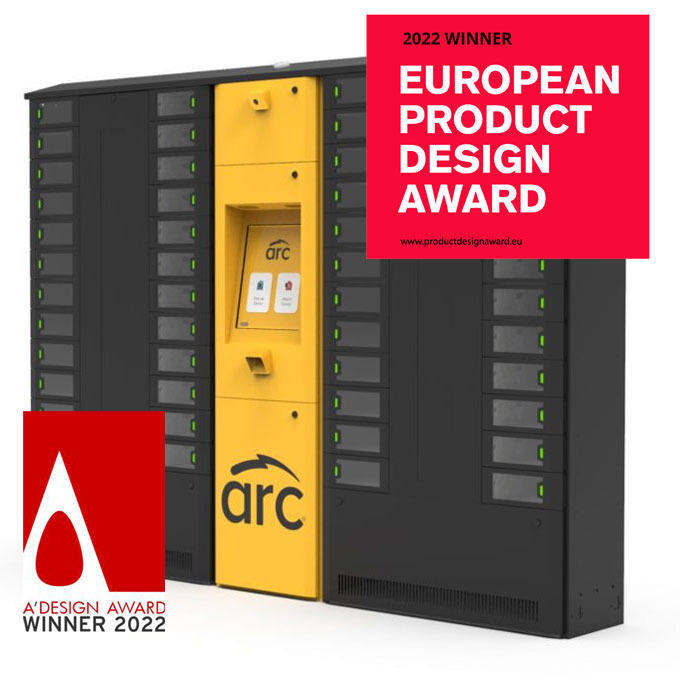
Design 1st client ARC Devices Inc. has developed several connected devices that measure vital signs including pulse, temperature and blood pressure. These devices allow healthcare professionals and patients easy access to vital sign information.

Share

Working on hardware to stop the spread of viruses?

We can help take you from idea to design, prototyping, and volume manufacturing.
Published on: February 27, 2023

The Hardware Startup Renaissance

The Hardware Startup Renaissance

27 Years Experience

75+ Design Awards

1,000+ Manufactured Products

From Idea to Prototype in as Little as Six Weeks!

Ready to Start?

The hardware startup renaissance is upon us and in a troubled market, both established companies and entrepreneurs are welcoming it with open arms.  The decade long gold rush to develop web software Apps is maturing.  Increasingly innovators are combining physical hard goods with new Apps in their product plans.  A suite of software platforms, wireless hardware modules, flexible manufacturing processes and low cost single item shipping are making the design, development and delivery of these products easier for ever smaller enterprises and virtual companies.

“It\’s a shift that Silicon Valley has taken note of in the last couple of years. Hardware startups are increasingly sharing the spotlight with software companies.” Alex Chang – Wired

It is good to see the pendulum swinging back towards an array of Gizmos, Gadgets and physical products that when combined with apps provide new ideas for smart devices that deliver great value to the user and utilize the global digital network that connects us all.

“The Hardware Renaissance” is unmissable. Paul Graham has noticed it and, certainly, my credit card has. Where once, entrepreneurs turned to software to form their ‘next big thing’, there is an increasing trend towards hardware in this space – Richard Oakley VentureBurn

There are many hardware opportunities and rich intellectual property opportunities for product ideas in a wirelessly connected world.  The last hardware revolution was the 80’s and 90’s with infrastructure build out of the landline and wireless telecom and data networks.  Once the network infrastructure and platform software was in place, the add-on product over the last decade has been mostly software apps.  These Apps were modular, simpler for smaller enterprises to build and the technically sophisticated portable hardware platforms (tablets and smart phones) were available.  As the software only opportunities mature the new value is found in combining Apps with hardware, looking at niche markets that leverage the network infrastructure and access to data in the cloud.  Product teams are designing to provide real time access for people to enhance their relationships, provide media, information and awareness of important things, in a personalized way.

Hardware is much riskier than software.  It can take significant capital, the amount depends on how much software and hardware development the new product is going to require.  With existing platforms and modular components it is getting much easier to develop hardware product.  The process does not go away as you still need to build prototype after prototype before you can go into production.  A wrong choice of features or failed prototype success can mean tens to hundreds of thousands of dollars lost. It\’s easy to take a wrong turn.  As the hardware is being completed, you have electronics and software development to do.  Hardware development also requires selecting manufacturers, designing packaging, organizing logistics, testing the product and passing regulatory compliance, then financing and managing your build inventories.

Three key enablers have come into the market in the last few years, (1) Rapid Design- Prototype – Build techniques including Crowd Sourcing of simpler products, (2) Crowd Funding ‘Kickstarters’ where individuals help fund a project for the thrill of being involved and the possible reward of being first to have the new product and (3) An increase in the number of people wanting to invent (possibly due to a troubled economy), and companies needing to take higher risk and innovate.

Design 1st is Ottawa’s largest independent hard goods product design and engineering team, inventing and developing product with R&D departments and Start Ups across North America.  Over the past 3 years we have witnessed the hardware product renaissance first hand.  Clients are asking help to put wireless devices on athletes – real time video in moving vehicles – monitor patient’s health and safety  – smart devices for home management – heart and breath belts for nutrition and fitness tracking – Security Camera control by smart phone – real time poker game dealer monitoring – hydro, heat, LED lighting and fluid monitoring for commercial spaces providing real time adjustment and alerting, and many more standalone products in widely different markets.

Development time frames to invent, test and engineer are being reduced from over a year to less than six months.  The process has evolved into smaller teams of experts, faster project times, lower R&D costs, test verifying markets quicker with prototypes and ability to commit to lower production volumes. The coming wave is a wealth of appealing high quality product that used to only be possible with larger firms.

Share

Have a new product idea?

We can help take you from idea to design, prototyping, and volume manufacturing.

Published on: June 12, 2014