
Category: Product development

Hardware Product Development Trends for 2026

10 Product Development Trends for 2026, Backed by 100+ Hardware Projects
Estimated Reading Time:

Introduction

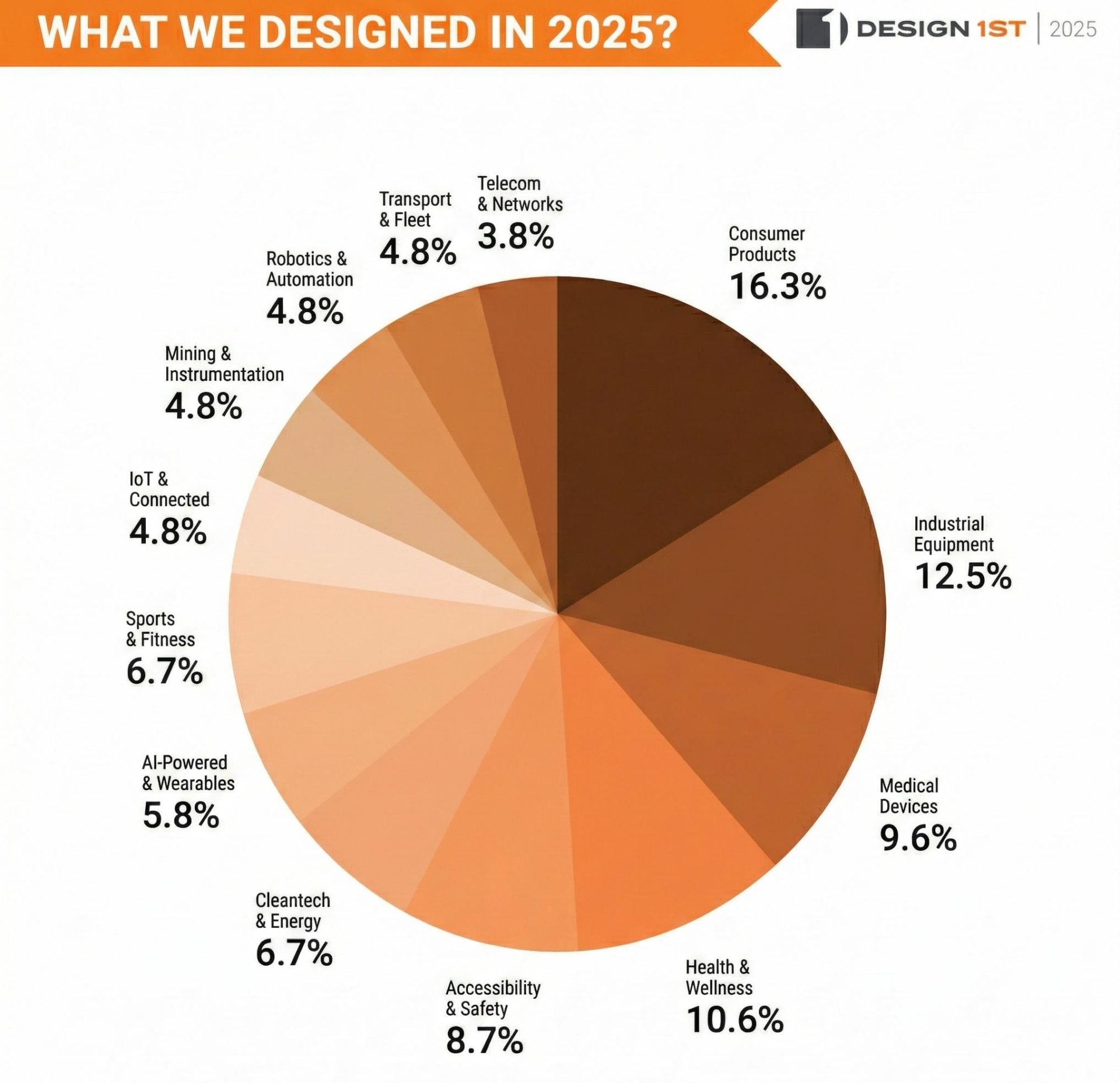
Last year at Design 1st, we worked on over 100 physical hardware projects across thirteen industries. Medical devices, consumer electronics, industrial equipment, pet tech, clean energy.

We’ve been doing product development for 30 years. What follows isn’t a forecast based on market reports. The patterns below are showing up right now in active development. Real projects. Real clients. Real engineering problems getting solved.

If you’re planning a hardware product launch in 2026, here’s what development actually looks like from inside the shop.

1. Regulatory Front-Loading

For years, compliance was the thing you figured out after the design was locked. Hire a consultant, run the tests, get the sticker. That approach is dead.

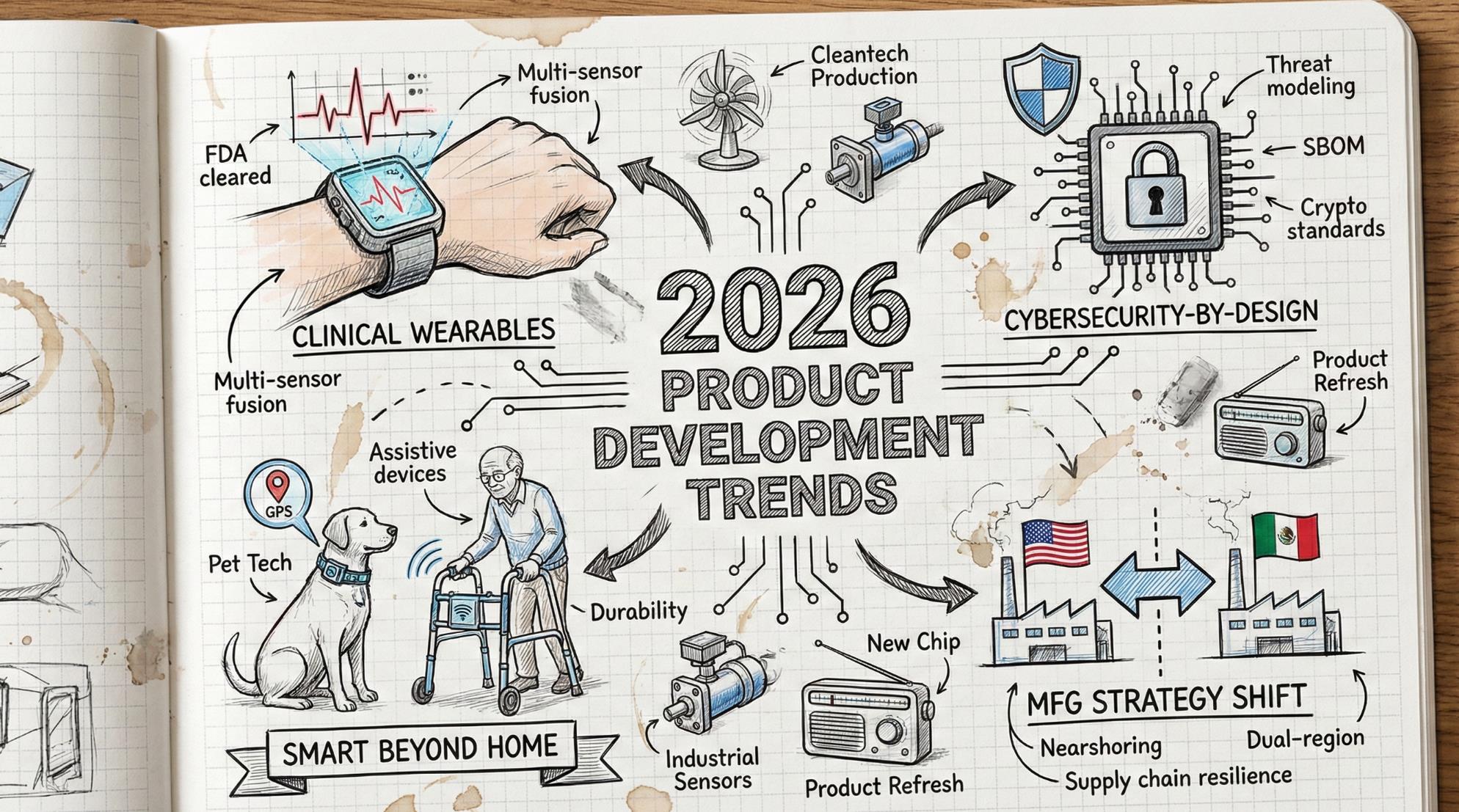
Three regulatory deadlines are converging. FDA cybersecurity guidance went final June 2025. EU Digital Product Passports standards finalized December 2025, with batteries mandatory February 2027. Right to Repair hit critical mass with five states enacted and all 50 introducing bills.

We’re seeing the shift with clients developing connected stethoscopes, bladder monitors, and implantables. Security architecture and compliance documentation now start at concept phase, not after design lock.

2. Wearables Crossing the Clinical Threshold

The FDA used to be where consumer wearables went to die. Too expensive. Too slow. Not worth the regulatory headache.

Something shifted. Samsung’s Galaxy Watch got FDA clearance for sleep apnea detection. Dexcom’s glucose monitor now integrates with the Oura Ring. CMS expanded reimbursement codes for remote physiologic monitoring in 2026.

The unlock is multi-sensor fusion. One sensor gives you consumer data. Stack multiple sensors with smart algorithms and you get prescription-grade accuracy. Our partners developing sleep apnea monitors and concussion recovery systems are building for both worlds. Consumer form factors with clinical-grade accuracy.

3. Cybersecurity-by-Design

A stat worth noting: 53% of connected medical devices have critical vulnerabilities, according to the FBI. Not minor issues. Critical.

The old approach treated security as a feature to add later. That thinking created the problem we have now. New FDA guidance makes security architecture a design-phase requirement. Threat modeling, software bills of materials, encryption standards. All documented before clearance submission.

We’re embedding security architecture at concept stage across all connected device projects. For clients building bladder monitors, connected stethoscopes, and implantables, cybersecurity decisions are part of the first engineering review. Not the last.

4. Wireless Power Goes Infrastructure

Remember when wireless charging was a gimmick? A party trick for your phone that worked half the time and overheated the other half?

That era ended. Wireless power transmission is becoming infrastructure. Room-scale charging systems, in-road EV charging, and medical implants that never need battery replacement surgery.

Medical implants are the sleeper application. Wirelessly powered implants mean no more surgeries to replace batteries. We’re working on bone lengthening devices and dental implants that draw power without wires. The engineering challenge shifted from “can we do it” to “can we do it efficiently and safely at scale.” Different problem entirely.

5. DFM-First Development

A number that should scare every product manager: 70% of manufacturing cost gets locked in during design. Not during tooling. Not during production ramp. During design.

The old model was design first, figure out manufacturing later. Run EVT. Find the problems. Fix them in DVT. Maybe do another round. That model costs months and money.

The new model brings manufacturing into the room from day one. Cloud-based tools now provide real-time feedback on manufacturability and cost drivers within CAD. Teams integrating Design for Manufacturability early are cutting entire build rounds. Single-build EVT/DVT is becoming achievable for teams willing to do the homework upfront.

6. Smart Products Beyond the Home

Smart home got all the attention for a decade. Meanwhile, smart everything else quietly became a massive opportunity.

Pet tech. Over a billion pets worldwide. More than half of all households own one. Smart collars, GPS trackers, health monitors, automated feeders. Pet owners treat animals like family and spend accordingly.

Assistive tech. The World Health Organization projects 3.5 billion people will need assistive devices by 2050. AI navigation, fall detection, drowning alerts. Features that used to require institutional equipment now fit in consumer products.

The design challenge is different than consumer electronics. Pet products get chewed. Baby products get thrown. Accessibility devices become life-critical. Durability and safety certification drive engineering decisions.

7. Manufacturing Strategy Shift

Reshoring used to be a talking point. Now it’s a line item.

Mexico is accelerating as a nearshoring hub. Dual-region sourcing is becoming standard for anyone who learned hard lessons from 2020-2022. The question shifted from “can we make it cheaper overseas” to “can we make it reliably with supply chain flexibility.”

Geography decisions now happen at design phase because they affect component selection, tooling investment, and logistics planning. Waiting until production ramp to figure out manufacturing location costs time and money. We’re setting up manufacturing across regions for clients who need both cost efficiency and supply chain resilience. The teams winning are treating manufacturing as a design partner, not a vendor to call later.

8. Cleantech Moving From R&D Lab to Production

Technologies that spent years in demonstration are finally hitting commercial deployment. Small-scale hydrokinetic turbines, solar EV charging systems, smart composting, HVAC heat recovery. Hardware engineering is catching up to climate policy timelines.

The shift isn’t about breakthrough science. The core technologies exist. The challenge is productizing them at price points that work without subsidies.

We’re working with partners on hydrokinetic turbines moving from pilot to production, solar EV chargers designed for residential installation, and thermal recovery systems for commercial buildings. The engineering focus has moved from proving concepts to solving manufacturing and installation constraints.

9. Industrial Equipment Adding Intelligent Sensors

Sensors are becoming standard in industrial equipment. Predictive maintenance, real-time monitoring, edge computing. The global pressure sensor market alone is projected to exceed $30 billion by 2032.

Industrial environments are harsh. Extreme temperatures. Vibration. Chemical exposure. Connectivity can’t come at the cost of durability.

We’re integrating sensors into hydraulic systems, industrial vacuum equipment, UV sterilization systems, and mining instrumentation. The engineering requirements go beyond adding a chip and an antenna. Sensor placement, power management, and data transmission all need to survive conditions that would destroy consumer electronics.

10. Old Products Getting Refreshed

Ground-up new builds get the headlines. But a significant portion of product development work is refreshing existing products rather than starting from scratch.

Companies are adding connectivity to proven platforms. Embedding AI capabilities into established product lines. Updating designs to meet new regulatory requirements. The economics make sense. Lower risk than new development. Existing tooling and supplier relationships. Proven market demand.

We saw a notable uptick in redesign projects through 2024 and 2025. Companies updating products for cybersecurity compliance. Adding smart features to legacy platforms. Refreshing tired designs with new manufacturing approaches. For teams facing budget pressure and timeline constraints, product refresh often delivers better ROI than starting over.

What to Watch

The pattern across all ten trends is convergence. Regulatory pressure, manufacturing economics, and technology maturity are colliding earlier in the development cycle than ever before. Decisions that used to be deferred are now irreversible after design.

For teams planning 2026 launches, three things matter most:

Compliance homework starts at concept phase. Not after design lock.

Manufacturing decisions happen during design. Not at production ramp.

Consumer expectations keep moving. Your timeline needs to account for that.

That’s not a trend. That’s the new baseline.

Share

Need help manufacturing your product idea?

We can help take you from idea to design, prototyping, and volume manufacturing.

Published on: January 15, 2026

AI-Powered Tool to Estimate Your Product Development Budget

AI-Powered Tool to Estimate Your Product Development Budget

30 Years of Project Data

Real-Time Budget Estimates

Timelines to Get to Market

Try the Free AI Product Development Budget Tool

After 30 years in product development, I’ve seen even experienced innovators struggle to estimate the true costs of bringing a product to market. That’s why we built the free AI Product Development Budget Tool.

Using data from hundreds of projects, this tool gives you a reliable ballpark estimate of what it takes to go from an idea for a real world physical product to a fully engineered and tested product ready for manufacture and production.

What the Tool Provides:

Whether you’re a startup or an established company adding to your product line, the tool helps you plan with confidence, avoid costly surprises, and make informed decisions early. It’s practical, data-driven, and built on hundreds of similar products, from decades of real-world experience. 

Based on our testing to date, even a simplified description of a product idea will get you within 10% of an actual required effort 7 times out of 10. That’s pretty amazing.

The Design 1st AI driven Product Development Budget Tool starts with a simple idea description and provides a range of hours (effort) that would be required. After the first AI summary, we encourage you to enter further specifics on the electronics complexity, software needs, unique features, and technical expertise, if any, that you know could be part of the idea development.

The tool will use further details to provide a more accurate estimate of the effort and will provide more content on the highest risks and estimated schedule. Enter your idea summary and get immediate feedback, enter additional information and get more specifics and refined effort.

How to Use the Tool

Using the Free AI Product Development Budget Tool is straightforward, and the more detail you provide, the more accurate your estimate will be. 

Here are the steps to starting using the tool now:

Step 1: Access the Tool by visiting :https://budget.design1st.com/ 

Step 2: Enter your product idea

Enter as much detail as possible. Be specific about features like electronics, software, sensors, or connectivity. The more precise you are, the better the tool can estimate your development effort.

For example:

  • A smart kitchen appliance that has electronics, sensors, mobile app integration, and Wi-Fi connectivity for remote control.
  • A wearable fitness tracker that has electronics, embedded sensors, GPS, and Bluetooth connectivity for syncing with smartphones.
  • An outdoor sports camera with electronics, it is rugged and waterproof and equipped with advanced stabilization software and 4K video capabilities.
  • A reusable coffee cup with a simple temperature control feature and an integrated digital display (no electronics or software needed).
  • A connected home device with electronics, AI voice control, cloud integration, and real-time sensor data processing.

Step 3: Refine your estimate. 

Once you have your initial budget, you can adjust based on additional details. For example, if you add custom firmware development, require specific compliance certifications, or change material selections, the tool will update your budget accordingly. Ask questions like, “What if my product needs continuous software updates?” or “How does adding more sensors impact my budget?”

By providing detailed input early on, you’ll get a more tailored budget estimate that reflects the actual complexity of your product, helping you plan with confidence.

Next Steps:

The Free AI Product Development Budget Tool is just the first step. It’s built to give you a clear, reliable estimate to start planning, but we know there’s always more we can do. This is version one, and our goal is to take it further—eventually turning it into a fully customized tool that fits your exact needs.

We want to hear from you. Your feedback will help us improve and shape the future of this tool. Let us know what works, what doesn’t, and where we can make it better, so we can keep pushing forward and make this the go-to resource for product innovators.

If you’d like to explore your project further, talk to a product development expert, and discuss your project budget, click here.

Share

Ready to get your product development budget?

Try the free AI-Powered product development budget tool today.

Published on: October 1, 2024

Navigating Edge AI for Physical Products

Navigating Edge AI for Physical Products

Artificial Intelligence (AI) is ushering in a new era of innovation, particularly with Edge AI, which allows companies to embed smart, responsive AI capabilities directly into their physical devices.

By processing data on the device itself, Edge AI enhances efficiency, privacy, and performance, making it a game-changer for product innovation. Let’s dive into how Edge AI is redefining the capabilities of physical products.

Embedding Intelligence in Physical Products

Edge AI refers to the technology that processes data on the device it’s generated, like in smartphones, IoT devices, and industrial machinery, rather than sending it to a centralized location. This approach streamlines the way we interact with data, presenting unique challenges and unlocking new advantages. Learn how Design 1st navigates the evolving Edge AI Landscape:

Table of Contents

Challenges in Edge AI Integration


When integrating Edge AI into new products, it’s crucial to be aware of several challenges that can impact performance and user experience:

  • Resource Constraints — Optimizing AI models for compact devices with limited power is a critical step towards harnessing Edge AI’s full potential.
  • Data Privacy and Security — Implementing robust security measures is essential for leveraging local processing without compromising user privacy.
  • Latency Issues — Minimizing latency through efficient algorithms ensures real-time applications run smoothly and reliably.
Advantages of EDGE AI for Physical Products


Embedding Edge AI into physical devices brings several key advantages that significantly enhance performance and user experience:

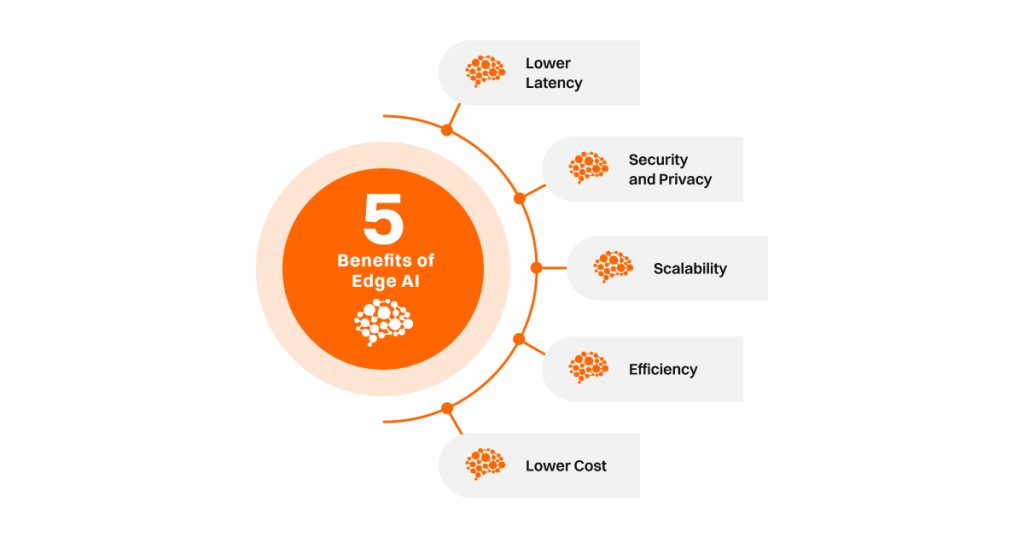
  • Reduced Latency: Local data processing cuts down latency, a game-changer for critical-response applications like autonomous vehicles and wearable IoT devices.
  • Bandwidth Efficiency: By minimizing data sent to the cloud, Edge AI conserves bandwidth and reduces the costs tied to cloud storage and communication.
  • Cost Savings: Edge computing slashes the overhead linked to cloud services by reducing the need for ongoing data transfers and storage in distant data centers.
  • Improved Reliability: With the ability to function independently of cloud connectivity, Edge AI ensures devices remain operational and reliable across various conditions.
  • Scalability 

Image: Five benefits of Edge AI

Real-World Applications of Edge AI in Physical Products


Edge AI is transforming the landscape of physical products, making them smarter and more responsive to our needs:

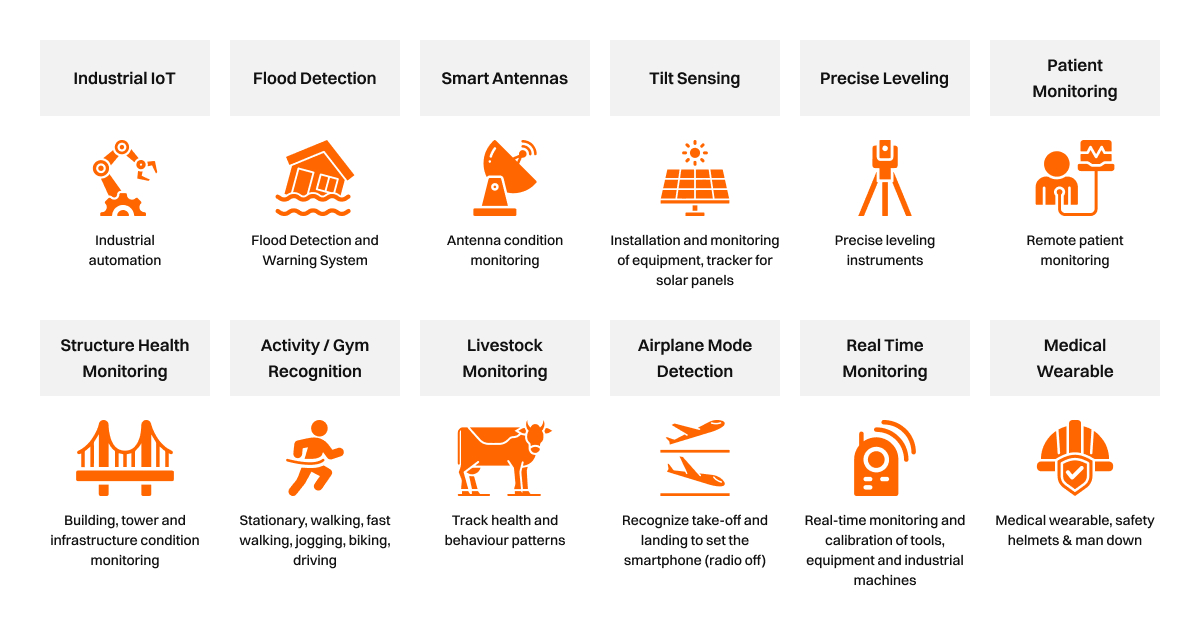
  • Wearable Health and Well-being: Revolutionizing the way we monitor health, Edge AI in wearables provides instant analysis of vital signs and biometric data. It extends its capabilities to monitoring the health of humans, pets, animals, and even plants, efficiently transmitting only essential information to conserve bandwidth and battery life.
  • Remote Sensors: In applications ranging from agriculture to security, Edge AI enhances the functionality of remote sensors. It enables automatic actions, like shutting off utilities during emergencies or detecting security breaches, offering rapid responses and valuable insights in real time.
  • Anomaly Detection/Preventive Maintenance: Edge AI is crucial in industrial settings for early detection of wear and potential failures. This prevents costly downtime and maintains operational efficiency. This predictive maintenance capability ensures smoother, uninterrupted industrial processes.
  • Fast Activation and Battery Saving:: Through technologies like wake word detection and gesture recognition, Edge AI improves device usability and energy efficiency. It supports a wide array of applications, from inventory management to quality control in manufacturing, by enabling quick activation and smart monitoring without excessive power use.
  • Signal Enhancement and Smart Processing: By refining and augmenting data directly on devices, Edge AI significantly enhances the quality of information derived from audio and visual inputs. This includes noise reduction, signal enhancement, and real-time content generation, like blurring backgrounds for privacy or translating spoken language instantly, making devices more versatile and user-friendly.

Image: Industries and applications of Edge AI

Examples of Industries Embracing Edge AI


Discover how Edge AI is transforming industries by integrating intelligence directly into physical products:

  • Logistics and Transport: Revolutionizing logistics with Edge AI for seamless real-time tracking and autonomous vehicle navigation, streamlining data processing for efficiency.
  • Intelligent Sports Wearables: Edge AI in sports wearables offers instant performance feedback, risk assessments, and training enhancements, leveraging sensor analytics.
  • Retail Stores: Transforming the retail experience with Edge AI for tailored recommendations, streamlined inventory management, and faster checkout processes.
  • Urban Mobility and Traffic Control: Improving traffic management and autonomous vehicle safety in urban settings with Edge AI, utilizing advanced data analytics.
  • Healthcare Devices: Edge AI plays a crucial role in wearable healthcare devices, focusing on sensor integration and efficient AI algorithms for privacy-respected real-time monitoring.
  • Consumer Electronics: Elevating user experiences in consumer electronics like smartwatches and home assistants with Edge AI, emphasizing low power use and swift processing.
  • Industrial Equipment & Manufacturing: Edge AI is reshaping manufacturing with predictive maintenance and quality control, enhancing operational efficiency and addressing integration challenges.
Cloud Computing vs. Edge AI
edge ai vs. cloud

Edge AI enables processing and decision-making at the source of data generation, offering a tailored solution for physical devices that operate with immediacy and autonomy, in contrast to Cloud Computing which relies on centralized data processing. The main benefits of using Edge AI over Cloud Computing include:

  • Latency: Edge AI minimizes the delay between data creation and action by processing information directly on the device, crucial for time-sensitive operations where even milliseconds matter.

  • Security: By processing data locally, Edge AI reduces the exposure to potential vulnerabilities that can occur during data transit to and from the cloud, thereby safeguarding sensitive information inherent in physical devices.

  • Power Efficiency: Physical devices leveraging Edge AI can operate with greater power efficiency since they don’t rely heavily on long-distance data transmission, which can be energy-intensive, thus extending the operational time of devices on a single charge.

  • Real-time Operations: For devices that need immediate response, such as autonomous vehicles or industrial automation, Edge AI ensures that real-time data is acted upon instantly without the inherent lag of cloud-based decision-making processes.

The table below compares the main features of Edge AI vs. Cloud Computing for usage with physical devices.

Features

Edge Computing

Cloud Computing

Latency

Low

High

Bandwidth Required

Low

High

Processing Power

Low

High

Storage Capacity

Low

High

Security

High: no transmission

Medium: cloud backup

Cost

Medium

High

Scalability

High: number of devices

High: Processing/storage

Context Awareness

High

Low

Power Efficiency

High

Low

Maintenance & Upgradeability

Medium

High

Where Design 1st Can Help


Navigating the complexities of Edge AI development can be daunting, but Design1st is here to streamline the process, reduce risks, and accelerate your journey to market. With over a decade of experience and a full-service team of experts, we provide a safe and efficient path to bring your Edge AI product from concept to volume production. Here’s how we can help:

  • Optimizing AI Models: Our team specializes in refining AI solutions for physical products with limited resources, ensuring optimal performance while mitigating risks associated with power consumption and processing capabilities.
  • Accelerate Your Path to Market: Leveraging our expertise and efficient processes, we expedite your product development timeline, enabling you to launch your Edge AI solution faster and stay ahead of the competition.
  • Commercialize Your R&D: We assist in commercializing your research and development efforts, helping you turn your Edge AI innovations into market-ready products quickly and efficiently.
  • Prototype Fast: Using rapid prototyping techniques, we iterate and refine prototypes swiftly, allowing you to validate your Edge AI concept and make informed decisions early in the development process.
  • End-to-End Product Development: From concept to volume production, Design1st offers comprehensive support, ensuring a smooth and successful transition from idea to market-ready solution while minimizing risks and maximizing speed to market.

What’s Next?

Edge computing is reshaping the landscape of AI, offering unique challenges and unmatched advantages. Partnerships with seasoned experts like Design1st are essential for navigating this transformative journey. Together, we unlock the full potential of edge AI, ushering in a new era of smarter, more efficient technologies. Ready to explore the possibilities? Let’s embark on this journey together.

Share

Have a new product idea?

We can help take you from idea to design, prototyping, and volume manufacturing.

27 Years Experience

75+ Design Awards

1,000+ Manufactured Products

From Idea to Prototype in as Little as Six Weeks!

Ready to Start?

Published on: April 1, 2024

The Process for Developing a New Product: Template + Guidelines

The Process for Developing a New Product: Template + Guidelines

27 Years Experience

75+ Design Awards

1,000+ Manufactured Products

From Idea to Prototype in as Little as Six Weeks!

Ready to Start?
 
Product development is about bringing a product idea to market.

Although product development differs by industry, it starts with an idea and moves through critical process stages that ensure even very complex products follow a realistic and successful path to market.

During the last three decades, we have successfully developed for our clients, over  750+ physical products from idea through to volume manufacturing using a predictable process.

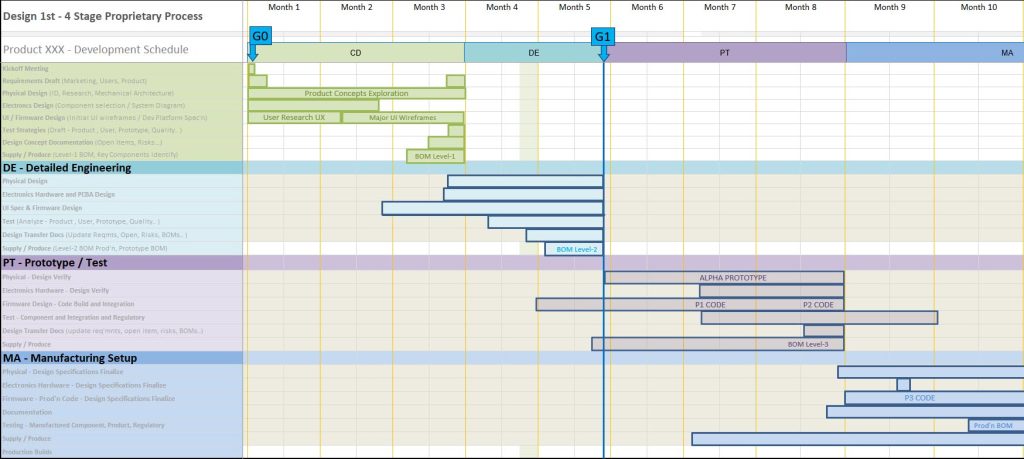
Below is an example of our typical product development process template. It includes:

  • Typical timeline to reach volume production
  • Key activities in each stage of product development
  • Prototype Modelling and Testing activities in each stage
  • Controlled release to Manufacturing with production-ready drawings
4-stage-product-development-process-1

The Four Stages of our New Product Development Process

Implementing a process-oriented discipline without losing the flexibility is critical to success. As many aspects of product development are unpredictable, frequent testing to validate your assumptions minimizes risks, maximizes your budget, and keeps the user experience top of mind as the product moves through predictable schedules and deliverables.

Design 1st delivers world class services that mitigate risk and provide accurate, reliable, and repeatable results using our proven four-step process.
Explore the details in each phase of our process below:

Phase 1: Concept Design

Concept design is the most important phase in any product development project. Making the wrong decisions here or spending too much time iterating potential product concepts can be costly. To get it right, we follow a structured design-for-users and design-for-manufacturing matrix approach that identifies key acceptance, feature and feasibility risks and lays out the mechanical, electronics and software architectures. Identified high risk elements are tested and reviewed before deciding on the final product solution to develop.

The output is a finalized product concept ready for build and test.

phase-1-concept-design

Phase 2: Detailed Engineering

Once a product concept has been finalized, we complete a ‘ready for manufacturing’ fully defined product specification that provides the necessary information to:

  1. Build the ALPHA product prototype and
  2. Allow third party manufacturers to quote and deliver.

This stage includes creating product housing and mechanism parts in 3D CAD geometry, hardware and firmware design including building rapid prototype bench models of sub systems and running simulations to validate key design assumptions and tolerances.

From stand-alone to connected products, this stage includes the housing design, custom electronics component selection, schematics design and PCB layout. Custom firmware coding for the microprocessors and programable chips is also built to run the product interface and communicate with a variety of radios to other devices, smartphones, and the internet.

The output is 3D CAD geometry and documentation to produce the very first ALPHA pre-production prototype unit with quick prototype suppliers.

phase-2-detailed-engineering

Phase 3: Prototype and Test

This first ALPHA prototype enables the design and engineering team to check the hundreds of decisions made on the product design stage and fine-tune the product specifications for manufacturing, including any required regulatory testing. Here is where the path to production begins to speed up.

We take the pre-production prototype files and produce a fully functioning product that replicates the final manufacturing process and allows all stakeholders from client to customer to manufacturer to review, comment and refine the design.

This prototype is then put through a range of testing, validation, and fine-tuning. The result is an “alpha prototype” ready for controlled user testing, product acceptance feedback and the fully defined product now makes it possible to get formal quotes from third-party partners in manufacturing.

One important output is a finalized BOM (bill-of-materials) and the creation of manufacturing-ready drawings for volume production. These formal drawings and 3D CAD geometry files must be release managed with all updates to any information going to third parties strictly controlled in a sequential release number process.

The process is two steps:

  1. The first step is control of the pre-production documentation and when all parts and assemblies are approved
  2. The second step is the production-ready bill of materials and documents to be used for the commercial supply contracts and first pilot run build of general availability (GA) product
phase-2-prototype-test

Phase 4: Manufacturing Setup

Setting up manufacturing really starts in the concept design stage and carries through to the Detailed Engineering and Prototype stages.  The attention to detail on a part by part decision basis is critical. It is not enough to transfer the production-ready design files to the manufacturing partner and hit go on volume production.

Suppliers must review, revise and agree to produce all parts and assemblies to the quality of the design requirements.

A quality control process must be implemented and revised as production issues are identified and resolved, much like the release control process for the transfer of part files to the suppliers is handled.

There are three types of part suppliers:

  1. The custom parts like injection-molded housings
  2. Off-the-shelf (OTS) parts like screws
  3. Custom off the shelf parts (COTS) where the design team must work with a part supplier to modify an existing component used in other products that are customized to the design teams needs. An example of a COTS part would be a display module with a bezel lens covering the top.

The COTS parts are the riskiest as the third party supplier may discontinue supply and create a shortage delay issue for manufacturing.

The transfer to manufacturing has 4 steps:

Step 1: Review the design documentation and get agreement on all parts and assemblies.

Step 2: Have the manufacturer produce sample parts for approval by the design team with any revisions to the specification documents

Step 3: Ordering parts and running a small volume of product (PILOT RUN) to verify the process and quality of the product coming off the assembly line.

These pilot-run units may be used for early sales or for marketing Beta trial testing depending on the complexity of the product and quality of the production process. Minor revisions to the design files are made from the feedback and learning the business team, design team, and manufacturing team find during the pilot run build and testing.

Step 4: Ordering all parts and the first official production product build which ends with General Availability (GA) product ready to ship to the target consumers.

phase-4-manufacturing-setup-1536x220

Design 1st delivers world-class services that mitigate risk and provide accurate, reliable, and repeatable results using this proven four-step process. Our process provides reliability and consistency at every stage to ensure your success in the market.

Share

Book a project review consultation to learn how our process can work for you.

We can help take you from idea to design, prototyping, and volume manufacturing.
Published on: February 26, 2023

Inventor

Inventor

27 Years Experience

75+ Design Awards

1,000+ Manufactured Products

From Idea to Prototype in as Little as Six Weeks!

Ready to Start?

The hottest new hardware product trend of 2022? Face Mask Innovation

Entrepreneurs, Startups, and enterprises across the globe and pouring resources into the development of new innovative masks. The strong global demand for face protection has accelerated development efforts, the result is dozens of new masks on the market.

1. LED Matrix Face Mask

Whether you want to display a message, or even a cute pixelated character, it’s all up to you. The mask can even respond to music or the sound of your voice with equalizer effects. Electronics are removable for cleaning and sanitation. The tech components can be removed for normal wear and better air circulation.

2. LEAF: Leaf HEPA

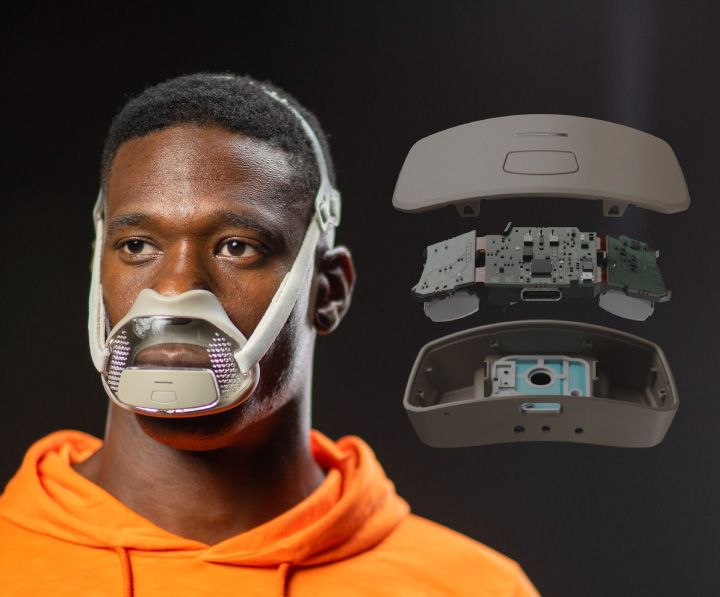
Leaf is the world’s first transparent n99+ HEPA filter mask with UV-C self sterilisation. Secured by the most capable yet easy to breathe HEPA filters rated at N99+, MERV20+. The HEPA filter with 25 pleats, fits in a chin size cartridge while carrying 5X the surface of the entire mask allowing ease of breathing that is off the charts.

3. Livinguard: CoV-2

The Livinguard mask can be washed up to 30 times with undiminished efficacy of its protective properties. If used daily and washed weekly under normal usage conditions, the mask can be used 210 times. The mask can be reused multiple times before washing because the fabric covering the filter media continuously destroys microorganisms.

4. INDIEGOGO: AirZ

When you wear the AirZ Reusable Mask, you can control how fast air flows through it. In fact, this reusable mask offers three different active airflow speeds. AirZ has a built-in Wind Wheel Module to provide enough airflow based on your different demands. AirZ supports quick charge, where a 2-hour charge can provide around 5 hours of continuous use.

5. Airwheel Air Experts

Airwheel F3 Smart electric air mask in unique ventilation design,built-in air motor which is Motor drives wheel on wind cavity to suck air and breathe gas, excellent permeability, can realize two-stall adjustment and produce air with high efficiency and actively deliver fresh air.

6. Delta Plus M6100 Jupiter One Filter Reusable Half Face Mask Respirator

These reusable face masks are manufactured from tri-material for ultimate wearer comfort, with the mask body being made from Thermo-plastic Elastomer (TPE), the cartridge anchorage from polyethylene HD (HDPE) and the valves protective housing from polyp­ro­pylene (PP).

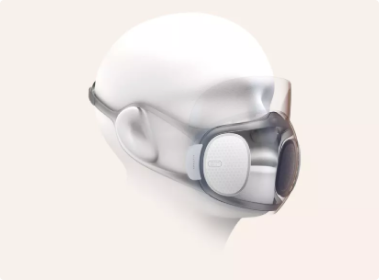
7. Huami Amazfit Aeri Mask

N95 mask that doesn’t interfere with face unlock on smartphones because it will be made of an anti-fog material, making it easier to unlock your phone via Face ID. The mask will also have built-in ultraviolet lights for self-disinfection. The mask also uses removable air-filters that can last for six weeks.
fsdfdsf

8. Breathable IceChill 2.0 Mask

Breathable IceChill 2.0 Mask uses an innovative light weight material. It uses patented technology commonly used in sport apparels for lowering temperature. This is a mask you can Jog in. This washable mask can last more than 50 machine wash cycles.

9. PM2.5 Dust Mask Smart Electric Fan Mask Anti-Pollution Breathable Outdoor Mask

Smart electric air mask, with unique ventilation design, built-in air motor which is Motor drives wheel on wind cavity to suck air and breathe gas will exhaust from bottom outlet, excellent permeability, can realize two-stall adjustment, and produce air with high effectivity and actively deliver fresh air.

Share

Have a new face mask innovation idea?

We can help take you from idea to design, prototyping, and volume manufacturing.

Published on: December 28, 2022