
The Manufacturer Isn't Ghosting You. Your RFQ Is.
What goes in the package, where to actually look, how to read a wild quote spread, and the tooling clause that saves your mold.
Talk to ten hardware founders about sourcing and you'll hear the same story ten ways. They sent out fifteen inquiries. Three quotes came back, so far apart they might as well be for different products. The cheap one felt like a trap. The expensive one felt like an insult. And the factory that sounded best on the call stopped answering email two weeks ago.
The popular diagnosis is that factories don't care about small customers. The real diagnosis is more fixable: the RFQ was incomplete, and factories don't argue with incomplete RFQs. They just don't answer them.
Why factories go quiet
Picture the other side of the desk. A quoting engineer at a decent contract manufacturer opens forty inquiries a week. Most are a paragraph and a dream. No drawings. No quantities. No target price. Pricing one of those means two days of unpaid engineering, pulling requirements out of a stranger who may never order anything. So she doesn't. She quotes the three inquiries that arrived complete and lets the rest age out of her inbox.
That's the whole mystery. Nobody blacklisted you. You entered a triage you didn't know existed.
One honest fork before we go further. If your product is a printed t-shirt, a candle, a simple cut-and-sew good, you don't need this article. Shopify's guide to finding a supplier is genuinely good for that product class, and it ranks #1 for a reason. But it runs 4,200 words without once mentioning tooling ownership, first-article inspection, or PCB sourcing. If your product has a circuit board, a custom-molded part, or a certification path, you're the reader it wasn't written for. Stay here.
Build the RFQ package before you contact anyone
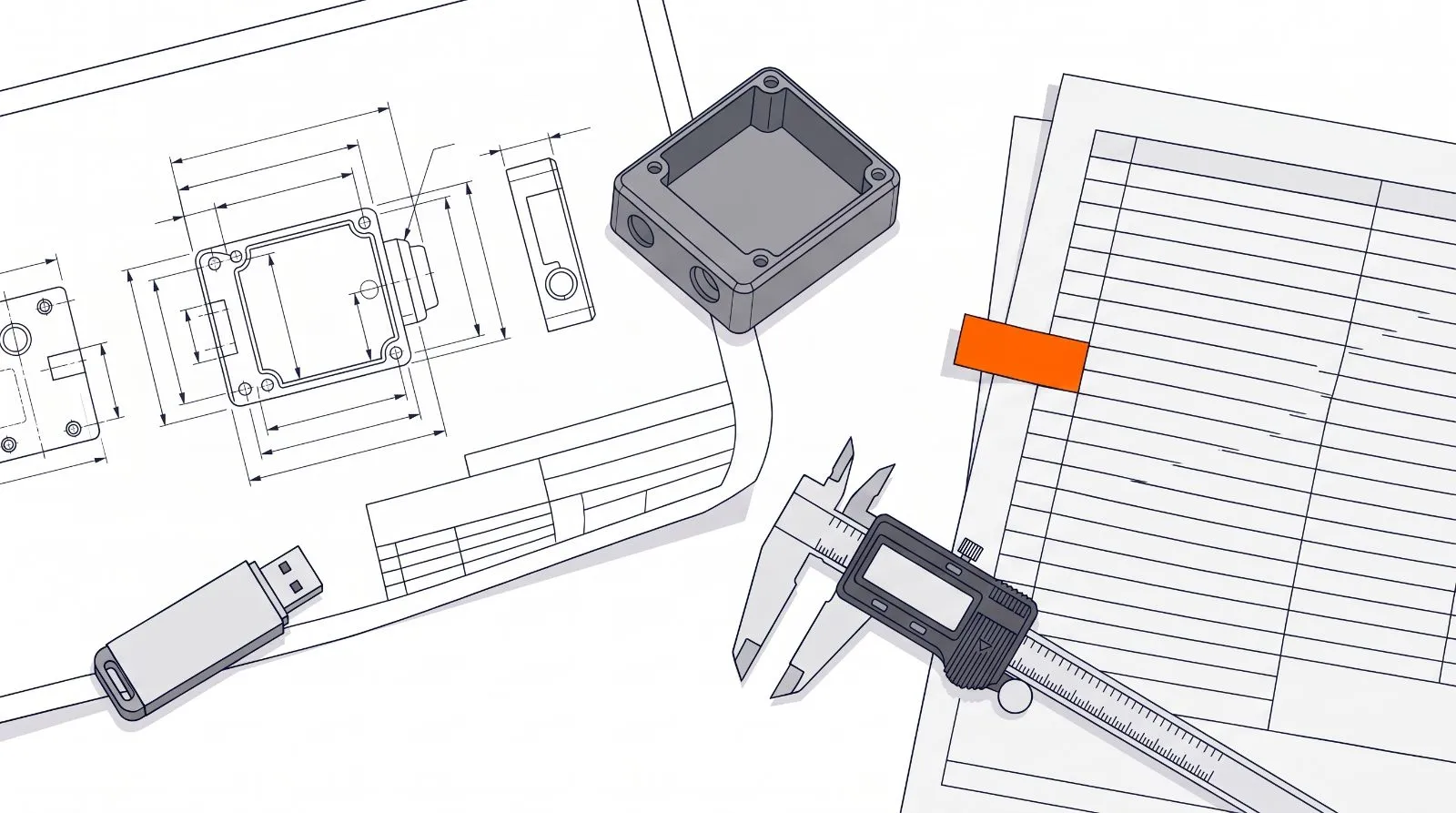
An RFQ (request for quote) is the folder you send a factory so they can price your product without a meeting. Here's what a complete one contains. This list is the article. Everything after it is technique.
The RFQ package
- 2D drawings with dimensions, tolerances, materials, and finishes called out. The drawing is the contract.
- 3D CAD files (STEP format, not renders).
- A bill of materials (BOM): every part, every material, approved alternates where you'll accept them.
- Quantities: the volume you'll actually order first, plus the forecast if it goes well. "500 now, 5,000/year if it sells" is a real answer factories respect.
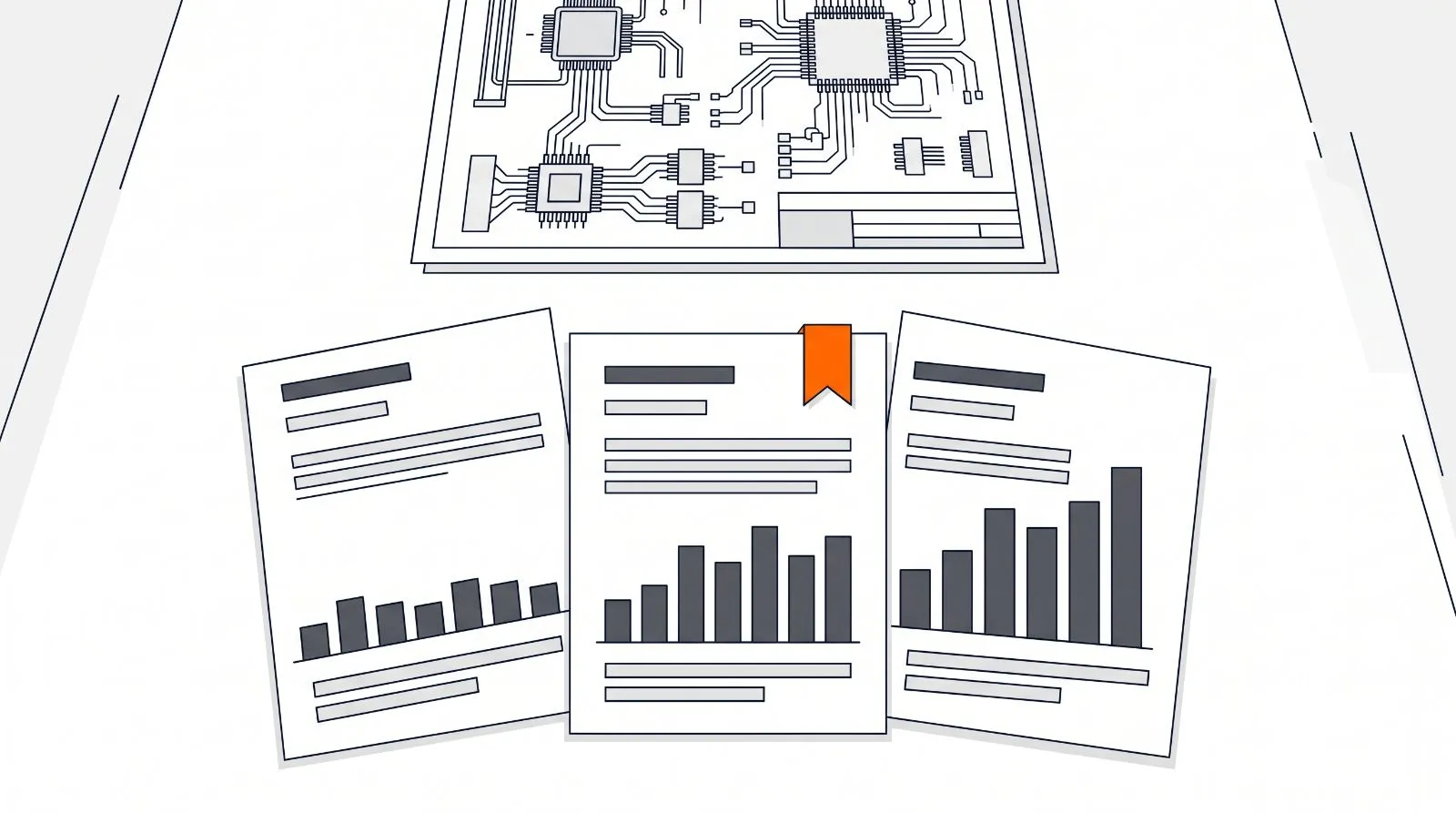
- Test and acceptance criteria: how you'll decide a unit is good. Even one page changes how seriously you're taken.
- Cosmetic spec: which surfaces matter, what defects you'll reject.
- Packaging spec, even a rough one.
- Target price, or at least a range. Founders hide this number out of negotiating instinct. Factories read the silence as "doesn't know what this costs," which is worse.
You don't need all of it to be perfect. A factory will forgive a rough packaging spec. What it won't forgive is having to guess your quantities, your tolerances, or your materials, because guessing wrong costs them money and arguing with you about it costs them time.
The item that kills most inquiries: quantities. A factory can price around a missing cosmetic spec. It cannot price around "volumes TBD." Every line on a quote is a function of how many you're making, so an inquiry without a number isn't a quote request yet. It's a conversation request, and those go to the bottom of the pile.
A complete package doesn't just raise the reply rate. It changes what comes back. Instead of one lukewarm "tell us more" and two numbers you can't compare, you get quotes that price the same job, from factories that read the same drawings, close enough to set side by side. The product didn't change. The pile your inquiry landed in did.
Where to actually look
Now the part everyone starts with, which works fine once you have the package and badly before.
Referrals first. Ask the engineers who designed your product where it should be built. Ask founders one product class above you. A factory that comes recommended by someone who ships is pre-vetted in a way no directory can match, and a referred inquiry gets read differently. This is the highest-yield channel and it's not close.
Thomasnet, for North American suppliers. Free to search, half a million North American manufacturers, owned by Xometry since 2021. The verdict: excellent for finding candidates by capability (they added an AI-powered search in early 2026), useless for telling you who's good. Treat it as a phone book with filters, not a vetting service.
NAICS codes, the trick nobody uses. Every manufacturing process has a six-digit federal classification code. Look yours up at census.gov (printed circuit assembly is 334418, for instance), then search "[code] manufacturer [region]". Supplier sites list their codes, so you're now searching the way factories describe themselves instead of the way founders describe products. Ten minutes, and you'll surface shops that never spend a dollar on marketing.
MFG.com, if you want factories to come to you. You post the RFQ, qualified shops bid. Works for machined and molded parts. The quality of what you get back tracks the quality of what you post.
Alibaba, with your eyes open. The real use of Alibaba isn't ordering, it's mapping the supplier base for your product class in an afternoon. If you shortlist there, know that many listings are trading companies, not factories. More on telling them apart below.
Trade shows, when you're serious. MD&M West for medical and precision, IMTS for machining, CES to see who builds what for whom. A twenty-minute booth conversation with your drawings in hand beats forty cold emails.
And the channel to drop: googling "manufacturing companies in [your state]." In the 60 days of search data behind this article, "manufacturing companies in [state]" variants were the single biggest bucket of queries, and the whole bucket converted exactly nothing. It's backwards. Your product doesn't care what state its factory is in. It cares whether the shop runs your process at your volume. Search by capability, filter by geography last.
OEM, ODM, or contract manufacturer?
Three terms you'll hit immediately, worth thirty seconds. A contract manufacturer (CM) builds your design to your spec; you own the IP, and it's the default relationship for an engineered product. OEM gets used loosely to mean the same thing. An ODM sells you their existing design with your logo on it: fastest path to market, and you own nothing. If a "manufacturer" keeps steering you toward their catalog instead of your drawings, you're talking to an ODM. Fine for a commodity gadget. Fatal for a product whose design is the company.
Vet the shortlist like an operator
Three checks separate factories from middlemen and good shops from good salesmen.
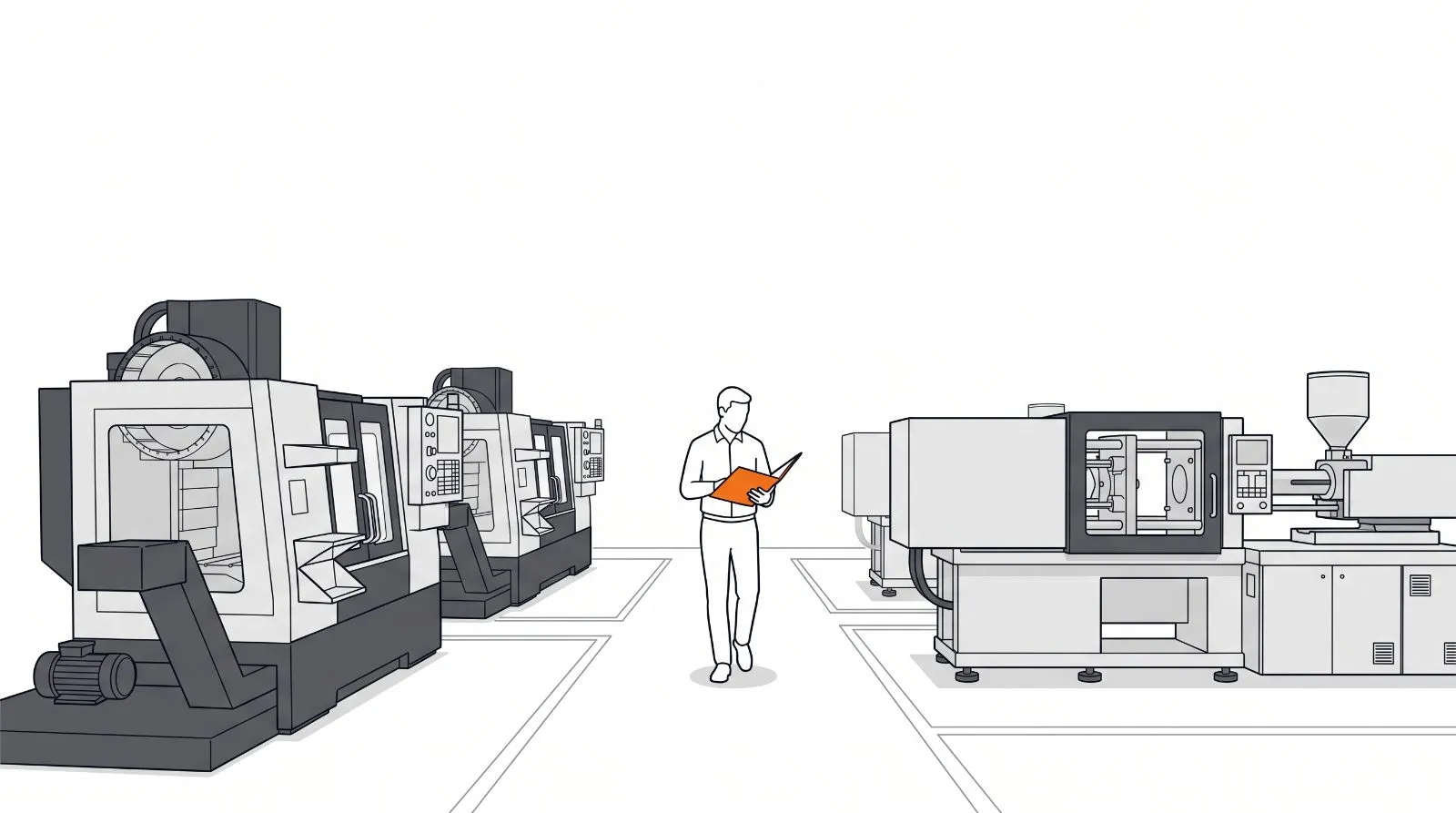
The trading-company test. Ask for the factory's business license and audit report (ISO 9001 at minimum). Ask for a live video walk of the floor, this week, not a produced video. Ask which machines will run your parts. A real factory answers all three in a day. A trading company stalls, because it has to go ask the real factory.
The DFM test. Send your package and see whether they push back. A shop that says "this wall thickness will sink-mark, can we go from 3mm to 2mm here?" is a shop whose engineers read your drawings. A shop that quotes your first revision without a single question either didn't read it or doesn't care what happens at the press. Either way you've learned something a brochure won't tell you.
First-article inspection (FAI), non-negotiable. Before the production run, the factory builds a small batch and measures it against your drawings, dimension by dimension, in a signed report. Put it in the purchase order. An FAI catches the wrong dimension while it's a batch of fifty on a bench, not a container of five thousand on the water. It's the cheapest insurance in hardware.
Reading the quotes
Remember the opening: three quotes, so far apart they might as well have been for different products. That's not noise. That's information. Factories aren't quoting different prices for the same job. They're quoting different jobs, because each one filled your spec's silences with different assumptions.
The usual suspects, in order of dollar impact:
| Line item | The cheap quote assumed | The expensive quote assumed |
|---|---|---|
| Material | The lookalike resin | The resin on your BOM |
| Tooling | Soft aluminum tool, 10k shots | Hardened steel, 500k shots |
| Tolerances | "About right" | The ±0.05mm your drawing asks for |
| QA | Visual check | Dimensional FAI + AQL sampling |
| MOQ | Baked a 10k-unit price into your 1k order | Priced your actual volume |
Read a spread as a diagnostic, not a lottery. Each line above is a silence in your package that a factory filled for you, and the table tells you exactly which silence to close before you compare another number.
Negotiate like you've done this before
MOQs bend. Minimum order quantities are the factory hedging setup cost against a stranger, not laws of physics. They move with the completeness of your package, a credible forecast, and your willingness to pay a fair setup charge on the first run. For genuinely low volumes, say under a thousand units, ask about bridge production: CNC, urethane casting, or a soft tool that dies after 10,000 shots. Low-volume manufacturing is a path, not a concession.
The negotiation itself is shorter than founders expect. A factory's opening MOQ prices you as a stranger and a risk. The package and a credible forecast reprice you as a customer, and most shops will meet a serious first order partway once they can see the reorder behind it.
Payment terms have a normal shape. Around 30% deposit with the balance before shipment is standard for a first order. Demands for 100% upfront are a red flag from anyone but a small shop making your prototype. As trust builds over reorders, terms improve.
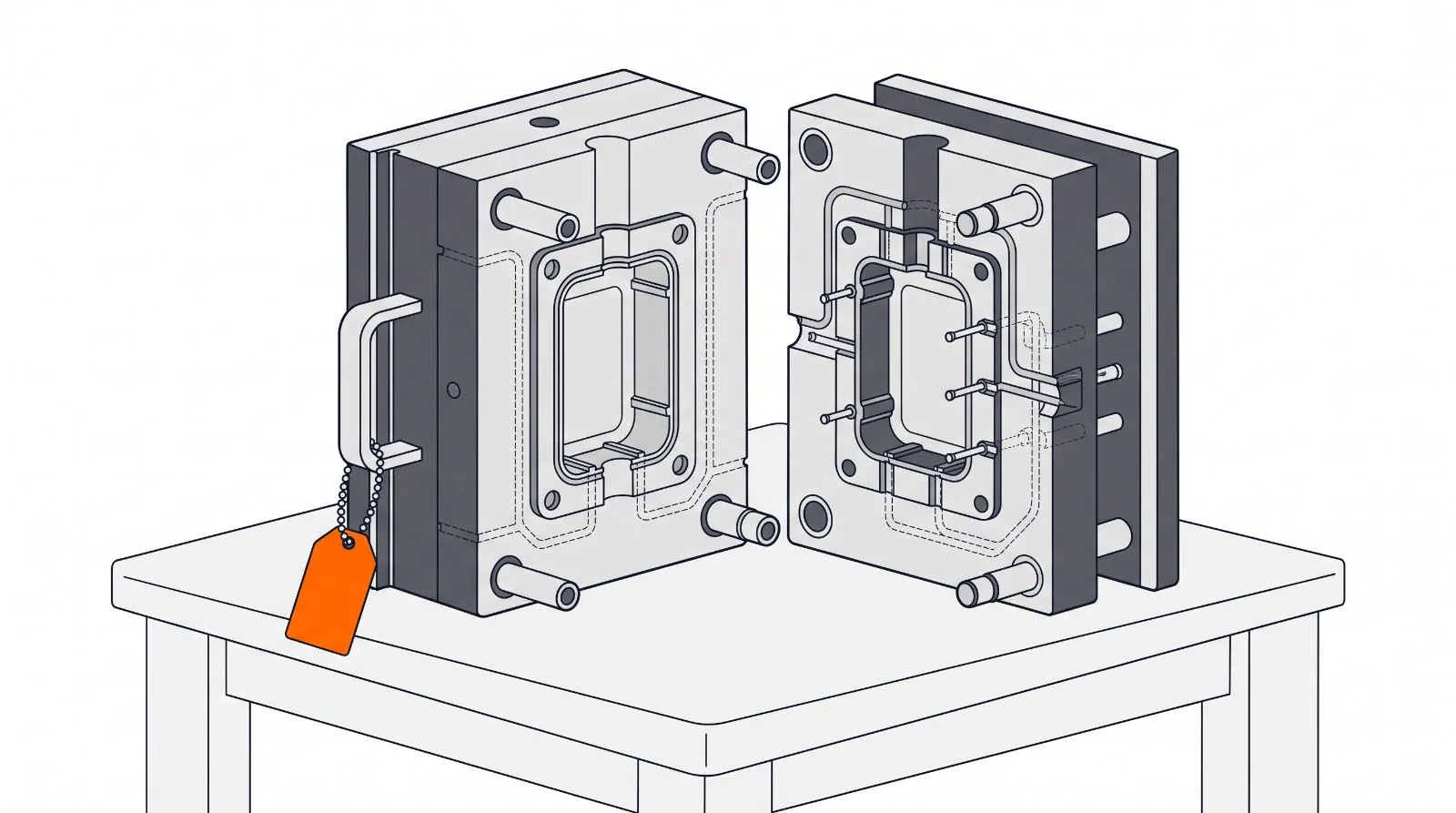
The tooling clause, or the lesson that costs you your mold. If you're molding parts, you're paying tens of thousands of dollars for tooling that lives inside someone else's building. Deposits on production tooling typically run 30 to 50 percent upfront with the balance at first-article approval, which means you've paid for most of that steel before a single sellable unit exists.
Factories don't resent this clause. The good ones expect it, because the ones that resent it were planning on the lock-in.
US or overseas, with 2026 math
If you're already in production overseas and the tariff math just moved on you, this section is yours too; the decision framework is the same whether it's your first factory or your third.
The "China is cheaper" rule started dying with the 2018 Section 301 tariffs, and every round since has cut deeper into the discount. Landed cost is the only number that matters: unit price plus tooling, freight, duty, tariff, and the cost of quality problems at a 12-hour time-zone remove. We keep a running breakdown in our tariff cost strategies piece, but the decision shape is stable:
| Factor | North America | Overseas |
|---|---|---|
| Unit price at volume | Higher, gap narrowing after tariffs | Lower, tariff-eroded |
| Tooling | Higher upfront, owned outright | Lower upfront, contract-dependent control |
| Iteration speed | Same week, same time zone | Weeks, plus freight |
| IP and tooling control | Strong legal recourse | Contract-dependent, see the clause above |
| Small first runs | Shops will take 250–1,000 units | MOQs usually start higher |
| Where it wins | Complex, regulated, iterating products | Stable designs at real volume |
The direction of travel matters more than any single rate. Since 2018, every tariff round has cut deeper into the overseas discount, and products that penciled out at one duty rate have stopped penciling at the next. Run the landed-cost math on today's numbers before you commit a tool to either side of the ocean.
The pattern we see: first production run close to home, where you can drive to the factory while the design is still moving. Move stable, high-volume parts offshore once the drawings stop changing. Doing it in the other order means air-freighting your mistakes.
FAQ
Why won't manufacturers respond to me?
Because your inquiry couldn't be priced without unpaid work. Factories triage inquiries by completeness, not by company size. Send the RFQ package above and response rates change within a week.
How much does it cost to manufacture a product?
Unit cost is the small number; the money is in tooling, certification, and iteration. Ranges vary so much by product class that averages mislead, which is why we built a product development budget tool that estimates from your actual product type.
What's the difference between a manufacturer and a trading company?
A manufacturer owns the machines that make your parts. A trading company resells a factory's capacity with a margin and a smile. The license, audit report, and live floor walk (above) settle it in a day.
What MOQ should a first-time founder expect?
Molded parts overseas often open at 3,000–10,000 units, but MOQs are negotiable with a complete package and honest forecast. Under ~1,000 units, ask about bridge production (see above).
Can I manufacture in the US affordably?
For low volumes, complex assemblies, and anything regulated, often yes, and the tariff era keeps moving the line. Run landed cost, not unit price. Our tariff piece covers the math.
How do I approach a manufacturer for the first time?
One short email: what the product is, the volumes, when you need it, package attached. That last clause does the work. You're not selling them your dream. You're showing them a job they can price.
Send it
The founders who get quotes back in a week aren't better connected. They sent a package a quoting engineer could price without asking a single question. Build yours. Send it through the channels above.
If you'd rather not build it alone, sourcing is part of what Design 1st does between design and production: we build the package, run the RFQs, and sit on your side of the table at the factory. Either way, stop cold-emailing. Start quoting.