
Our Design 1st Development Process
Need help going from an idea to a functioning physical product? One-off builds to serial production.
We are a 35-person team of physical product development specialists. Our experience is based on 1,000+ products developed over 30 years, across many markets.
Our Product Development Process
The are 3 major areas to consider when setting out to design and develop a physical device
Planning the Direction
The early requirements work starts with deciding on the product idea, potential users and buyers, and ends with the birth of the product concept, drafting the bones of the idea and capturing the goals, targets and requirements that will get used to engineer and evaluate the final solution.
Designing and Engineering the Solution
Finding a Company to Build and Supply Your Product to meet your Requirements
Hiring an Expert Team

Define business, market, user and product targets early on. It is estimated that 70% of a products lifetime cost are locked in, during the product concept and major parts selection stage.
Physical Products are Challenging to Develop
To get a product idea ready to sell to customers may require conceiving a whole new market opportunity or perhaps it involves replacing or improving on a current solution.
A 4-stage development process is critical for successfully developing a substantially new product idea, the outcome is far riskier than doing “incremental” product improvements which require much less planning. Generally new devices solve a problem, improve on a task, improve a process or change a workflow. Products must be designed to survive and function without failure in the environment they will be used in.
Unlike Software development, physical products have one major challenge
If one part or function fails on a customer – the product fails. This matters because with physical product you will build product in batches, so when a problem is discovered, you fix or discard many units, at high cost.
The parts selected for use in the product must meet many expectations – going from subjective aesthetics and ease of use to survival in real world shipping, user frustration, mother nature, regulatory safety and other feats of performance, reliability and endurance.
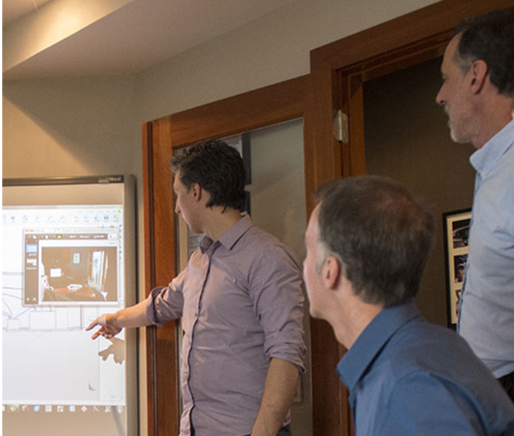
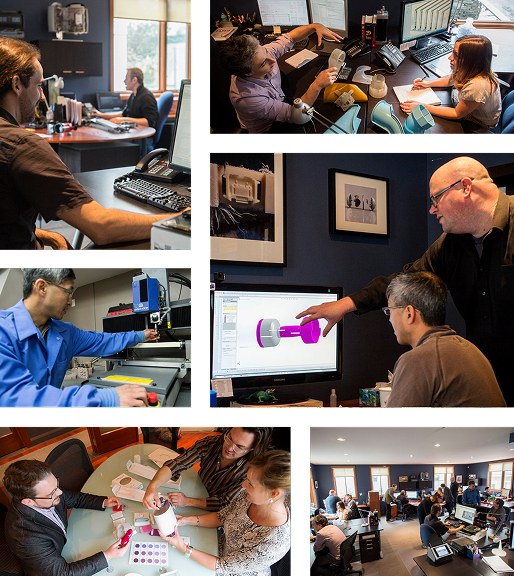
We Can Help – from one-off product designs to higher volume serial production
We are a 30-person team of physical product development specialists with cross function team members including Product Planning, User
Experience, Industrial Design, Mechanical Engineering, Electronics Engineering, Software Engineering and Supply coordination. Our experience is based on the number and diversity of the products we have developed over 30 years, in many markets (we have developed more than 1000 physical products).
We know where to start, helping define requirements, capturing fluid information, direct and guide a business team, integrate with existing
engineering teams, find reliable parts, identify and qualify risks and organize the order of activities based on these variables. We focus on
requirements and areas of high-risk first to determine options and feasibility, before getting too far into large budget spends on the solution.
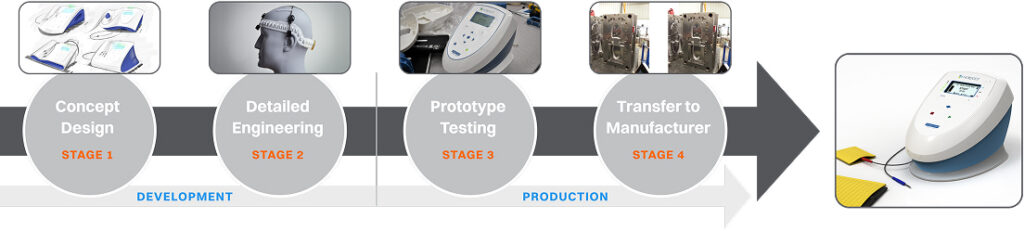
Our 4-Stage Process
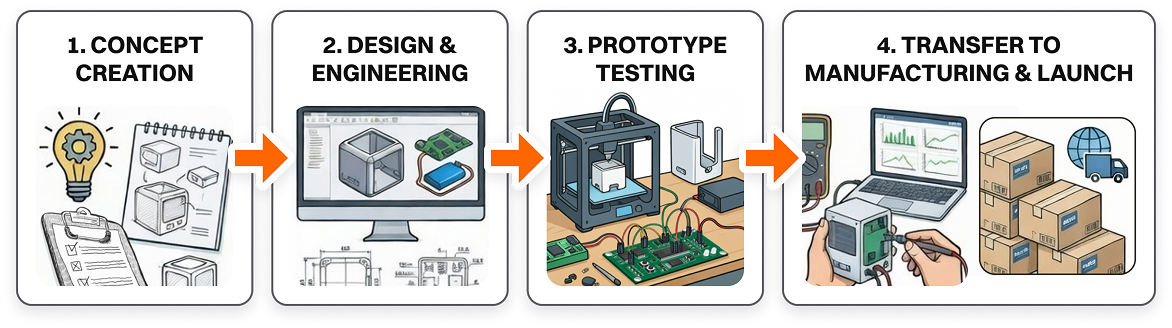
A proven process used by professional development teams for decades. We focus on high-risk areas first, before committing budget to the solution.

Stage 1
Concept Design
Stage 2
Detailed Engineering

Stage 3
Prototype and Test
Stage 4
Transfer to Manufacturer
How Design 1st Fits Into Your Product Planning
Companies with a Development Team
We seamlessly integrate our technical expertise for feasibility investigations or to fill in product development skill gaps in your new product design or refresh.
Company/Startup no Development Team
We guide you from the product idea to a feasible solution. Leverage our free AI planning tools for Supply Logistics, Cost Estimates, User Personas, Target Market analysis and more.
Entrepreneur Inventor First Timers
We will turn your idea into a feasible product solution. We design, engineer, prototype, then setup and guide you through manufacturing partner choices.
Business / Supply Strategy
- IP Review
- Product Supply Strategy
- Manufacturing Coordination
- Qualify Risky Suppliers
User & Buyer Research
- User/Buyer Outreach
- Informal Testing
- Personas Creation
- Surveys, Focus Groups
Market Requirements
- Market Research & Features
- Competitive Tear Downs
- Distribution Channel Plan
- Barriers & Costs
Product Design
- Feasibility & Options
- Simulation Modelling
- Engineering & Part Selection
- Prototype & Verification
Manufacturing Setup
- Transfer to Manufacturer
- Approve Parts & Builds
- Release-Controlled Specs
- Certifications & QA
Development Starts with Creative Exploration
Aim before you shoot, Creativity must be balanced with focus. For physical products, you can lower development costs if you define critical requirements at the start. Business, User, Market, Product and Supply choices (BUMPS) intersect and compete.
Many teams lock into their first gut feel idea without digging deeper into risks and alternatives.
We help you get critical requirements organized first, to focus the design team.
The draft requirements work starts with deciding on the product idea, potential users and buyers, and ends with the birth of the product concept, drafting the bones of the idea and capturing the goals, targets and requirements that will get used to engineer and evaluate the final solution.
Using custom AI tools, we draft detailed BUMPS product requirements for you, in hours not weeks.
We work closely with clients using a structured approach to explore and document requirements, options, benefits, and risks.
There are several documents that professional development teams create early on, to organize their product design ideas and thinking across Business, User, Market, Product and Supply dimensions. This results in a more organized development program with lower cost to develop. Having your product related targets, requirements and other critical information in an organized form helps us with design and engineering decisions and keeps us focused on the critical product details.
This information helps us design, engineer, choose key parts (balancing cost and performance), create the product and build the many documents that are the PRODUCT FILE. The design team will make many decisions and tradeoffs with you, on the path from the idea to the final solution.
We can help you with an initial draft of these Requirement Documents using our secure server tools, done quickly before the project starts, and at no cost to you. These documents are a lot of work to organize and require updates. The goal is to have the details so they can easily be referred to.
It is critical to maintain and update these Requirement Documents at end of each stage with the design team as they determine the test plans.
Frequently Asked Questions
The answer depends on the nature of the work you hire us to do. The work may be support-related where we contribute design or engineering services to your product development team and process. The time required varies from a few weeks to much longer depending on the activities you require from us. If our team takes your product concept from the idea stage all the way to a working product, it may take from 3 to 12+ months to complete the 4-stage design-engineering-prototyping and transfer to manufacturing process. It depends on the complexity of the product being designed.
Once the design concept is captured, engineering decisions are finalized and the product is 3D prototyped and documented, making it possible for manufacturers to bid on making the product in volume. Your design is carefully created and focused on product cost that meets quality and business needs.
The Product File documentation is well-defined, and release control managed, with manufacturers that want to produce it.
Our manufacturing setup experts will help you identify and secure trusted part suppliers and a contract manufacturer (CM) onshore, or offshore, depending on your product and business objectives.
We facilitate the prototyping and product builds, from helping coordinate the CM and parts supplier relationships, to overseeing product batch builds.
When asked we also do injection tooling approvals, release controlled documentation, regulatory testing, Bill of Materials (BOM) updates, in-process test jig creation, qualifying custom parts, MOQ ordering and supply coordination.
Designing a new hardware product starts with defining one or two possible Concept Designs (CD), based on requirements and business targets. Our technical sales team create the first CD budget with the major activities. When the work starts, we capture key product requirements, research opportunities, and unknowns, then together with you, we determine the best solution to develop.
Our experienced development team will then facilitate and help you define the many product requirements, carry out the creative design and engineering process, examine manufacturing feasibility, and provide an ongoing estimate of the direct product cost as details are filled in and decisions on features, functions, parts, and quality are made. For a new product concept of moderate complexity, the CD design exploration and architecture definition stage takes 200+ hours. This timeline depends on many factors, including uncertainty about first users and buyers, the uniqueness of the design relative to products in the market, the number of custom components required for design and manufacturing, product safety requirements, manufacturing setup, and the amount of documentation required.
Professional, experienced Product Design and Engineering teams in North America charge $125 to $400 USD per hour. Our rates are competitive at the lower end of this scale. After a phone discussion on your needs, we will provide a detailed design budget for review and signature.
Call us: 1.877.235.1004 x229 or click here to schedule a meeting with Ian Kayser, our VP of Sales, who will help answer questions.
Physical Product Development is 9 to 12+ months of effort. Projects often start with loose targets and a concept solution.
One of the first steps is drafting a more specific product development plan as more detail is uncovered, so a monthly cash flow forecast can be made to get to first product build requirements and the market launch, and beyond. We recommend that you have funding for the first few months to get to specific product details so the plan can be realistic. Design 1st is a work-for-hire organization, and new projects require a small deposit to start the work, intended to cover the first month’s activities on your project. We work from a budget document with activities that you approve and bill monthly for our time.
We are an excellent fit for business teams new to hardware product development who want an expert team to plug in and move their concept design to volume production. We are experts at network products, wireless apps, and cloud integrations. Our diverse team of planners, designers, engineers, electronics, software and supply strategy experts makes the transition from product concept to manufacturing a much more predictable process.
NDA’s ensure confidentiality for both parties during conversations. We provide a mutual NDA where the terms apply to both parties. Your organization may already have a mutual NDA that requires our signature. Instead, we handle signatures via email, online, or as circumstances require.
Yes, working with you, we can navigate, negotiate, document, and fine-tune product quality during the initial production batch builds and continuous serial production.
Our process ensures we deliver value throughout development, and we transition the production management role as your operations team assumes control of manufacturing. However, if your business objectives require a more virtual, low-overhead operation, we facilitate batch production builds, supplier coordination, and product logistics oversight, working closely with you and your operations manager.
Have a product idea that needs building?
Tell us a few non-proprietary details about your project and we can get you a development plan and timeline fast. No commitment, no pitch deck. Just a conversation about what it takes and why.
what happens next
- We review your brief
- You receive an NDA + D1 overview
- 30-minute intro call
- Development plan with timeline and budget
Prefer to talk?
Tell Us About Your Project
We reply within 1 business day with an NDA and a next step.
"(Required)" indicates required fields
what happens next
- We review your brief
- You receive an NDA + D1 overview
- 30-minute intro call
- Development plan with timeline and budget