
Our Design 1st Development Process
Need help going from an idea to a functioning physical product? One-off builds to serial production.
We are a 30-person team of physical product development specialists. Our experience is based on 1,000+ products developed over 30 years, across many markets.
There are 3 major areas to consider when setting out to design and develop a physical device - we call the device “a product”.
Planning the Direction
The early requirements work starts with deciding on the product idea, potential users and buyers, and ends with the birth of the product concept, drafting the bones of the idea and capturing the goals, targets and requirements that will get used to engineer and evaluate the final solution.
Designing and Engineering the Solution
Starting with the product idea, thousands of choices, tradeoff decisions and tests are carried out in the successive consolidation of a workable product solution that meets subjective and objective goals of the new product. Rigorous documentation follows the creation, selection, integration and testing of the many physical parts that make up the new product and evaluation of the final production solution in real world conditions.
Finding a Company to Build and Supply Your Product to meet your Requirements
Supply of a product with high quality and reliability requirements is a long journey, from option exploration to partner selection. It involves choosing a build location, cost analysis, part supply logistics (getting parts to the final manufacturing point), buyer needs and shipping, plus distribution of final product to the end customer points. This supply thinking affects requirements, part choices, design considerations and the engineering details.
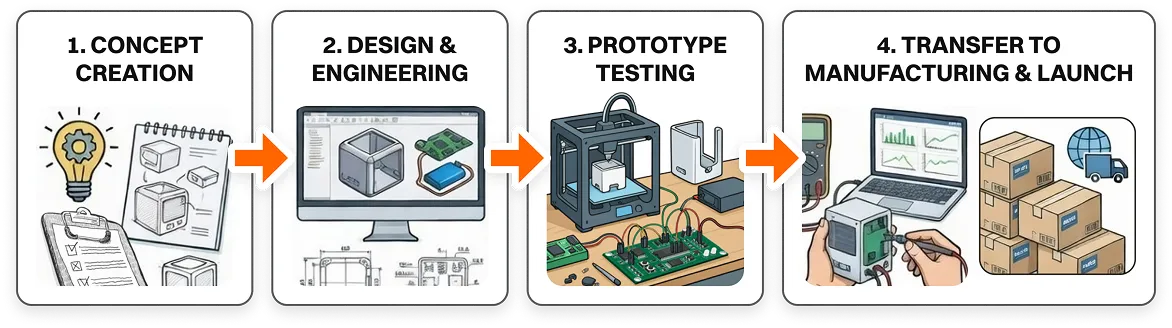
Our 4-Stage Process
A proven process used by professional development teams for decades. We focus on high-risk areas first, before committing budget to the solution.
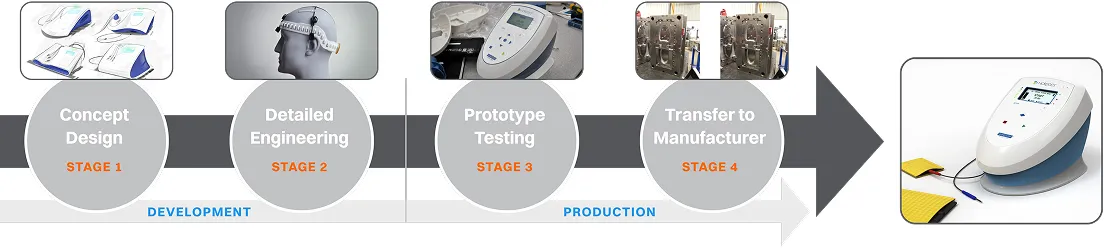
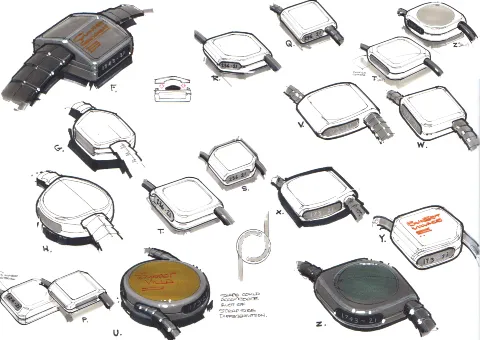
Stage 1: Concept Design
Ideas and requirements transformed into the best-fit product solution, including major components and early BOM costing.
Stage 2: Detailed Engineering
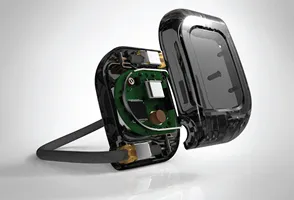
All components identified, selected, and integrated. Captured in a “Product File” used to build the first functioning prototype.

Stage 3: Prototype and Test
A functioning prototype is built, tested, and refined to verify requirements and confirm usability for planned workflows.
Stage 4: Transfer to Manufacturer
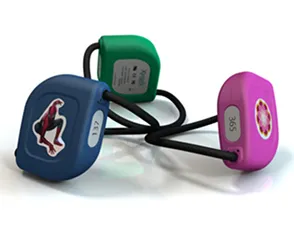
Transfer design and documentation, determine quality expectations, get formal quotes, and support launch preparation.
How Design 1st Fits Into Your Product Planning
Our team fills gaps in your process. We fit in seamlessly and come up to speed fast. Leverage our Business, User, and Market Planning Tools. We’re a perfect fit to get you from idea to a feasible solution including manufacturing partner options.
Companies with a Development Team
Leverage our team to define UX and carry out Industrial Design and Engineering for your new product or product refresh. We integrate with your R&D team when you need external specialists.
Company/Startup no Development Team
Leverage our Business, User, and Market Planning Tools. We’re a perfect fit to get you from idea to a feasible solution including manufacturing partner options.
Entrepreneur Inventor First Timers
All the skills and services to find a product solution. Given a limited team and budget, we have the necessary experts and services in one place to get you to market.
Business / Supply Strategy
- IP Review
- Product Supply Strategy
- Manufacturing Coordination
- Qualify Risky Suppliers
User & Buyer Research
- User/Buyer Outreach
- Informal Testing
- Personas Creation
- Surveys, Focus Groups
Market Requirements
- Market Research & Features
- Competitive Tear Downs
- Distribution Channel Plan
- Barriers & Costs
Product Design
- Feasibility & Options
- Simulation Modelling
- Engineering & Part Selection
- Prototype & Verification
Manufacturing Setup
- Transfer to Manufacturer
- Approve Parts & Builds
- Release-Controlled Specs
- Certifications & QA
Hiring an Expert Team
Physical Products are Challenging to Develop
To get a product idea ready to sell to customers may require conceiving a whole new market opportunity or perhaps it involves replacing or improving on a current solution.
A 4-stage development process is critical for successfully developing a substantially new product idea, the outcome is far riskier than doing “incremental” product improvements which require much less planning. Generally new devices solve a problem, improve on a task, improve a process or change a workflow. Products must be designed to survive and function without failure in the environment they will be used in.
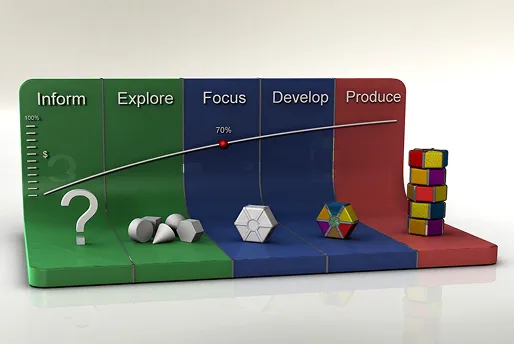
Define business, market, user and product targets early on. It is estimated that 70% of a products lifetime cost are locked in, during the product concept and major parts selection stage.
Unlike Software development, physical products have one major challenge
If one part or function fails on a customer – the product fails. This matters because with physical product you will build product in batches, so when a problem is discovered, you fix or discard many units, at high cost.
The parts selected for use in the product must meet many expectations – going from subjective aesthetics and ease of use to survival in real world shipping, user frustration, mother nature, regulatory safety and other feats of performance, reliability and endurance.
We Can Help – from one-off product designs to higher volume serial production
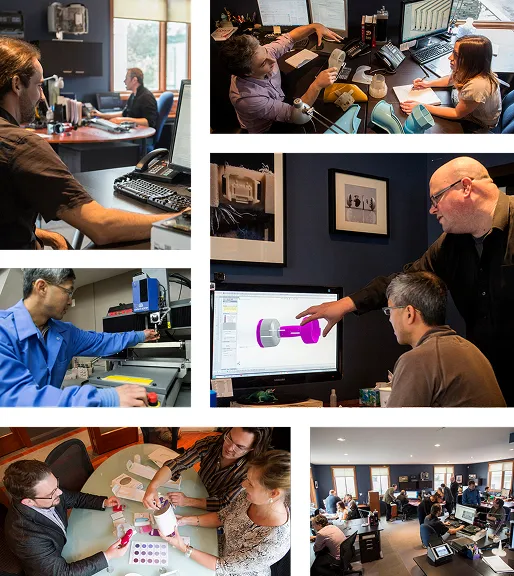
We are a 30-person team of physical product development specialists with cross function team members including Product Planning, User Experience, Industrial Design, Mechanical Engineering, Electronics Engineering, Software Engineering and Supply coordination. Our experience is based on the number and diversity of the products we have developed over 30 years, in many markets (we have developed more than 1000 physical products).
We know where to start, helping define requirements, capturing fluid information, direct and guide a business team, integrate with existing engineering teams, find reliable parts, identify and qualify risks and organize the order of activities based on these variables. We focus on requirements and areas of high-risk first to determine options and feasibility, before getting too far into large budget spends on the solution.
Concept Stage Starts with Strategy
For physical products, it’s high value, fast, and low cost to get organized at the start. We love the proverb: “aim before you shoot.”
Many teams lock into their first gut feel idea without digging deeper into risks and alternatives.
The early requirements work starts with deciding on the product idea, potential users and buyers, and ends with the birth of the product concept, drafting the bones of the idea and capturing the goals, targets and requirements that will get used to engineer and evaluate the final solution.
We work closely with clients using a structured approach to explore and document requirements, options, benefits, and risks.
There are several documents that professional development teams create early on, to organize their product design ideas and thinking across Business, User, Market, Product and Supply dimensions. This results in a more organized development program with lower cost to develop. Having your product related targets, requirements and other critical information in an organized form helps us with design and engineering decisions and keeps us focused on the critical product details.
This information helps us design, engineer, choose key parts (balancing cost and performance), create the product and build the many documents that are the PRODUCT FILE. The design team will make many decisions and tradeoffs with you, on the path from the idea to the final solution.
We can help you with an initial draft of these Requirement Documents using our secure server tools, done quickly before the project starts, and at no cost to you. These documents are a lot of work to organize and require updates. The goal is to have the details so they can easily be referred to.
It is critical to maintain and update these Requirement Documents at end of each stage with the design team as they determine the test plans.
Project Examples of Our Process
See our process in action
Ready to Get Started?
Let’s talk about how we can help turn your product into reality.