- Search
- 1.877.235.1004
- Contact Us

Volta 2.0 - Modular Smart Lockers
Next-Generation Modular Locker Architecture for Multi-Lock Smart Storage
Product Design Requirements
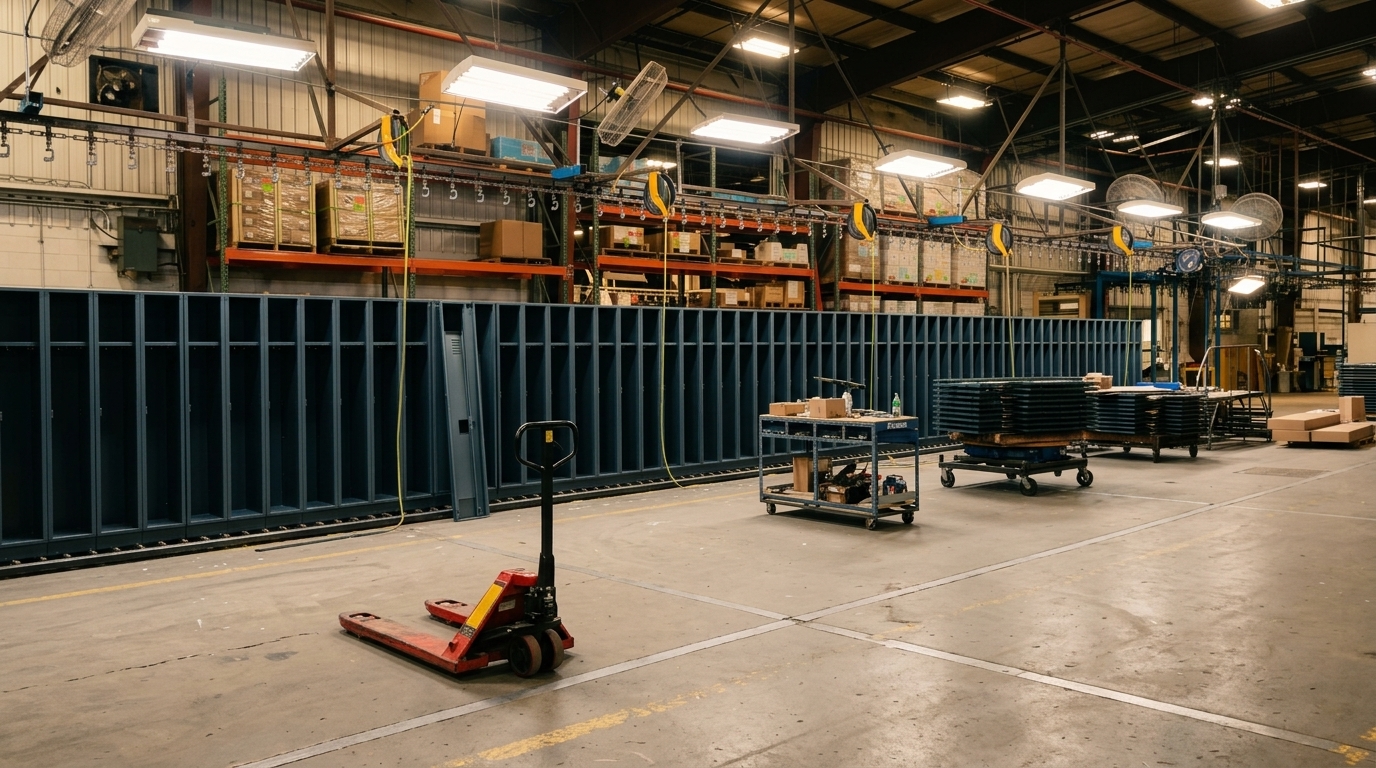
For 90 years, DeBourgh Manufacturing has built metal lockers for schools, workplaces, and public spaces, running its own MIG welding, sheet metal forming, and powder coating out of La Junta, Colorado.
To push their smart locker line forward, President Patrick Berg brought Design 1st in to take the Smart Move concept through to detailed engineering. The constraint was real: everything had to fit DeBourgh’s existing manufacturing line, not work around it. Design 1st delivered the full engineering package for DeBourgh’s R&D and manufacturing teams to take to production.
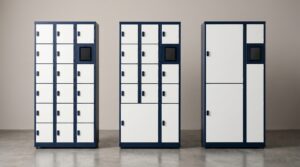
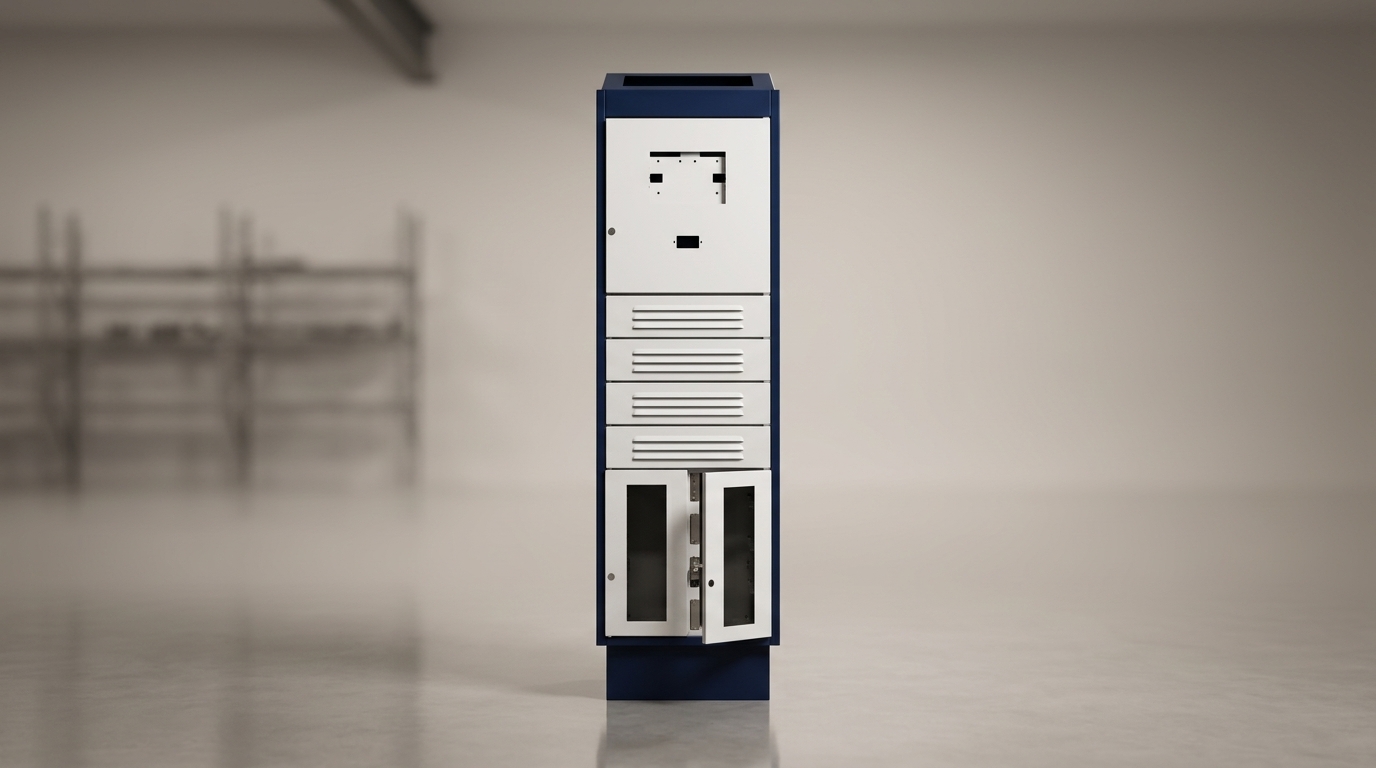
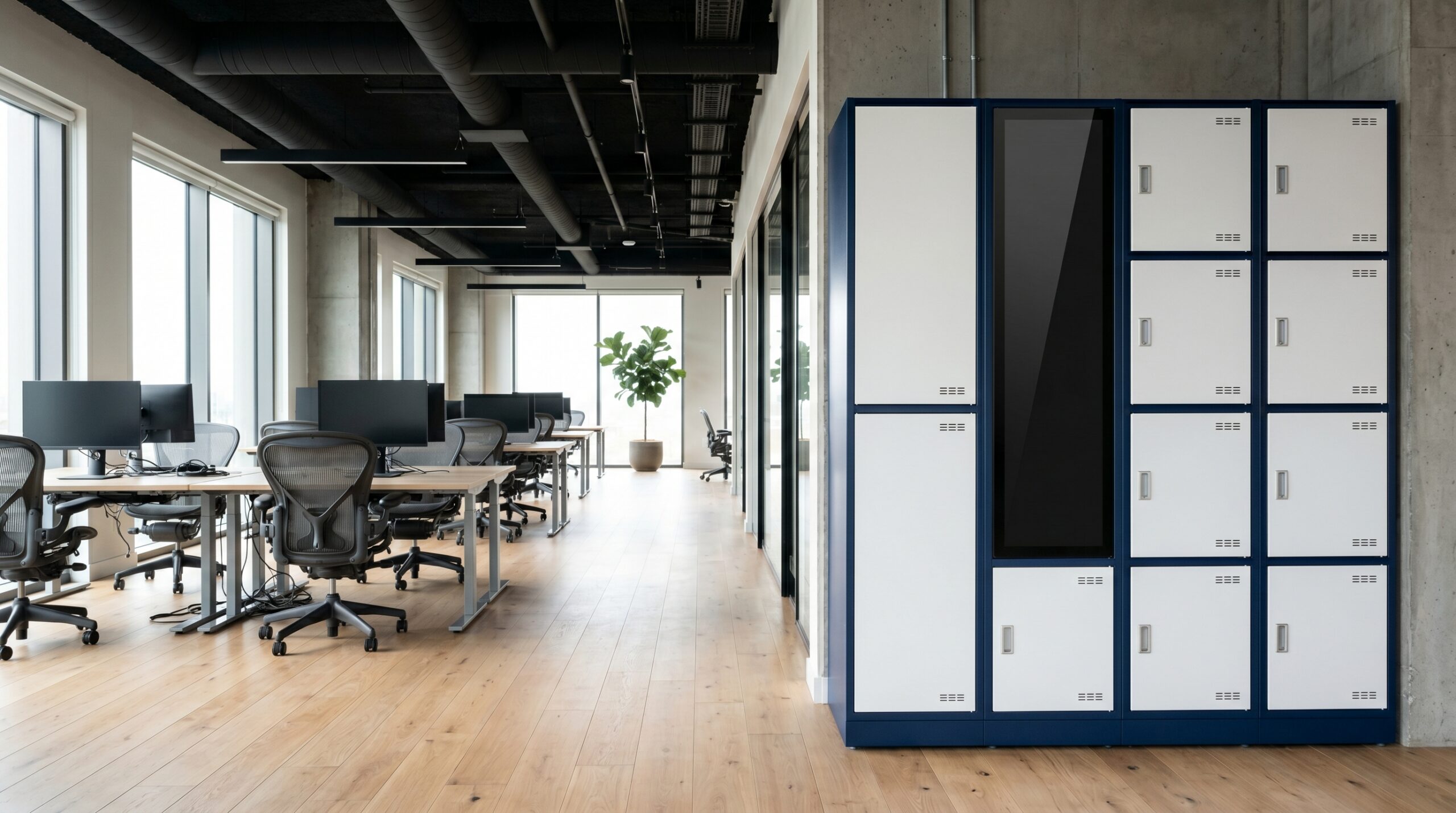
- Three column widths (18", 21", 24") on a 24" deep base, with five locker sizes (XS to XL — 4.5" to 72" tall) configurable in any mix within a single column
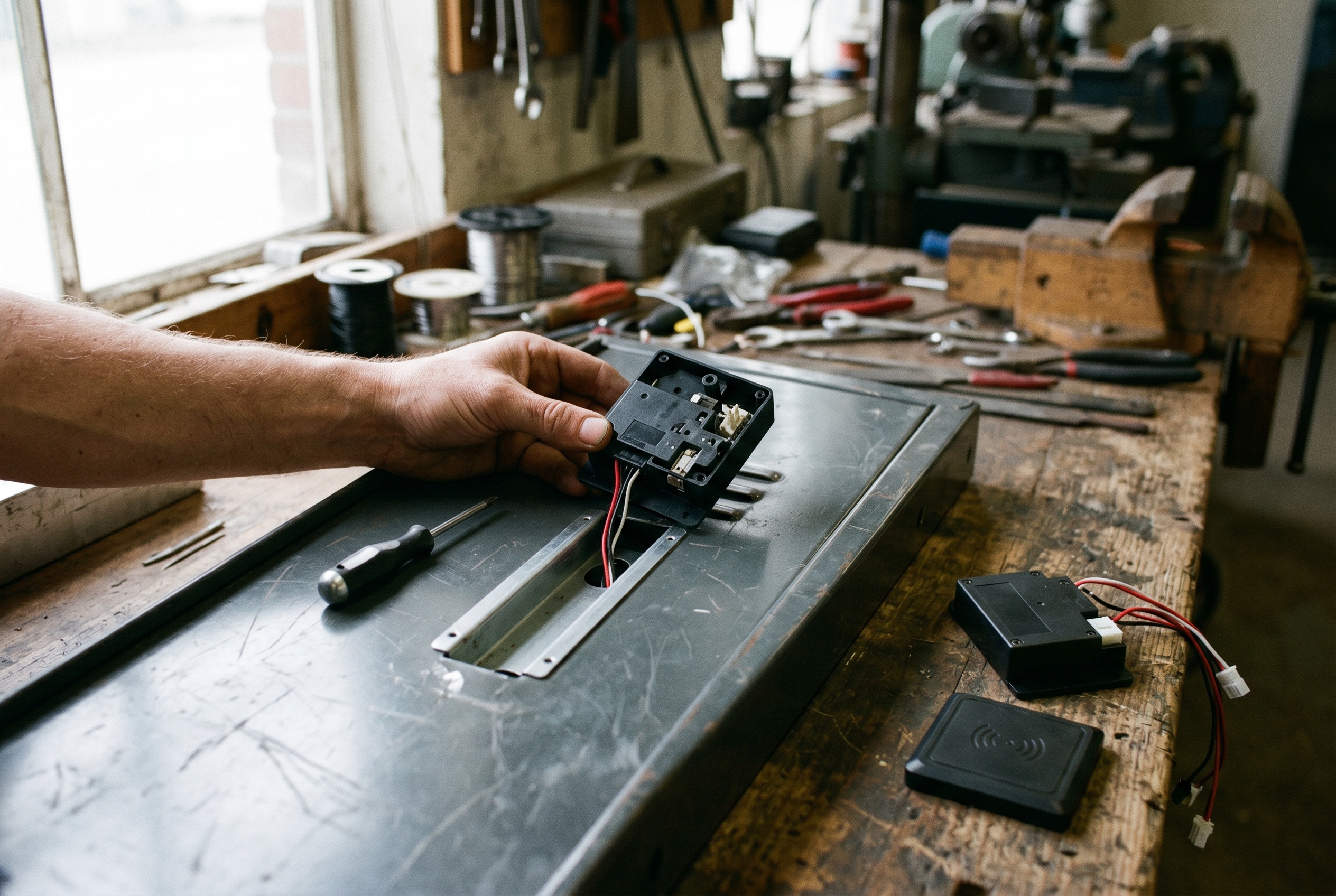
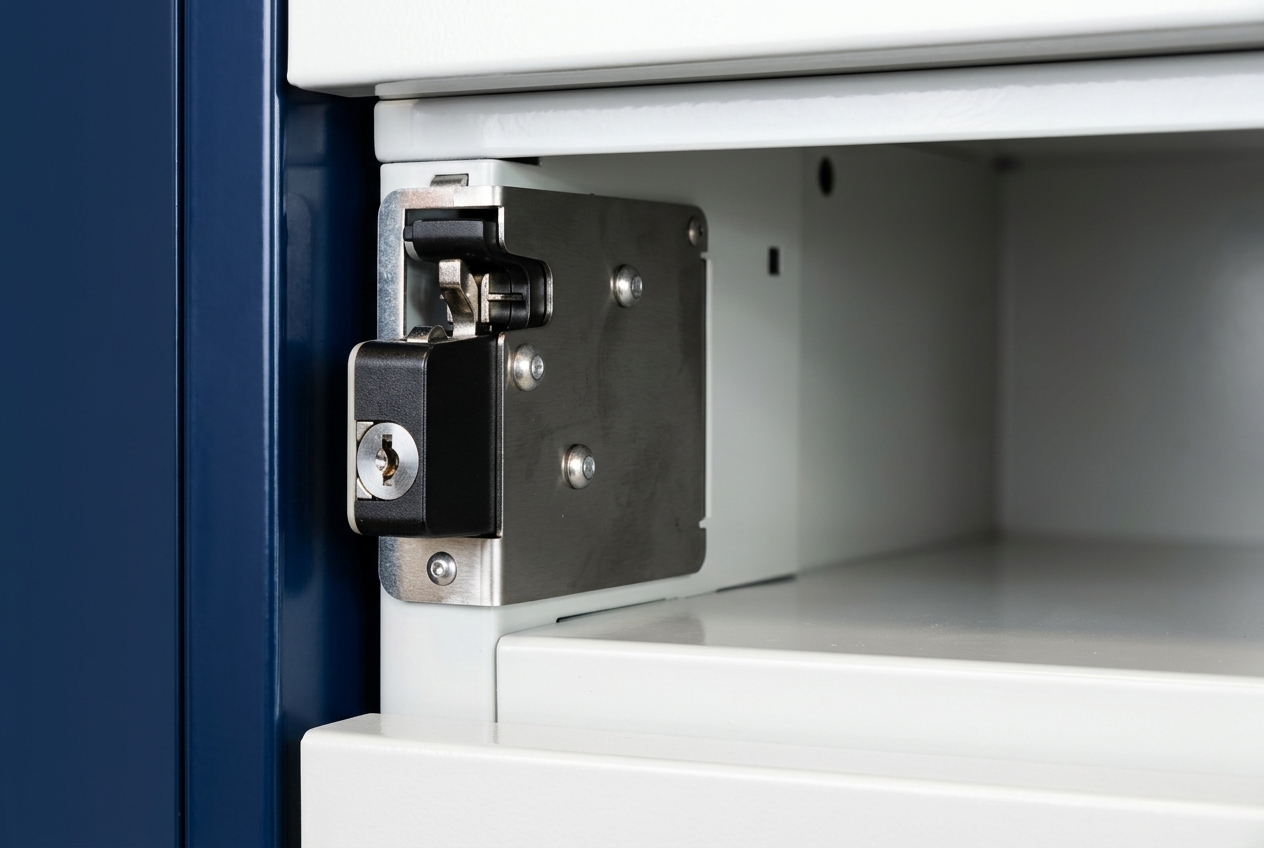
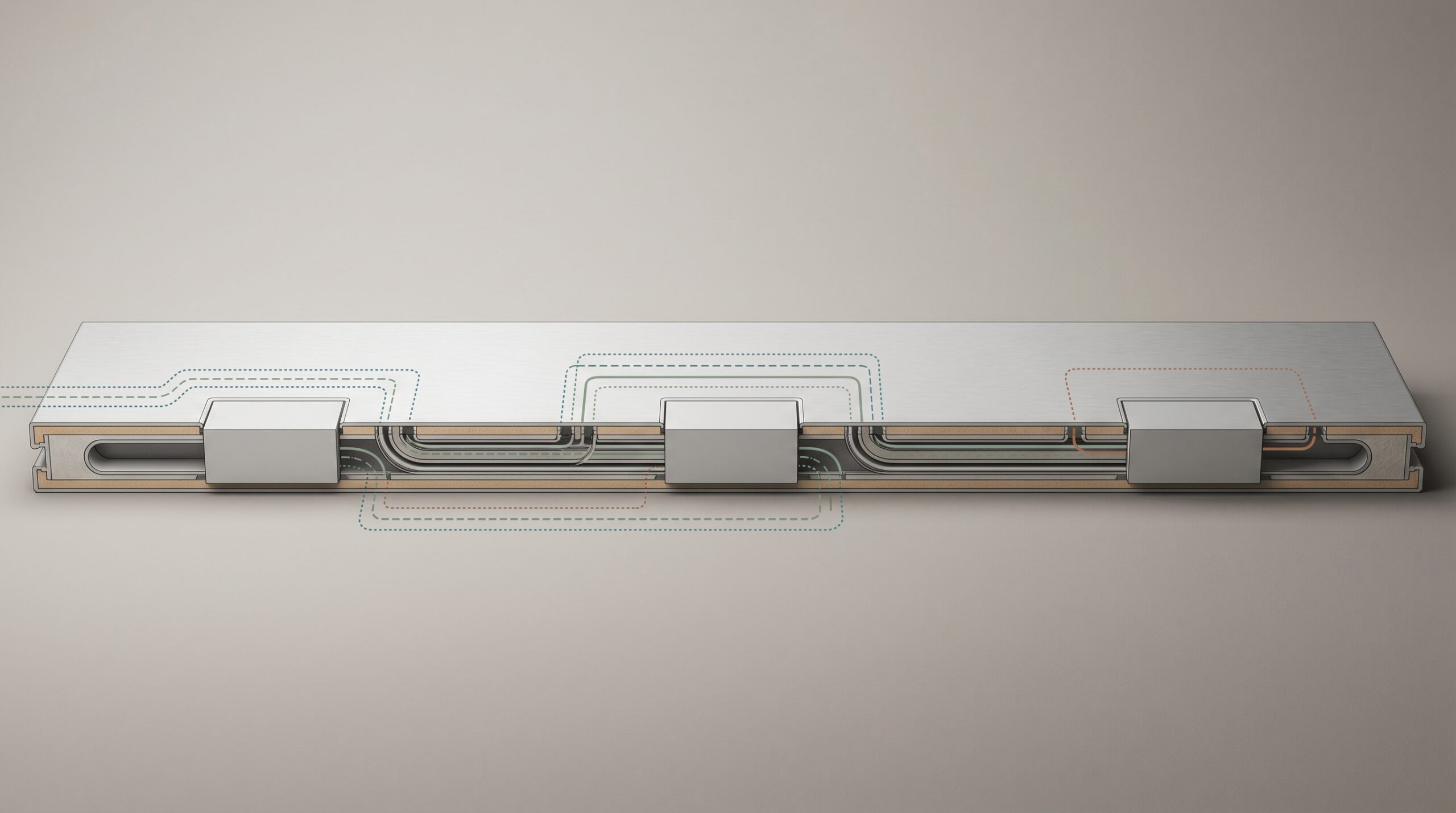
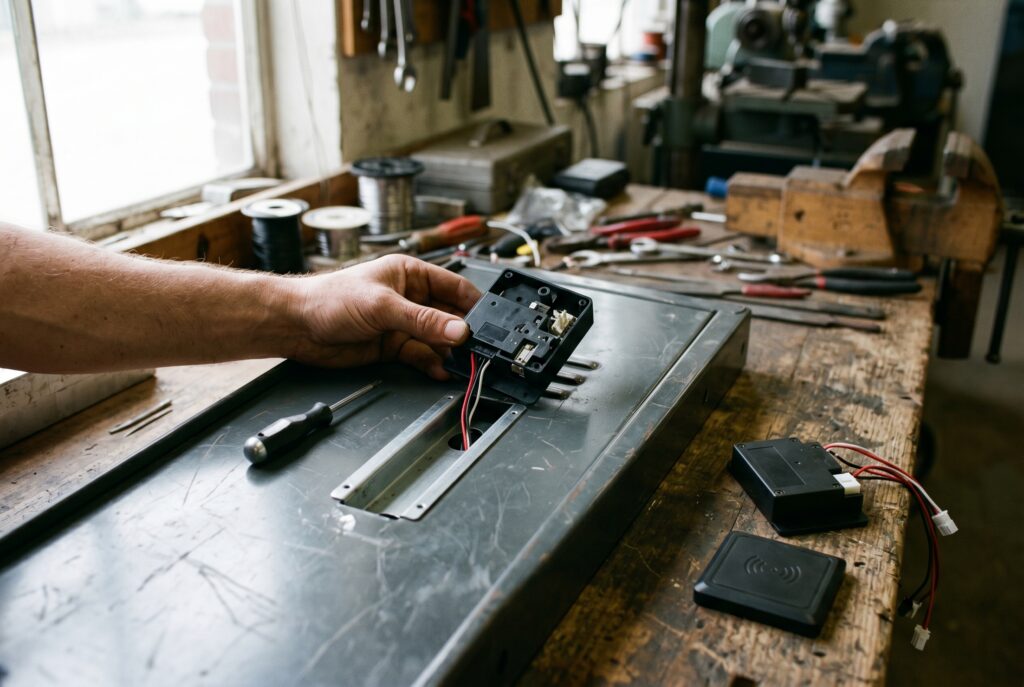
- Three electronic lock platforms in one chassis — LoQit TF30/TF50 hardwired, Gantner NET.Lock 7020 RFID, and Ojmar surface-mount — sharing one side panel, one cable path, and one brake-cable override
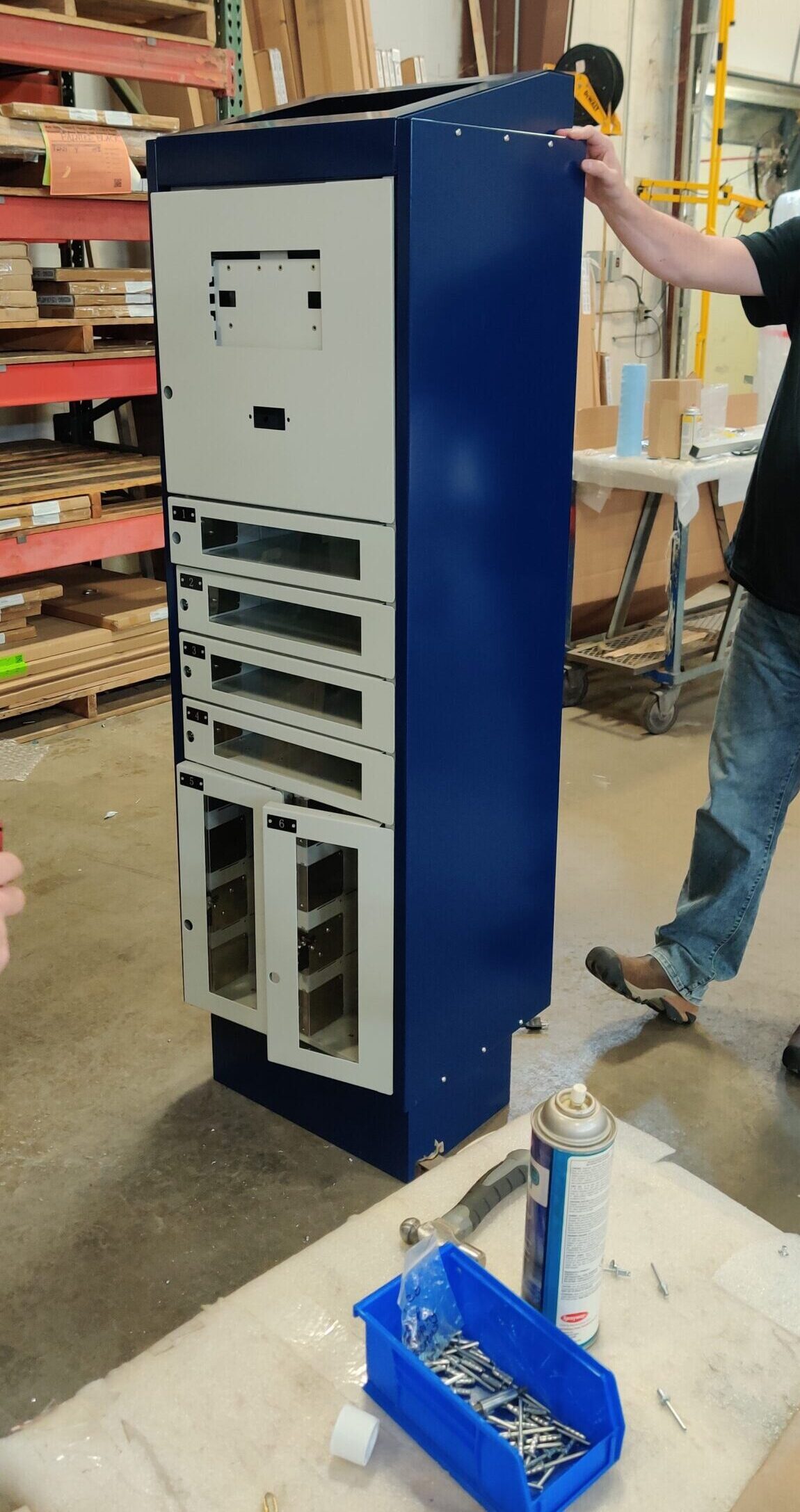
- Flat-front overlay doors with concealed hinges, no visible partitions between adjacent doors, and a per-column mechanical override that releases one door without breaking security on the rest
- Terminal column with a 15"W × 15"D bay for touchscreen and control electronics, ADA compliant, with seismic mounting brackets for California installs, indoor 10°C–30°C
- Metal cost target of $800–$1,200 per column excluding lock hardware, every component shippable on standard pallets
- Every part sized and shaped for DeBourgh's MIG welding, sheet-metal forming, and powder coat lines
Engineering Challenges
DeBourgh’s in-house fabrication set the design envelope. The Volta 2.0 had to hide every hinge across an extreme door range, fit three lock platforms into one cable channel, and shave assembly time on DeBourgh’s existing welded line without altering tooling or the door feel that anchors the brand.
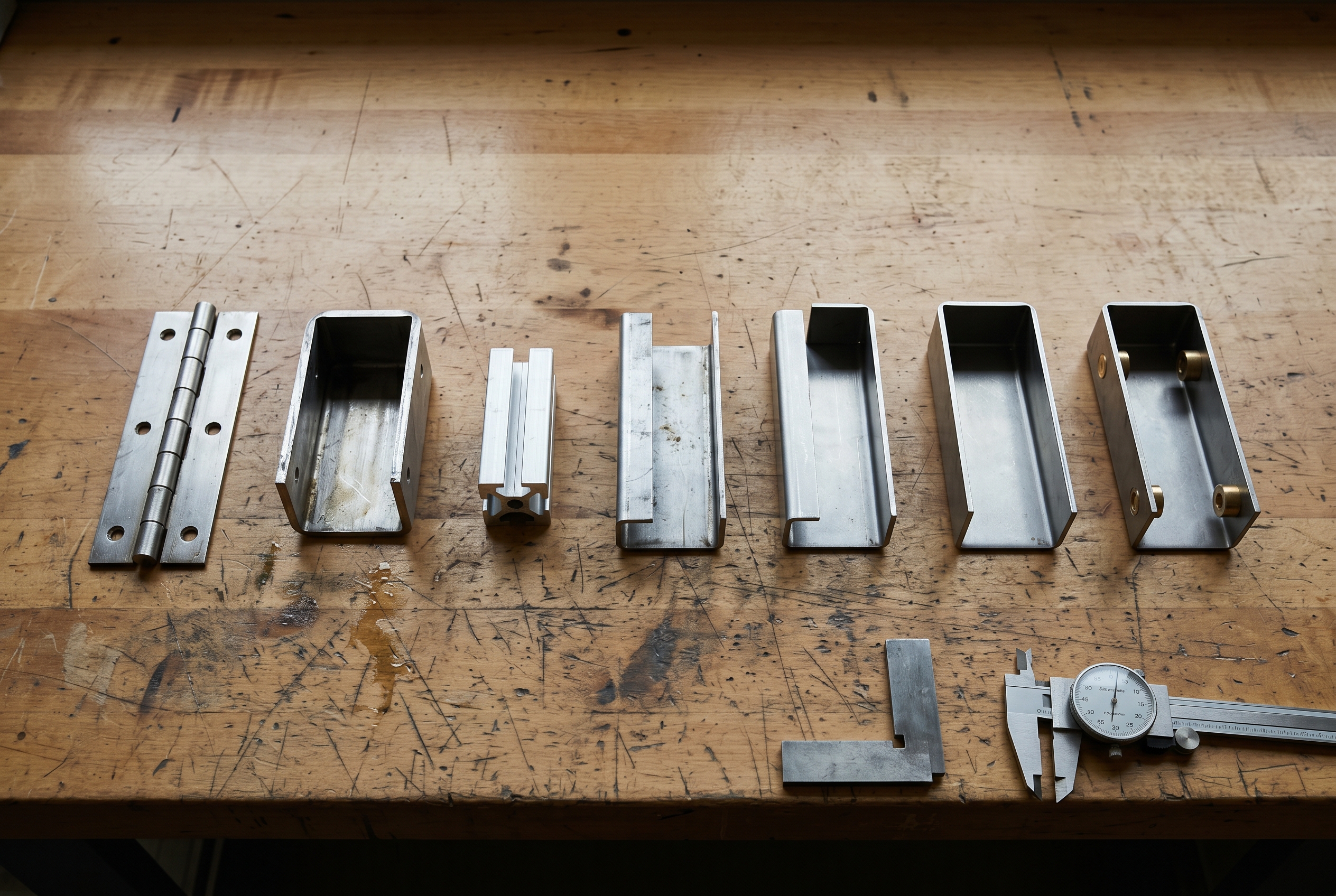
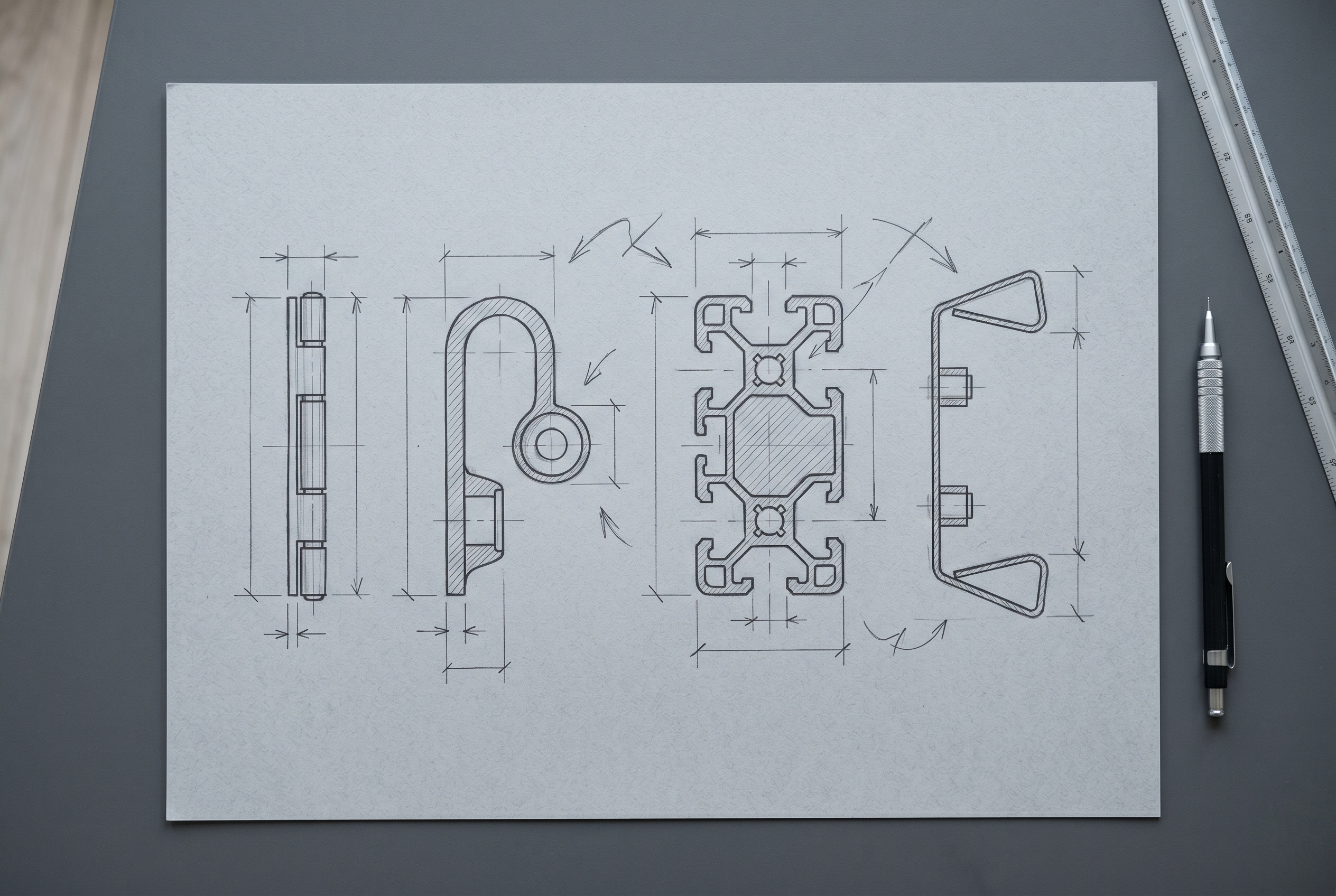
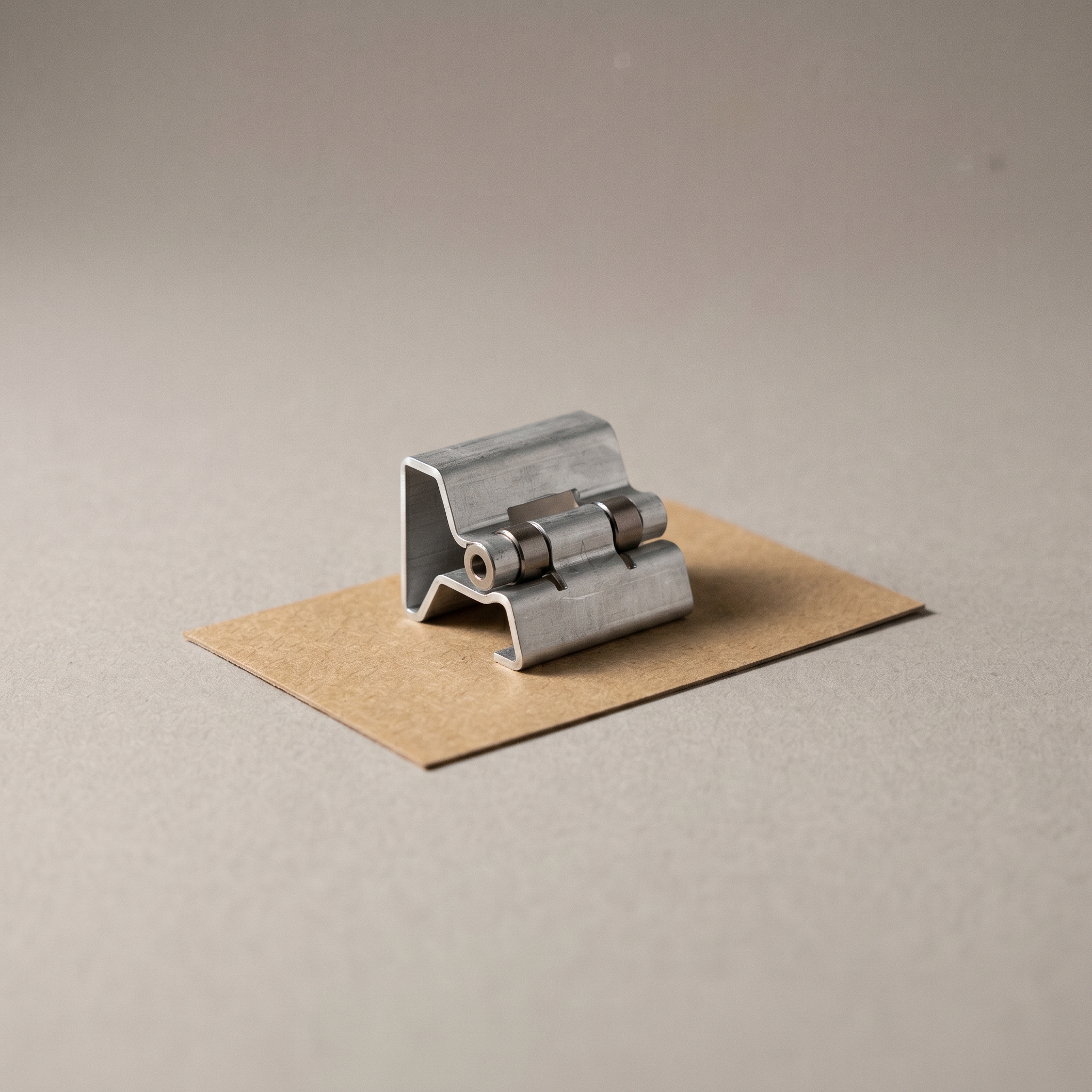
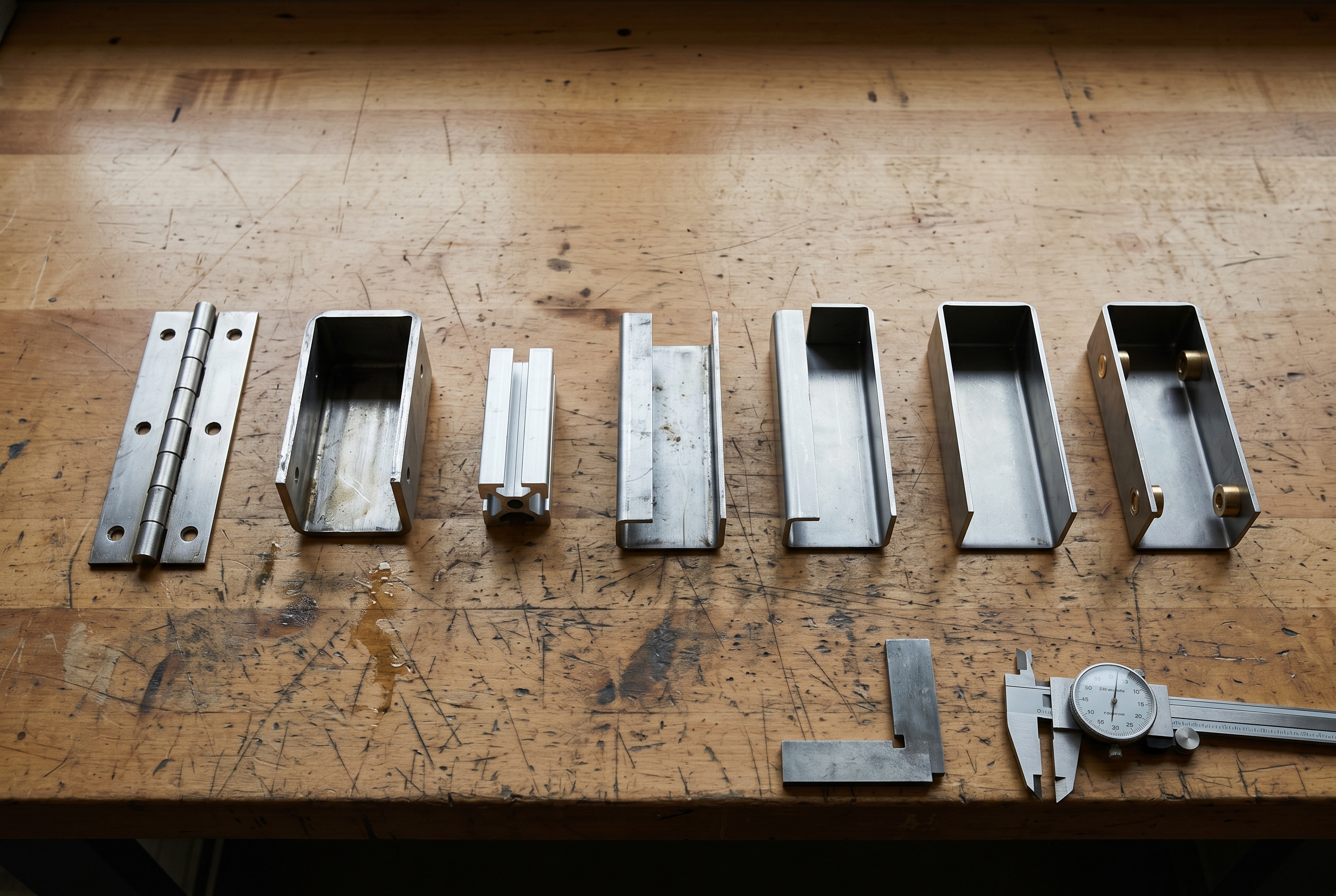
- Hide a hinge that works at every door size from 4.5" to 72". Piano hinges were too visible. Cabinet hinges couldn't sit inside the sheet metal assembly. Design 1st developed a custom formed hinge profile (1.0" x 0.65" x 0.875") with bearing surface spacers that holds alignment from a 4.5" door to a 72" door, and forms on the same press DeBourgh already runs.
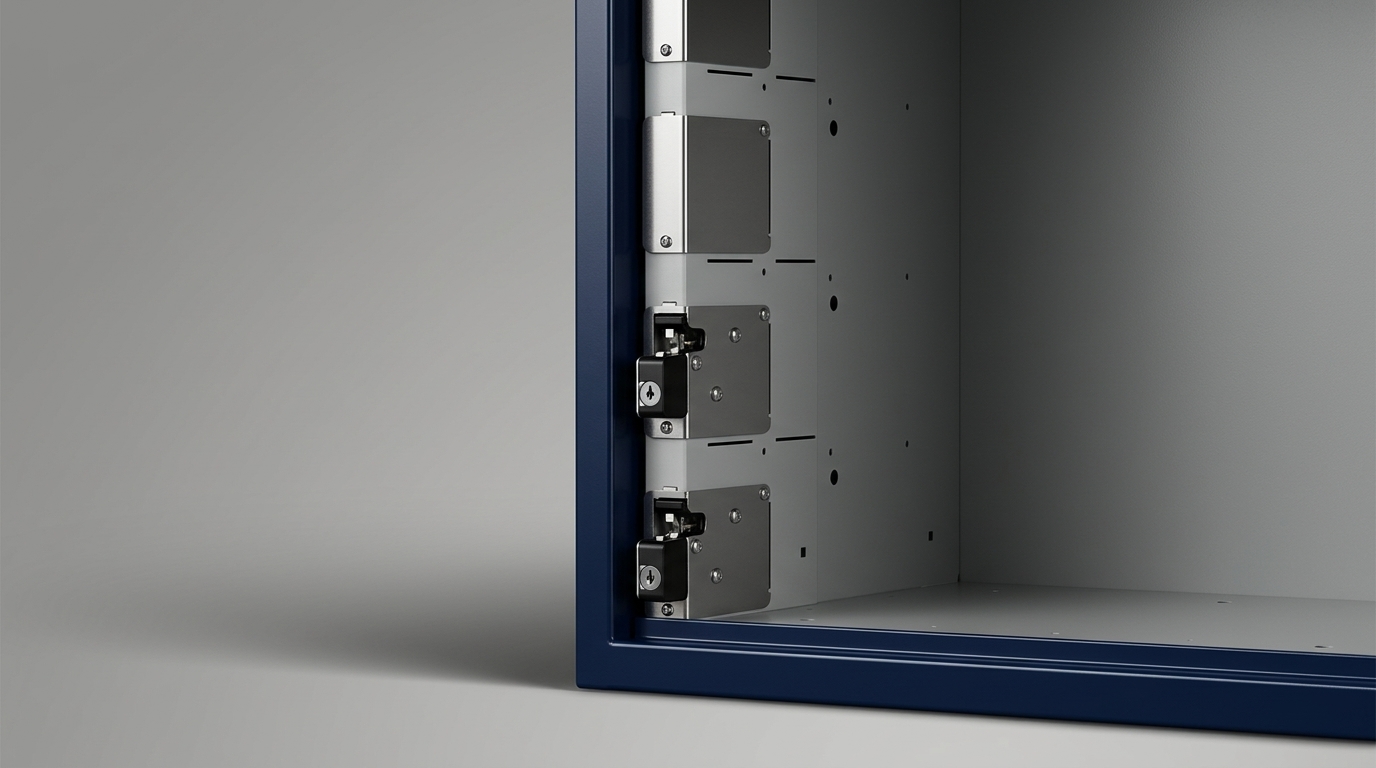
- Three lock systems with three different mounting points, three release access requirements, and three wiring paths, collapsed into one side panel. Universal cable channels and a shared mounting frame let DeBourgh assemble any LoQit, Gantner, or Ojmar configuration off the same line without custom parts per brand.
- A manual override that frees one door without compromising the rest of the column. A standard bicycle brake cable pulls a sliding block to release the latch directly. The override mounts to the left side panel, separate from the lock and ethernet bundle, so field techs can service either system without dismantling the other.
- DeBourgh's strength is MIG welding; the cost target depended on shaving assembly time. Design 1st tested aluminum extrusions, riveted joints, and snap-in panel systems against welded subassemblies, with the trade-off framed in DeBourgh's own production economics: labor saved per shift versus added material cost per column.
Product Results
The Volta 2.0 came through detailed engineering as a production-ready column architecture that DeBourgh’s R&D and manufacturing teams took to the line. Design 1st delivered the design files, manufacturing fixtures, and reference documentation DeBourgh needed to release every variant without further outside development.
- One configurable column architecture in three widths (18", 21", 24") and five locker sizes (XS to XL), built around a custom sheet-metal formed concealed hinge that holds alignment from 4.5" doors to 72" doors
- Universal side-panel profile that accepts LoQit, Gantner, or Ojmar with no per-brand custom parts, and an independent per-door brake-cable override
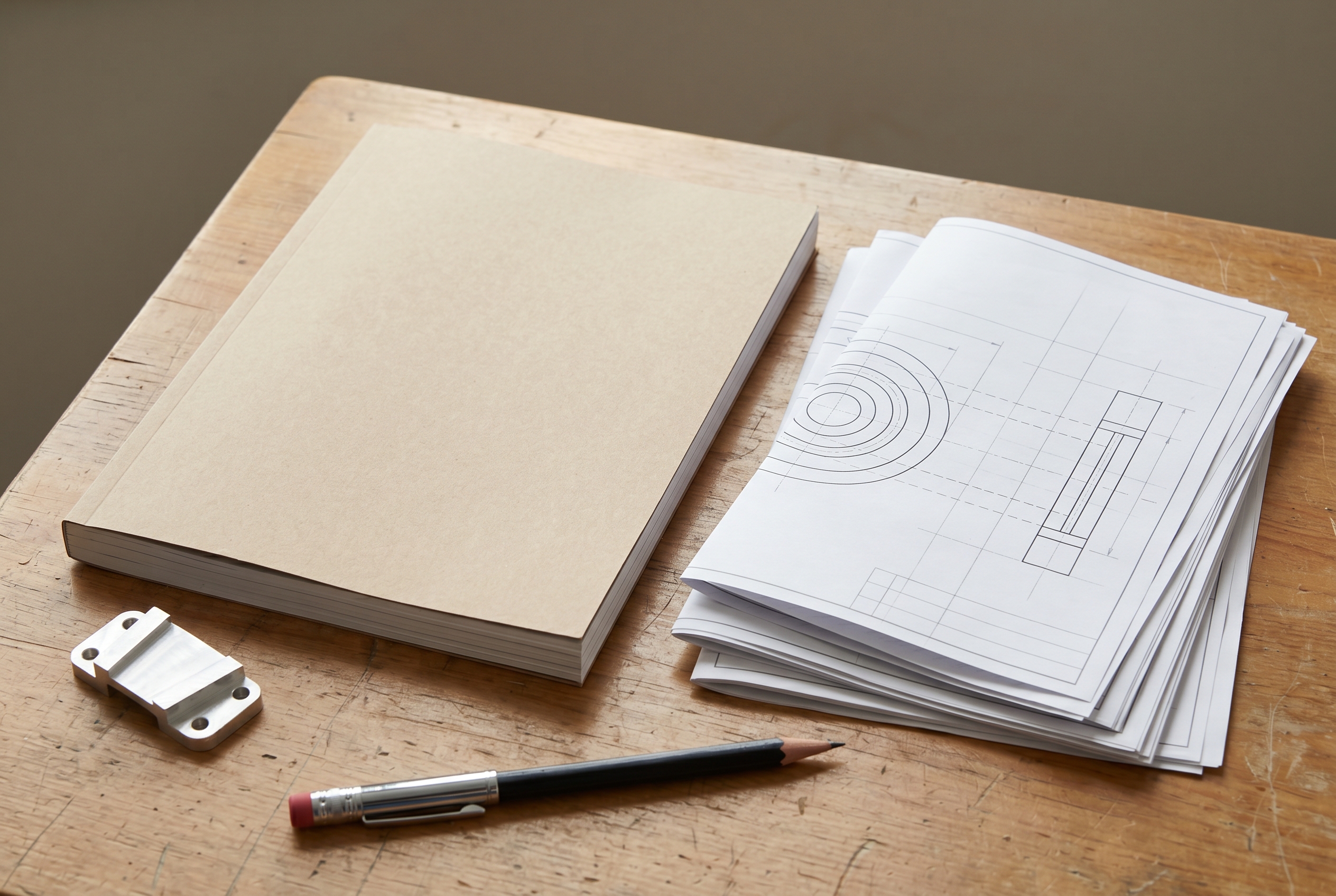
- Volta Standards reference document (26 pages) with full dimensional specifications, material callouts, and the configuration matrix DeBourgh uses to release each variant into production
- Competitive teardown of six smart-locker systems — Amazon Hub, Canadian Tire, Snaile, TZ SMArt, Luxer One, Spacesaver — that anchored design decisions from concept through engineering
DeBourgh Manufacturing Acquired List Industries
In March 2026, DeBourgh announced they were acquired by fellow locker industry titan List Industries. The deal makes DeBourgh’s existing manufacturing facility and business primed for investment and expansion