- Search
- 1.877.235.1004
- Contact Us

Neurovine: Brain Activity Headband
A connected headband that reads brain activity to help guide concussion recovery
Product Design Requirements
Ashleigh Kennedy, PhD, founder and CEO of Neurovine Inc., brought Design 1st an early-stage prototype and asked the team to turn it into a production-ready EEG headband that monitors brain activity during concussion recovery. EEG (electroencephalography) reads the brain’s faint electrical signals through sensors against the scalp. From first concept to a 1,000-unit Canadian production run, Design 1st handled industrial design, electronics, firmware, quality, regulatory, and manufacturing.
The device began as a physician-prescribed medical product, which set a high bar: a documented, traceable design process and a fully defined supply chain. Neurovine later pivoted to a more accessible first market, a testing and consumer wellness device. That shift reshaped the feature set and drove a second round of production design around the curved-frame headband that reached volume.
- Match the accuracy of clinical EEG equipment, to the IEC 80601-2-26 standard for medical EEG devices, inside a comfortable fabric headband for everyday use
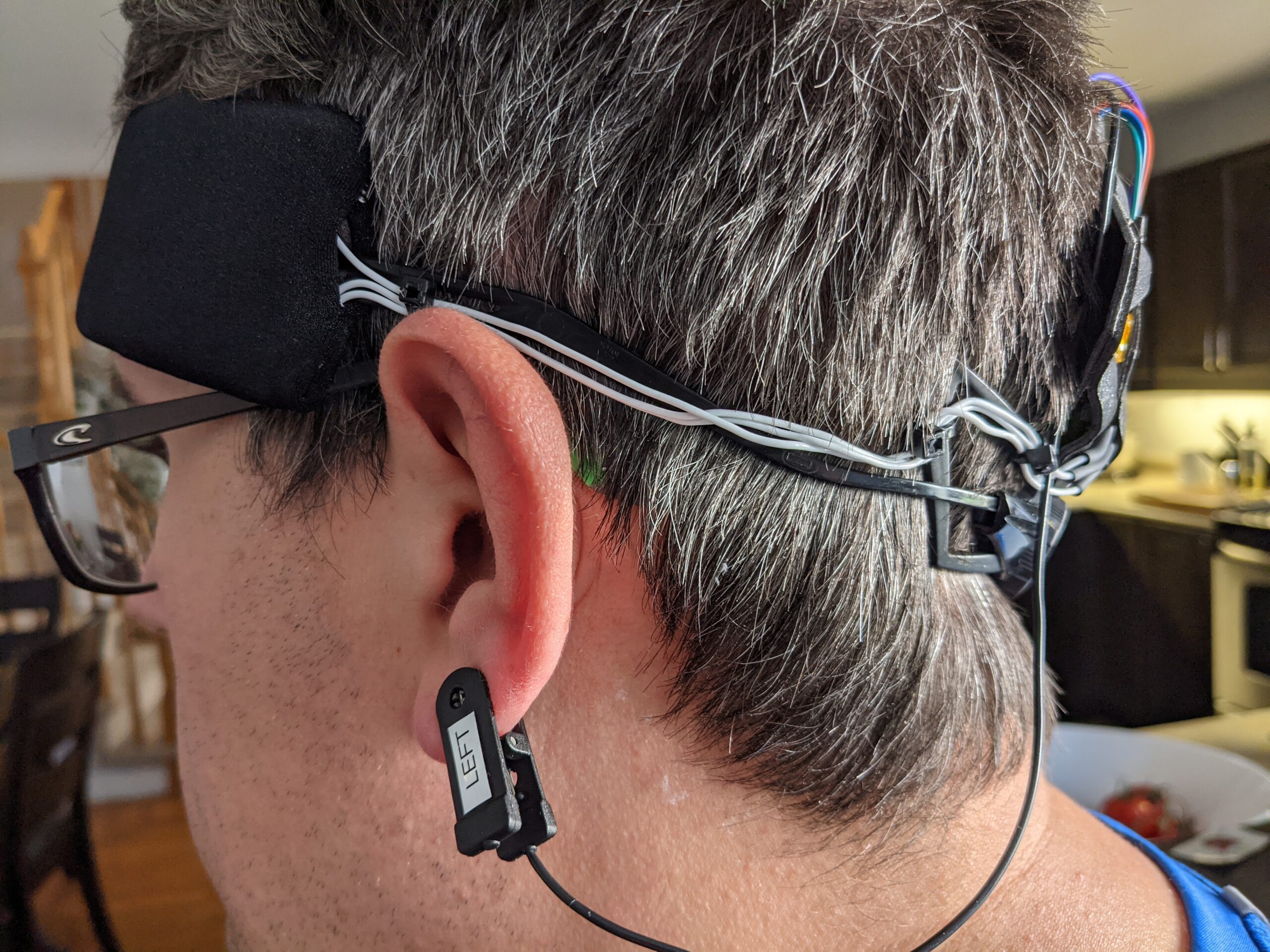
- Read four channels of EEG using dry silver conductive-fabric sensors placed by the international 10-20 system (the standard map clinicians use to position sensors)
- Stream brain activity in real time over Bluetooth Low Energy at 200 readings per second on each channel, protected by the same strength of encryption used to secure banking data and to meet US health-privacy rules (HIPAA)
- Power it with a rechargeable battery safe to wear against the head, with built-in temperature monitoring and battery management
- Clear FDA Class II and Health Canada reglatory approvals
- Scale production in stages, from 5-unit builds through 40, 85, 100, and 1000 units
The Physical Product Design Challenges
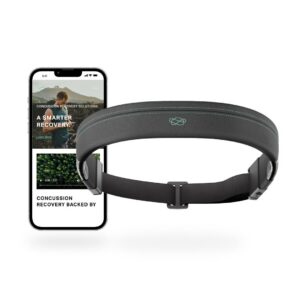
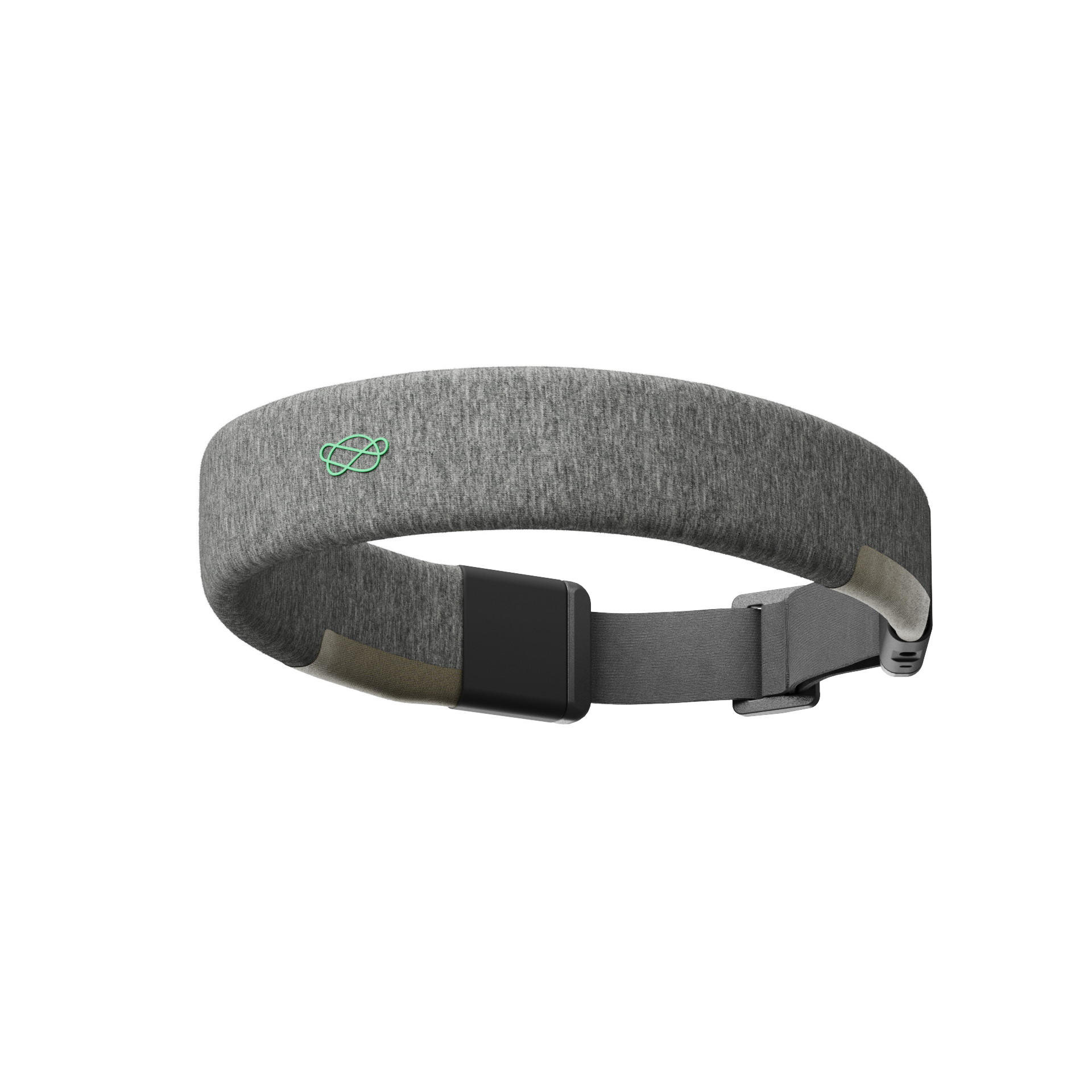
The Neurovine headband required an athletic-leisure-gear feel and clinical-equipment performance. Design 1st’s physical design teams balanced comfort, looks, and precise sensor placement across a wide range of head sizes through comprehensive testing.
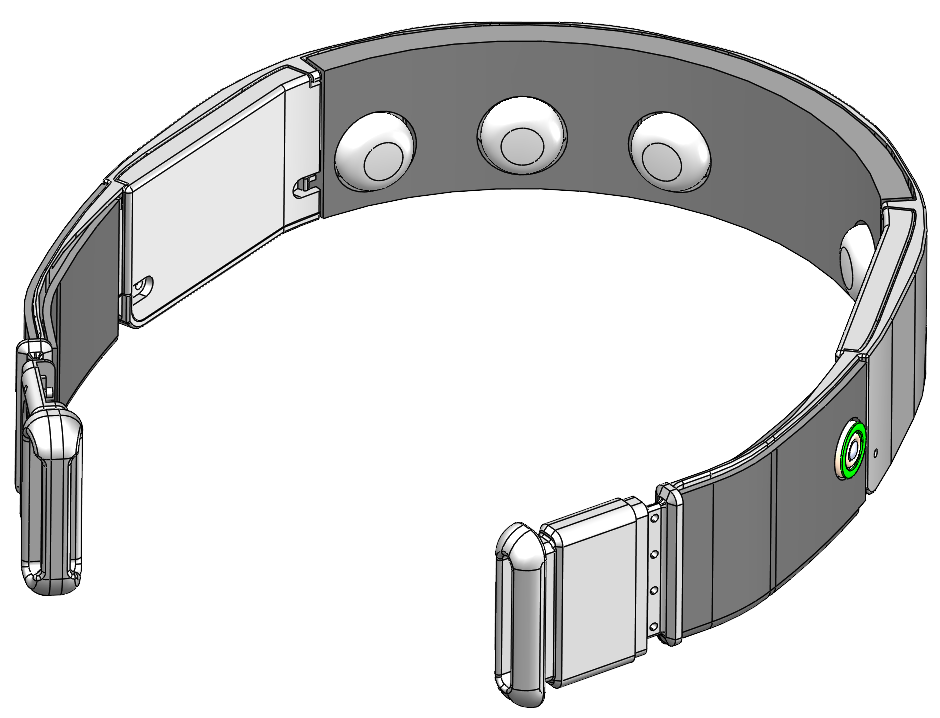
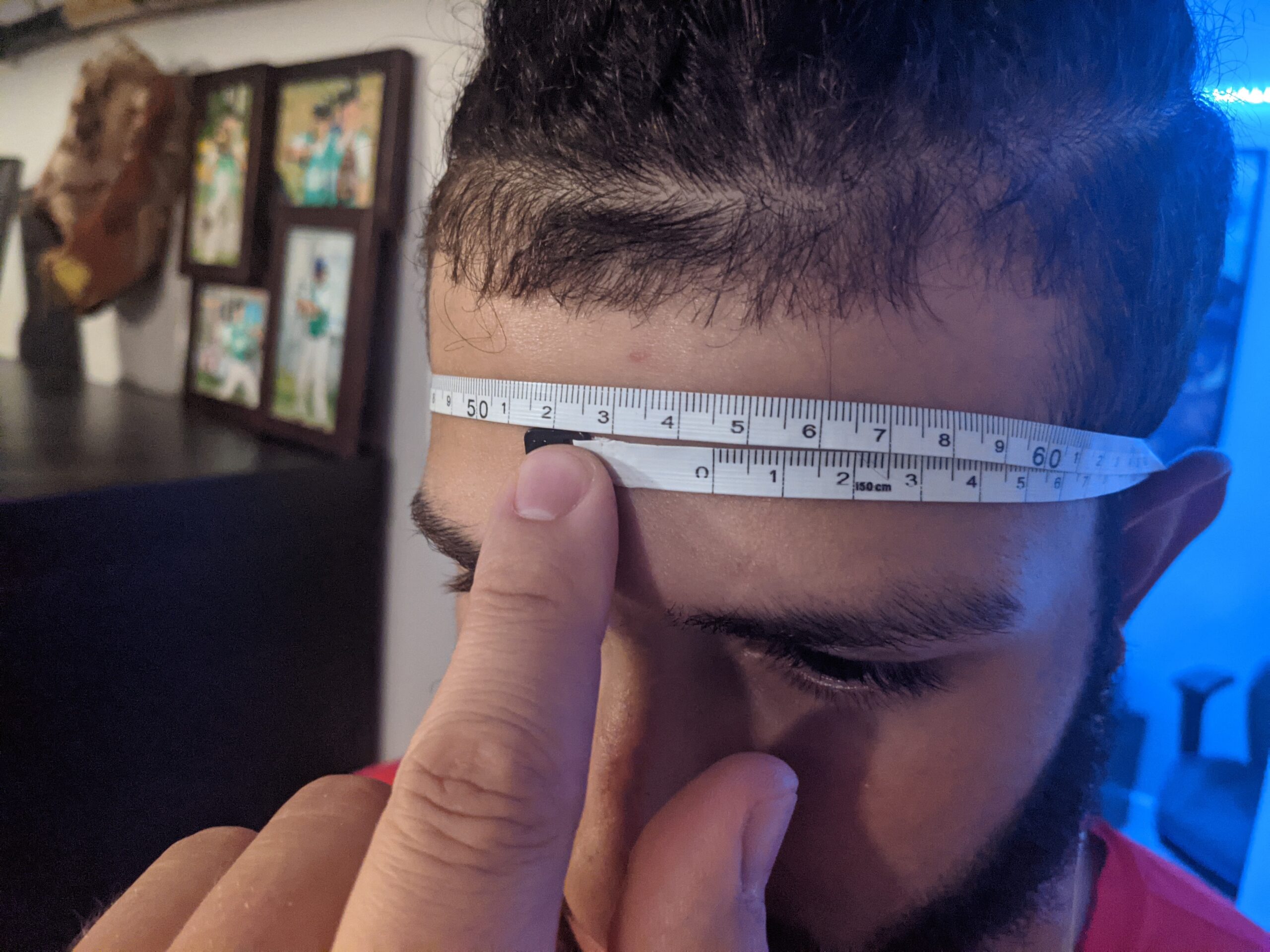
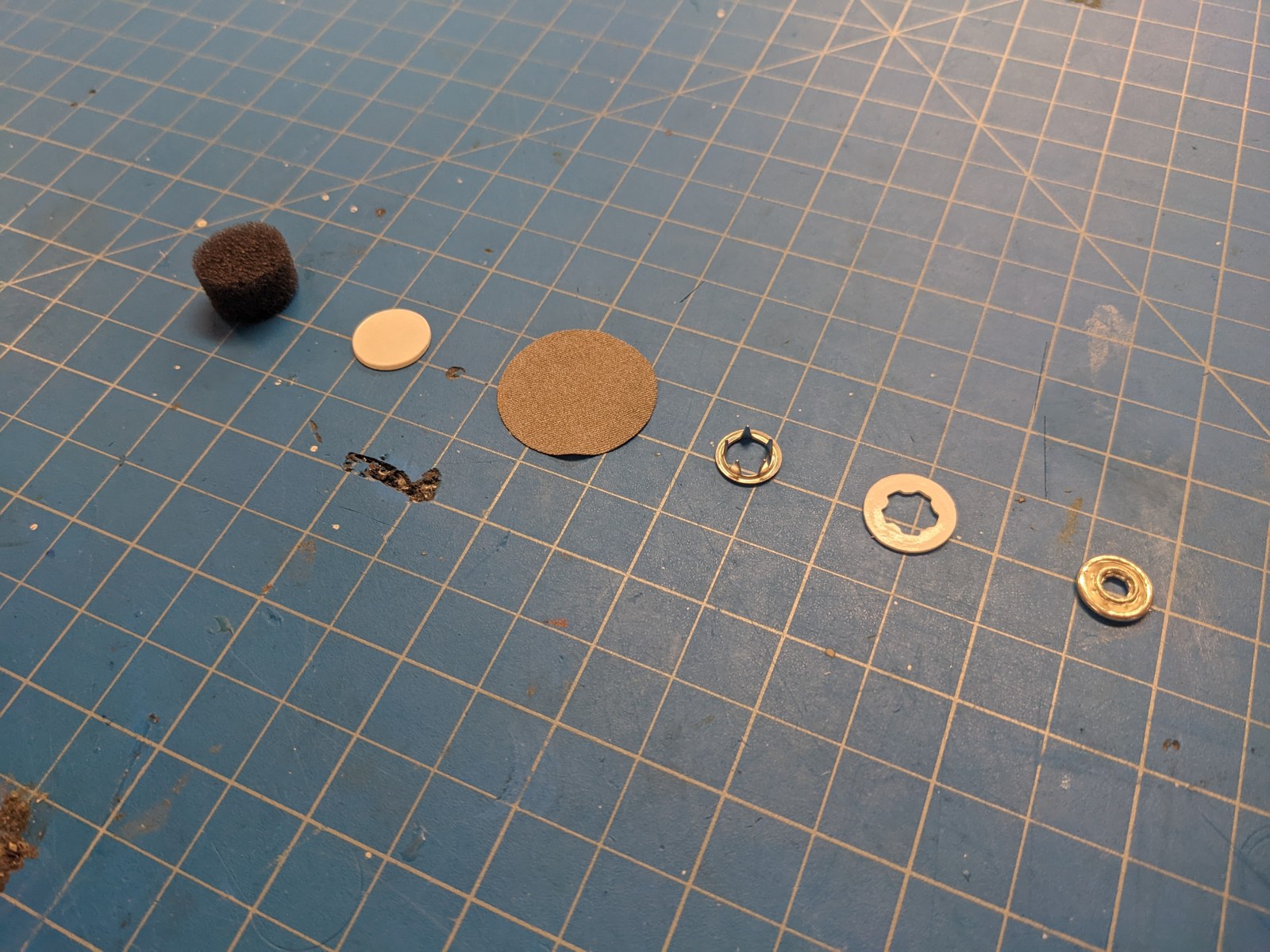
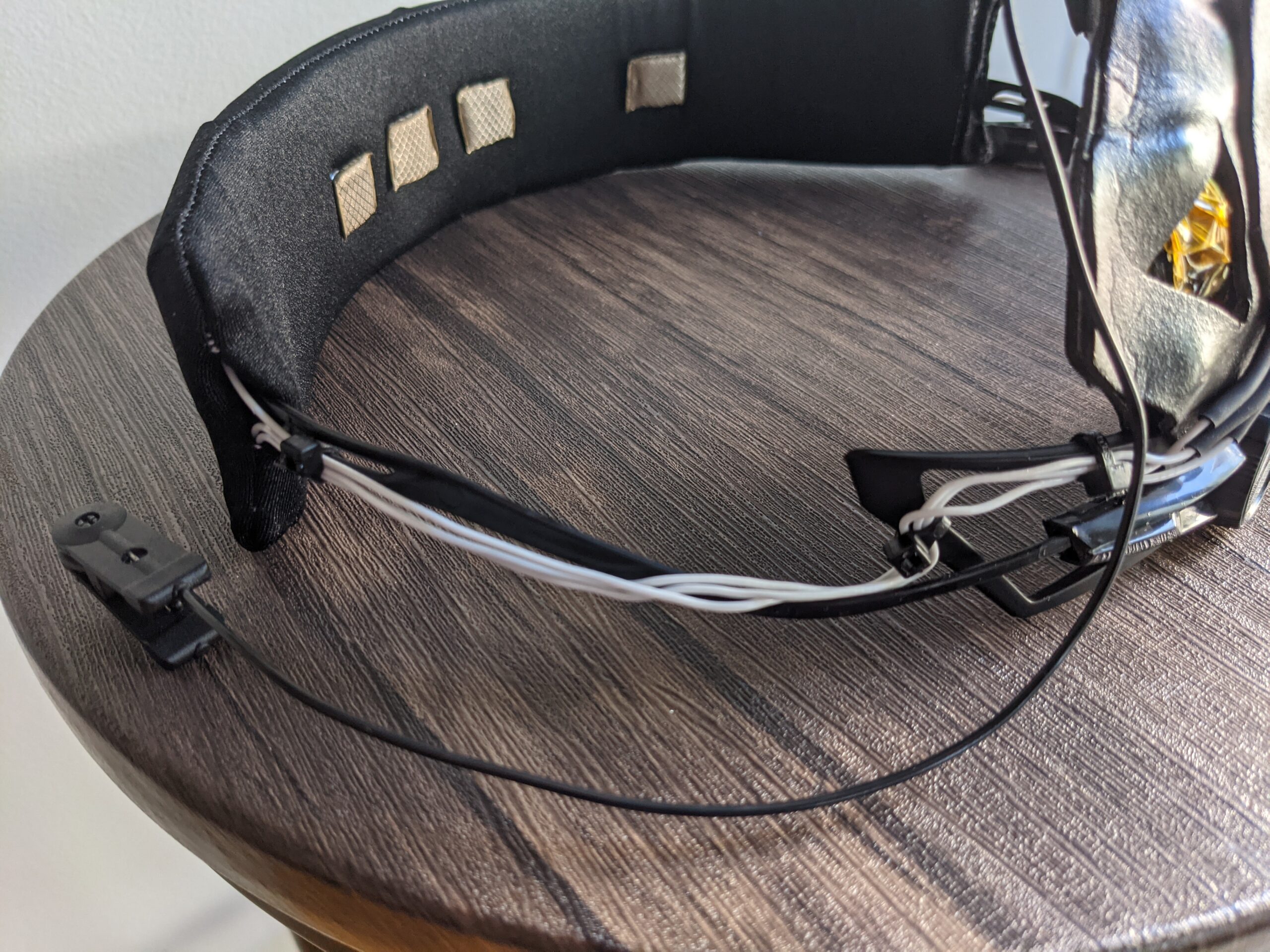
- The EEG sensors hold exact 10-20 scalp positions (Fpz, Fp1, AF7, AF8, plus two ear references), each set by a precision-cut fabric window that holds across every head size.
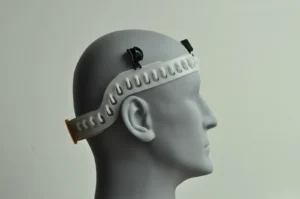
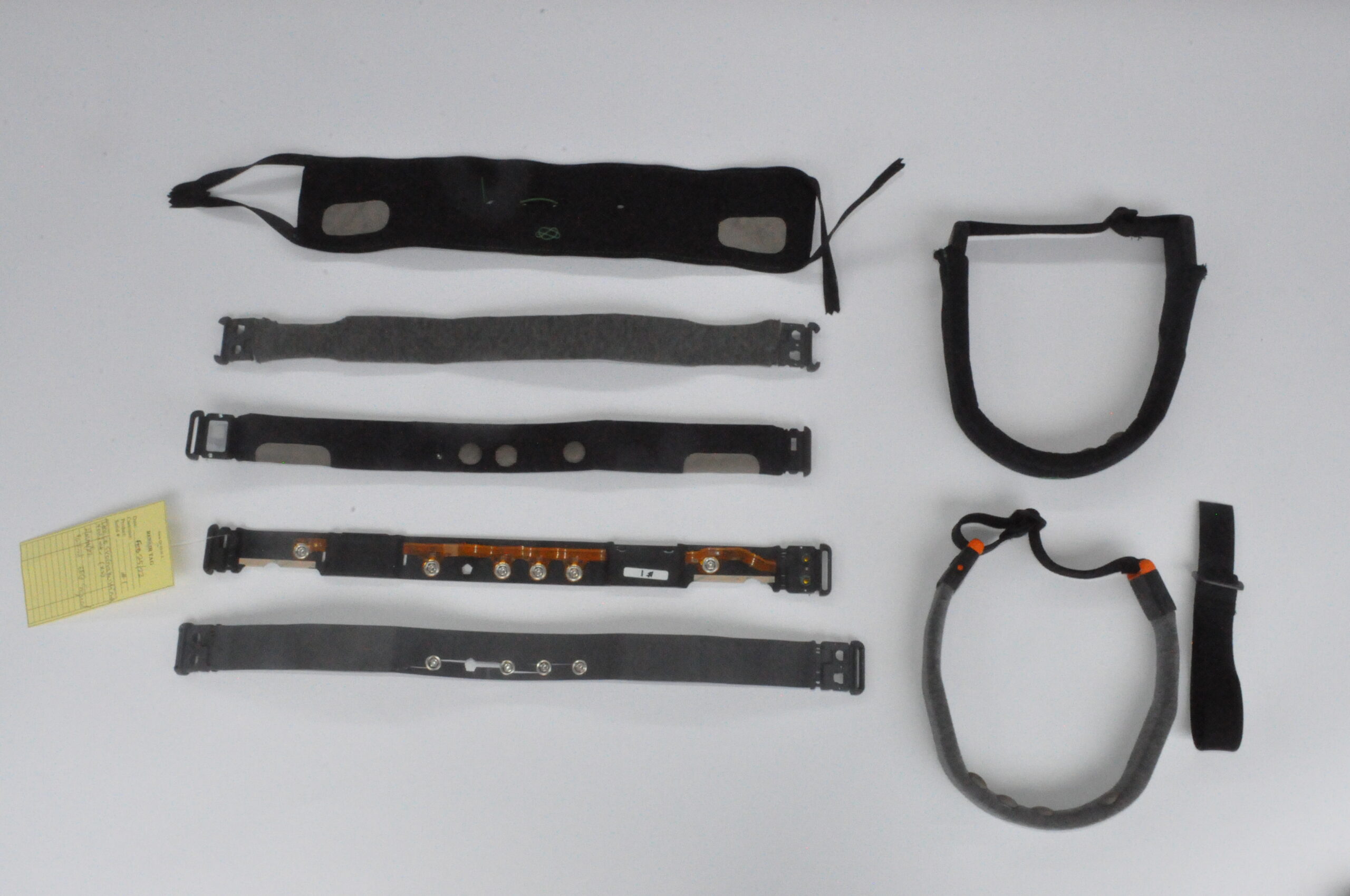
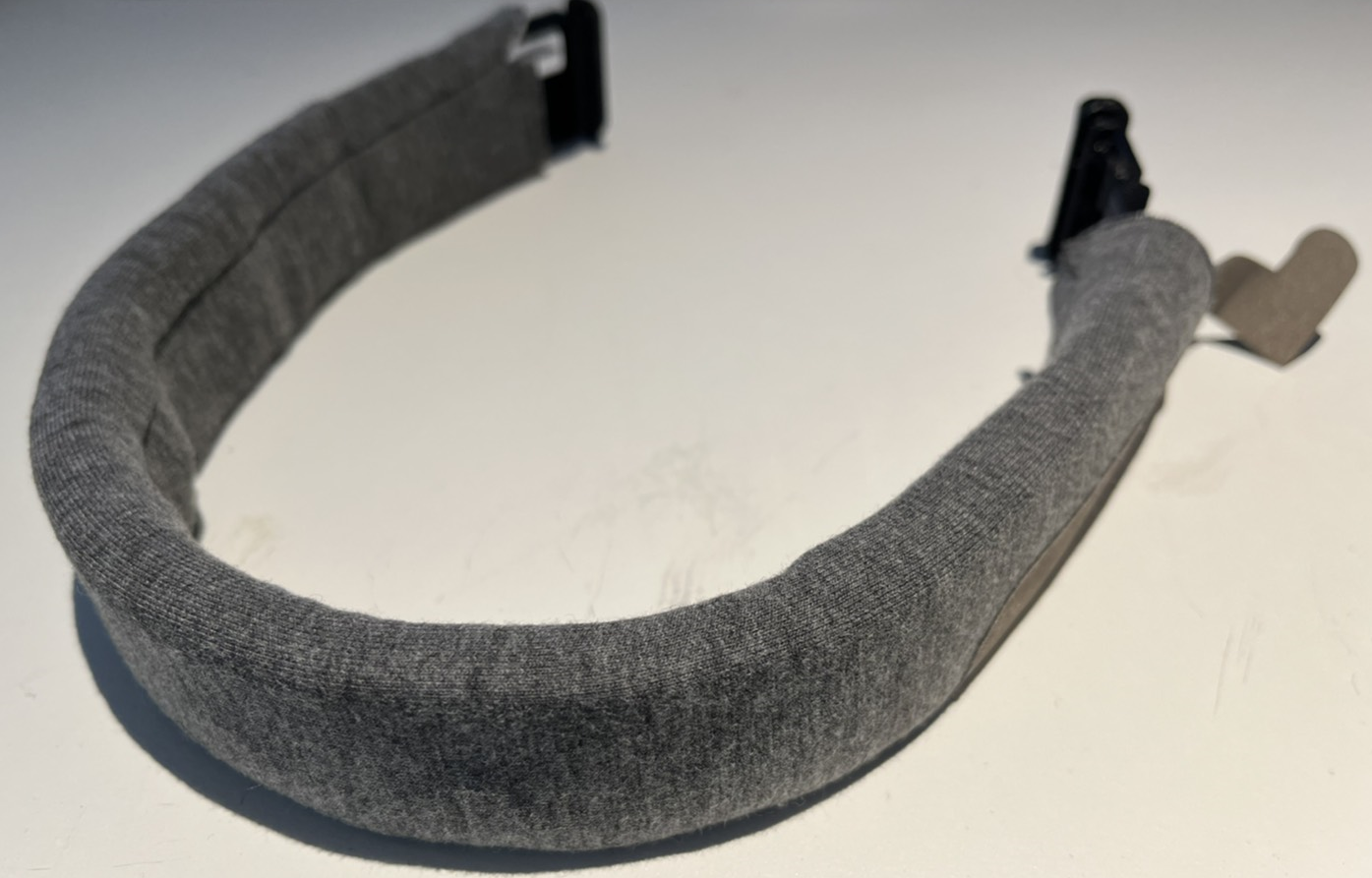
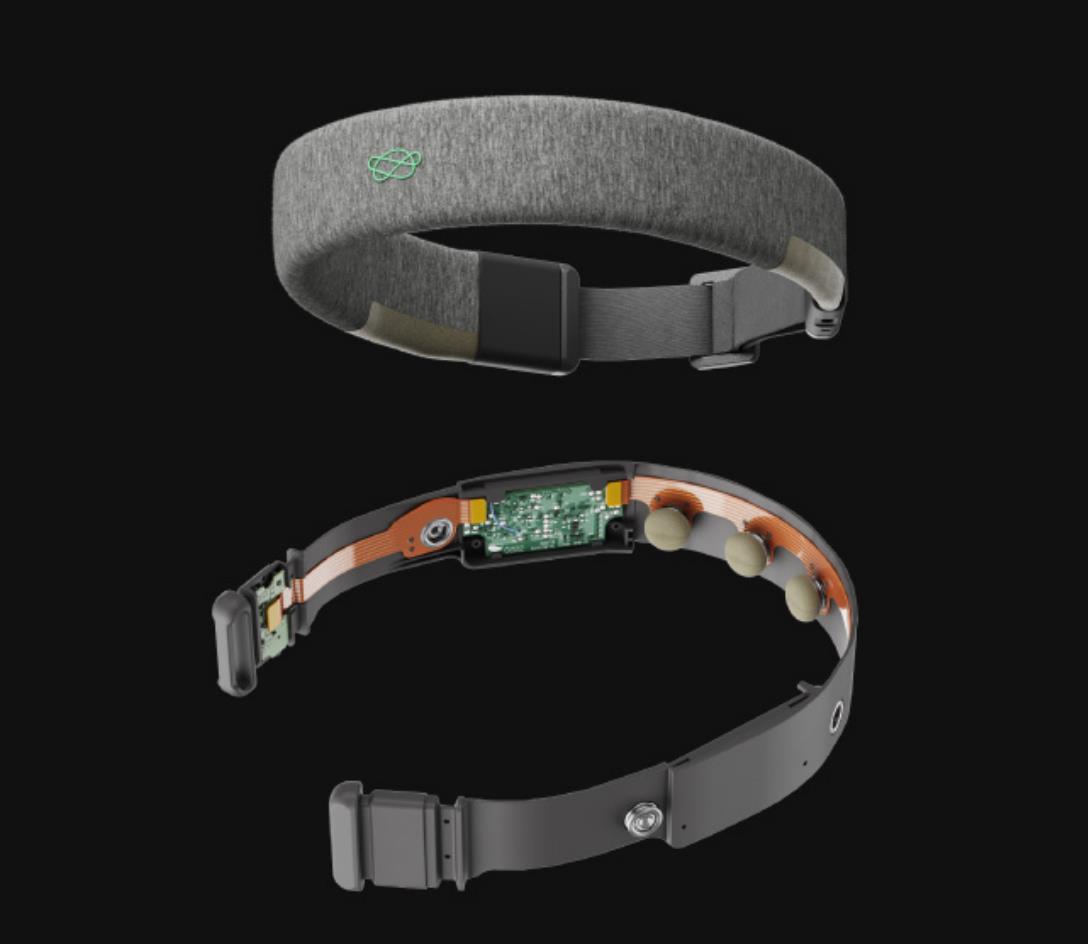
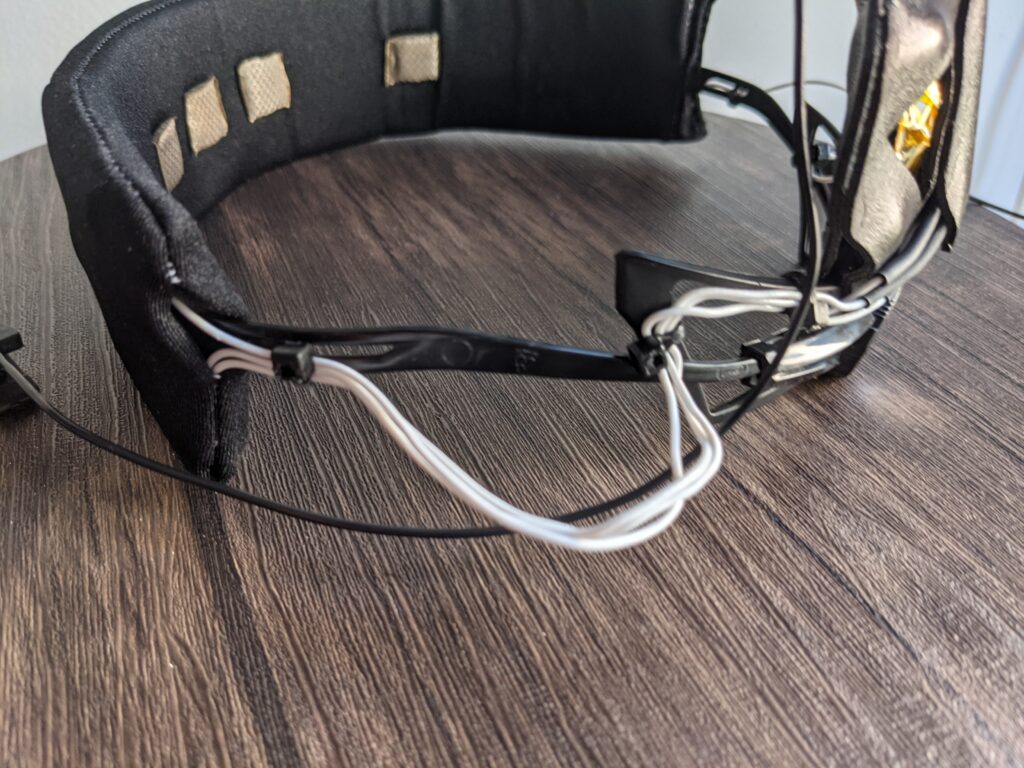
- A multi-layer build sewn over an internal skeleton combines a knit outer fabric, an EVA foam cushion, a rigid plastic frame, and removable conductive-fabric sensor pads.
- A second-generation curved frame replaced the flat original, wrapping the head more naturally and carrying into the larger production builds.
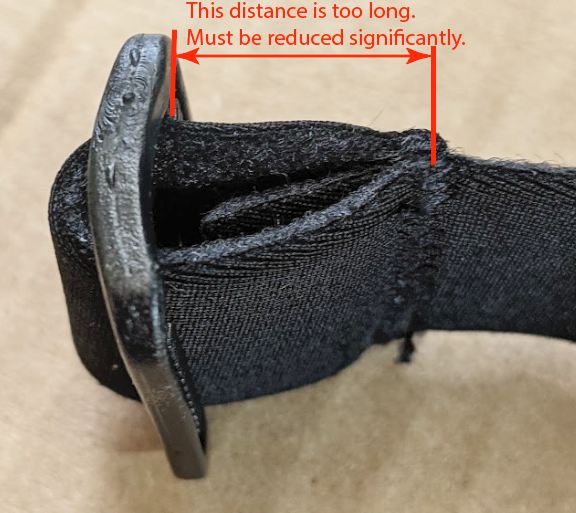
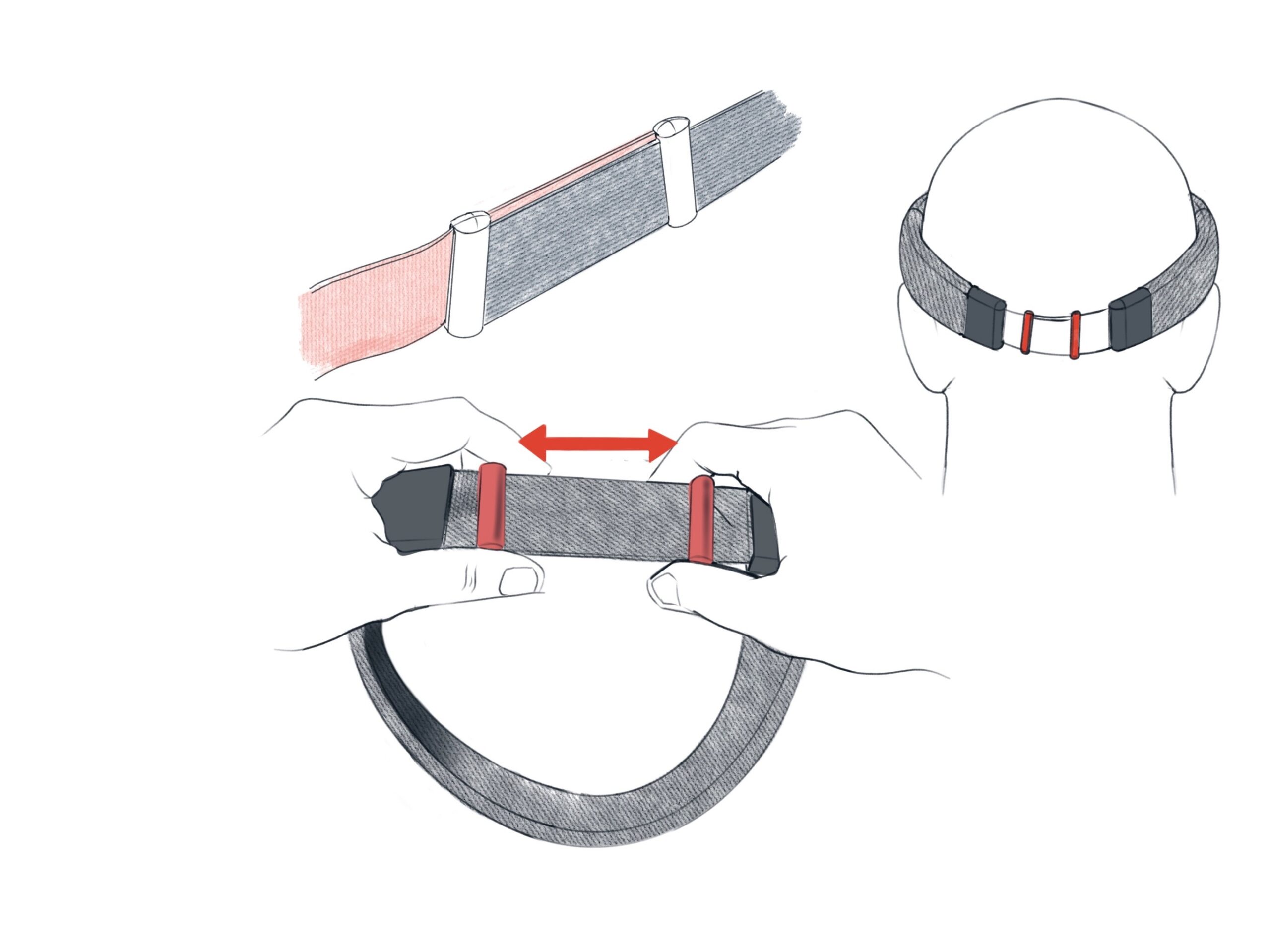
- A tri-glide strap adjuster fits the band one-handed while holding steady sensor-to-skin pressure, validated across adult head sizes.
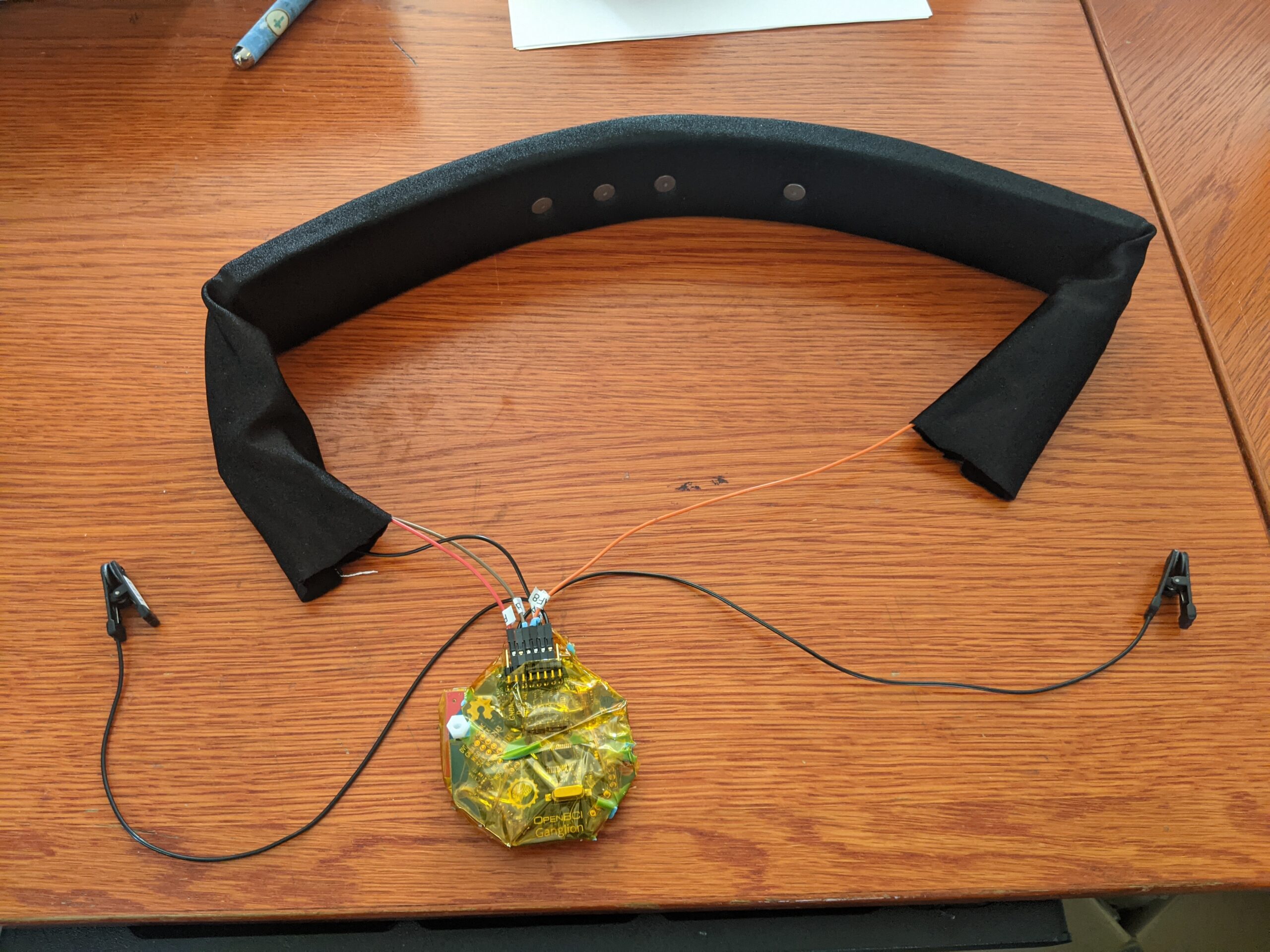
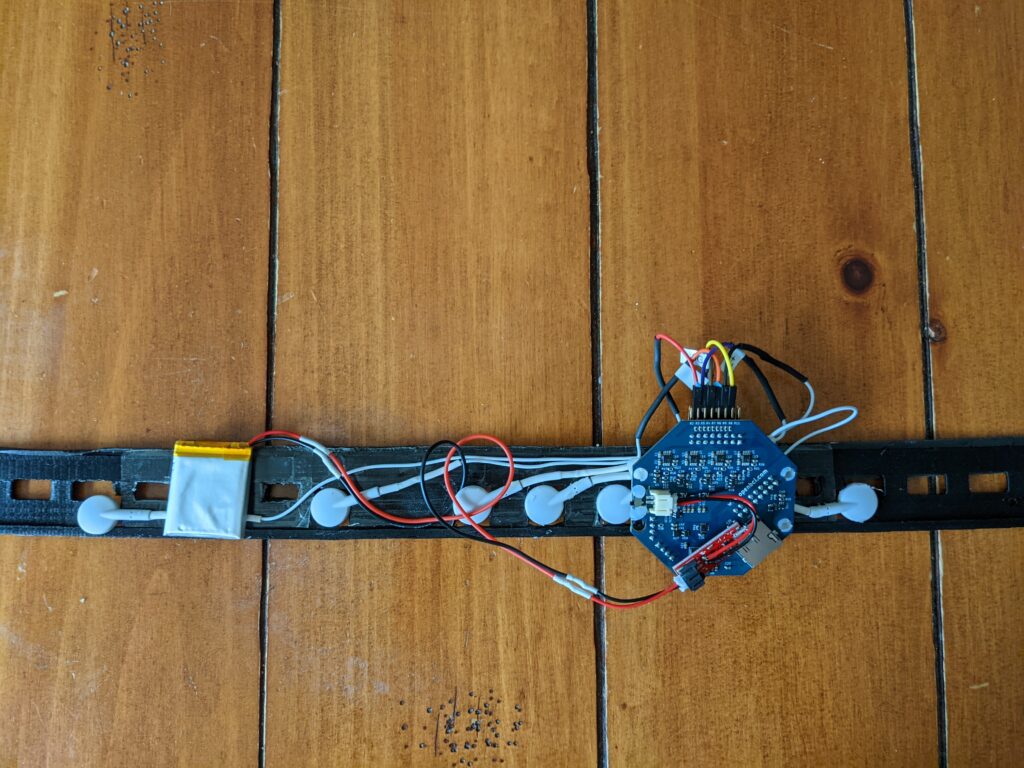
- The design matured from 3D-printed bench models with exposed wiring, through alpha prototypes, to near-production runs near Ottawa.
Engineering the Electronics
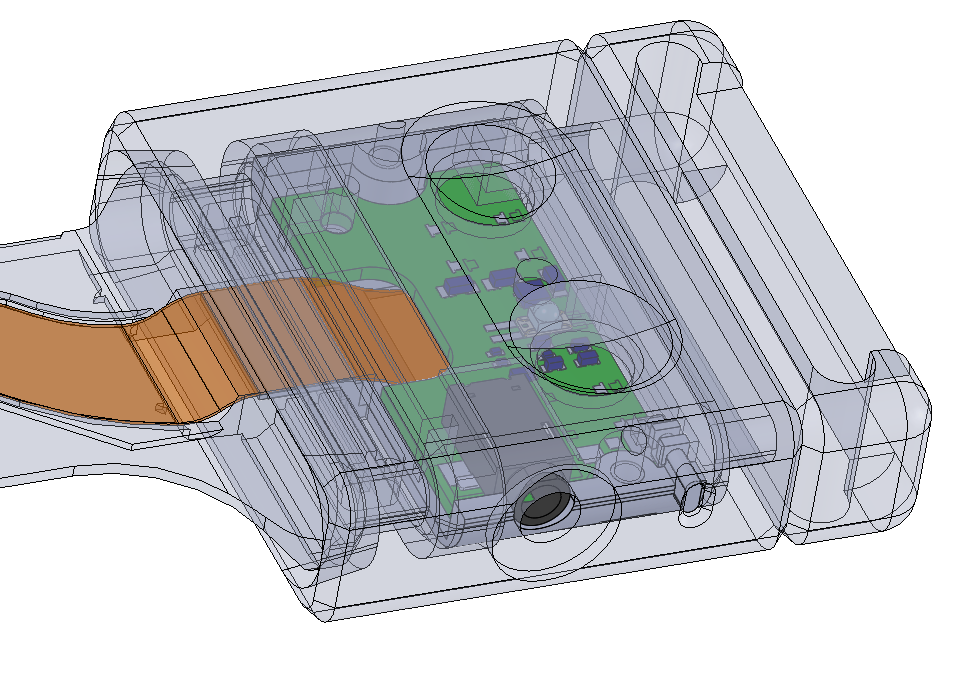
Design 1st replaced the off-the-shelf board the prototype started with (an OpenBCI Ganglion dev board) with a purpose-built design shaped for something worn on the head: two small circuit boards instead of one, joined by flexible ribbon cable.
- A low-power system-on-chip pairs processor and Bluetooth radio in one, driving a medical-grade analog front end that amplifies and digitizes the brain's faint signals. Design 1st sized the channel count to shrink the board and lower cost while holding signal quality.
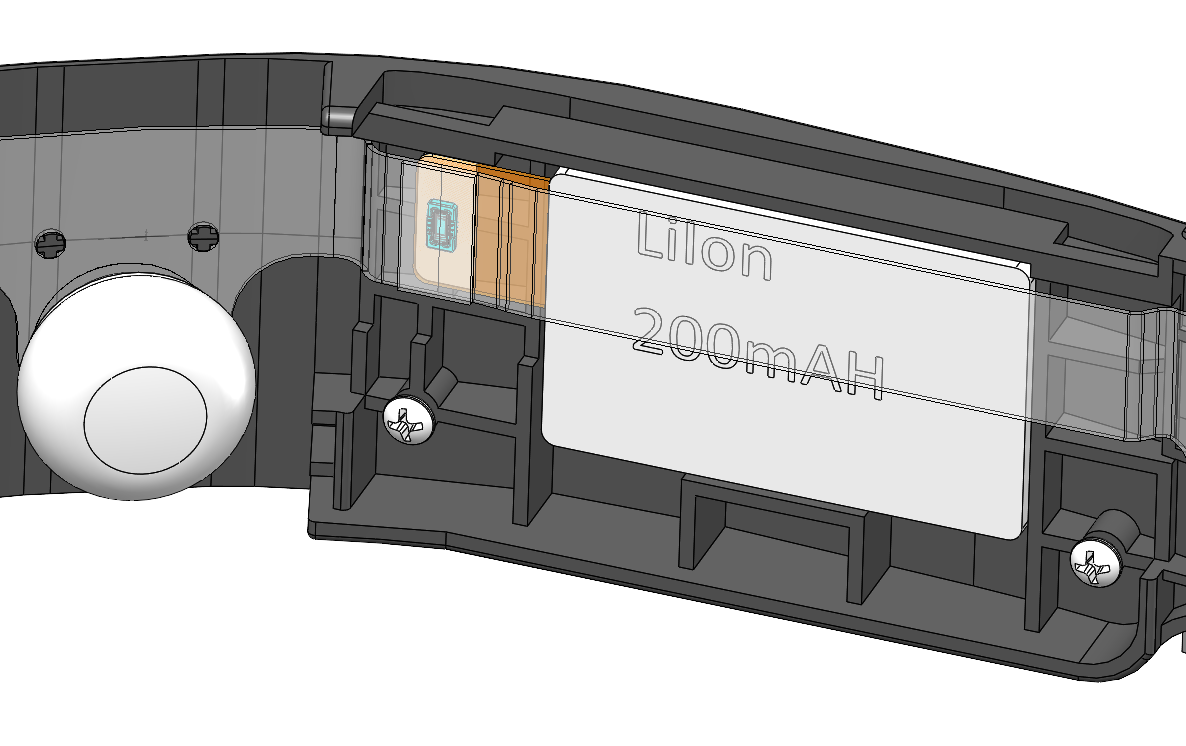
- Two boards split the work: a forehead sensor board carries the front-end chip and a motion sensor, while the rear board handles status lights, the button, and USB-C charging. Flexible ribbon cable links them through the frame, bent gently enough to survive every wear.
- A custom lithium-ion battery in a compact format, with a chemistry chosen for heat safety against the head. Design 1st tested alternative chemistries first, then qualified a manufacturer to build the cell to spec and paired it with protection circuitry guarding charge, current, and heat across an 8hr session.
Embedded Software and Firmware
Design 1st wrote the firmware, the software that runs on the headband. It captures the EEG signal from all four channels, streams it wirelessly to the companion app, and runs the built-in factory tests, all from a single codebase on a low-power processor.
- Streams all four EEG channels in real time, 200 readings per second on each channel, with a timestamp and sequence number on every packet so the app can confirm nothing was lost or scrambled in transit
- Secures the wireless link with the same strength of encryption used to protect banking data, enough to satisfy US health-privacy rules. The headband only pairs when someone presses its button, so it can’t be connected to without the patient’s knowledge
- Builds the factory tests right into the shipping firmware. Sensor-contact checks, status-light checks, and battery checks all run from the same software, so there’s no need to load and unload a separate test program on the line
- Accepts new firmware wirelessly through the app, so the headband can be updated without ever being opened or plugged in
The Supply Chain Challenges
Neurovine is part hardware, part soft good: rigid electronics and molded plastic on one side, knit fabric, foam, and conductive textile on the other. Building it at volume meant standing up and running a supply chain across all of those worlds, held to medical-grade record-keeping.
- More than 30 separate parts sourced and qualified, spanning circuit-board fabrication, plastic molding, fabric and foam cutting, the conductive-fabric and snap-connector suppliers, the custom-battery maker, and final headband assembly
- Custom parts carried from first samples all the way to volume orders, including the die-cut replaceable sensors, the curved-frame moldings, and the custom lithium-ion cells
- The same medical-grade discipline through every supplier, full traceability and complete handoff documentation, kept in place even as the product shifted toward the more accessible consumer and testing market
Clearing the Regulatory Path
Design 1st’s quality and regulatory team, led by VP Quality & Regulatory Dave Mills, built the testing program and the regulatory strategy needed to bring a medical EEG device to market in both the United States and Canada.
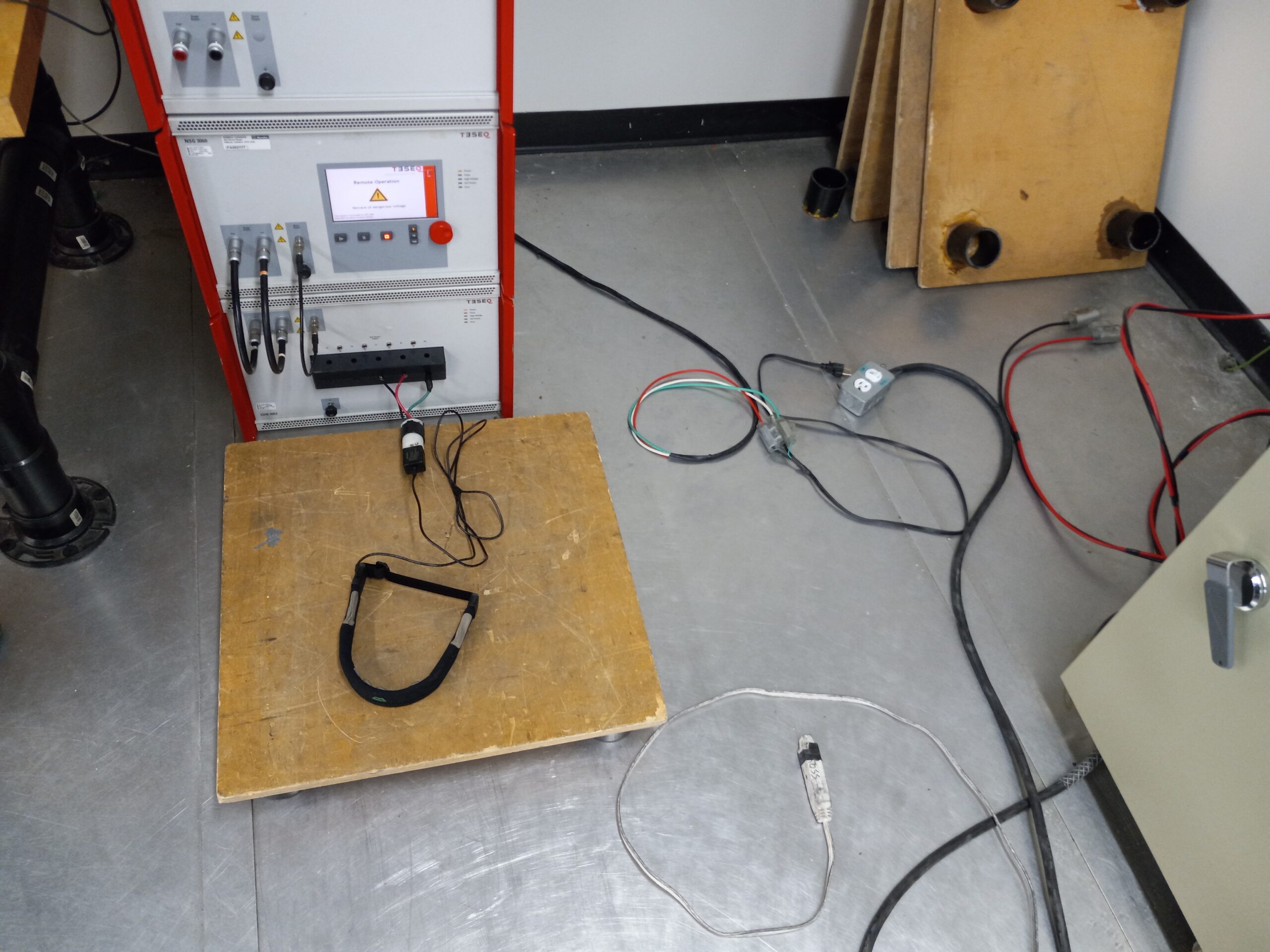
- A full bench-testing program covering signal quality, contact resistance, battery safety, operating-temperature range, a 1-metre drop, static-shock immunity, and electrical interference. Design 1st pre-tested in-house, then sent the final rounds to accredited labs for certification.
- EEG accuracy confirmed to IEC 80601-2-26 through a three-stage factory test: each board alone, then the full assembly with battery, then a sample check feeding known brain-signal patterns through the sensors on a test head.
- A two-track regulatory plan developed with consultancy Ironstone PDI, splitting the lighter US wellness route (FDA Class II, 510(k) exempt) from full Health Canada medical-device approval for prescription use.
- A complete quality management system: design-handoff packages, assembly procedures, and written production procedures supporting ongoing Canadian manufacturing.
Neurovine is using AI to crack the code on concussion recovery
“What excites me most is putting technology that was tested and proven at the professional level into the hands of kids, families, and minor sports teams.”
– Dr. Ashleigh Kennedy, CEO, Neurovine Inc.